Category Archives: Countries

Social Freedom for Turkish Women


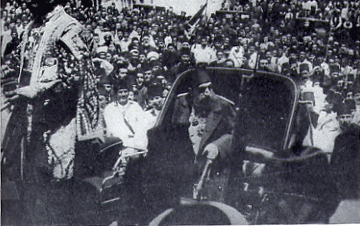
The sultan of the Ottoman Empire going to mosque the day after the constitution was announced.

Social Freedom for Turkish Women
by Mary Mills Patrick.

[The following excerpt is from “The Emancipation of Mohammedan Women,” published in the National Geographic Magazine, January 1909 (Volume XX, No. 1, p.p. 61-62).]

Their past experience has been slowly preparing the Turkish women for the larger opportunities that the constitution gives them. On the morning of the 24th of July all classes of the Turkish Empire entered into a new life, but the greatest change of all took place in the harems. Women everywhere threw off their veils. A prominent woman in Salonica openly assisted her husband in the political celebration.

One woman went so far as to have her picture published in a Paris paper. At this the members of the Reactionary party rose up in common protest and said, “If this be the result of freedom, that our women display their faces to the public with such brazen immodesty, we do not wish a constitution.”

The turkish women are true patriots, and when they saw that the question of freedom for women appeared to have such deep significance to the nation, not only from a political and social, but also from a moral point of view, they said with one accord, “Of what consequence is so small a matter as the veil! We will continue to wear our veils, and will seek the larger opportunities that the new constitution gives us.” Turkish women everywhere have accordingly resumed their veils; but it is a very different thing to wear a veil voluntarily from being obliged to do so, and eventually they will probably appear in the streets without them.

The moral freedom that the revolution has brought the Turkish women is showing itself in many different lines. The freedom of the press has been offered to women. They are writing for the papers openly and without fear of censorship, and their voices are being heard in regard to the affairs of the nation.

Mary Mills Patrick was President of the American College for Girls at Constantinople.
Kama Sutra, Indian Islam and Missionaries

Sex and the country: Islamic rule did not disturb the long Indian tradition of erotic writing
By William Dalrymple, New Age Islam, August, 2008

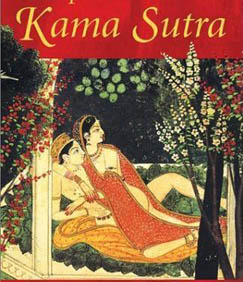
There is nothing new about India being perceived as a place of great and growing wealth: for much of the pre-colonial period, the west was the eager consumer of the spices, silks, and luxuries of the subcontinent, while India was the prosperous supplier. You can still get a flavour of the intoxicatingly rich and sophisticated classical India that supplied these luxuries at the once-great port of Mamallapuram on the Coromandal coast. Here massive relief sculptures faced onto the port where, according to a seventh-century poet, “ships rode at anchor, bent to the point of breaking, laden as they were with wealth, with big-trunked elephants, and with mountains of gems of nine varieties”. The reliefs cover one side of a hill: at the right are two huge elephants, trunks swinging; nearby, warrior heroes and meditating sages stand below flights of gods and goddesses, godlings, nymphs, and tree spirits. There is a breezy lightness of touch at work: a flute is playing, there is dancing, and the heavenly apsara fertility spirits and goddesses are whispering fondly to their consorts. Continue reading Kama Sutra, Indian Islam and Missionaries

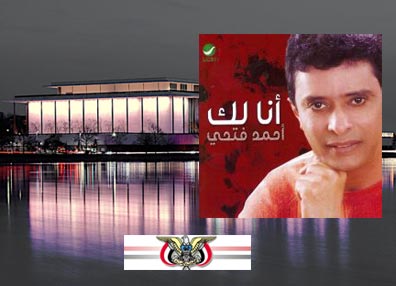
Ahmad Fathi in Washington, DC

The renowned Yemeni singer, composer and oud player, Ahmad Fathi (أحمد فتحي), is coming to Washington and will be performing this Friday at 6 pm at The John F. Kennedy Center for the Performing Arts. The event is free, sponsored by the Yemen Embassy. Fathi is well-known in the Arab world, but less so here in the United States. He has several albums, and his work is readily seen on Youtube (for example http://www.youtube.com/watch?v=mFBdbVnRvbU&feature=related).

Fathi was influenced early on with traditional Yemeni music. He joined the musical institute of Cairo in the late 70’s and earned a diploma in harmonic music with a focus on the lute (oud) instrument. He enriched the Yemeni artistic movement with his distinguished creativity and his brilliance in playing the lute. Fathi obtained an MA with honors from the Cairo higher musical institute December, 1998 for his thesis on the “lute (Oud) and its role in Yemeni songs.”

The Yemeni Culture affairs Ministry decorated Fathi the “Arts Medal” for his role in promoting traditional Yemeni music globally. In 2008, The Arab Creative Association honored composer and singer Ahmed Fathi for his contribution to Arabic Music. Fathi was named an Ambassador of Yemeni Music. Yemeni and Arab fans have enjoyed two decades of modern and classic songs composed by Fathi.

In Pursuit of the Exotic

Museum Exhibits

January 29 to March 29, 2009: Napoleon on the Nile: Soldiers, Artists and the Rediscovery of Egypt

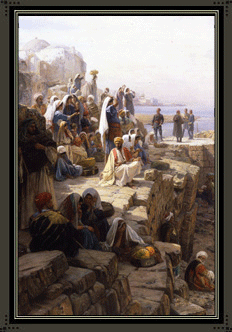
March 24 through April 30, 2009: In Pursuit of the Exotic: Artists Abroad in 19th Century Egypt and the Holy Land

New York, New York – The Dahesh Museum of Art and Syracuse University Art Galleries today announced the formation of a partnership, which will include the Museum’s organizing several exhibitions annually from its own collection of 19th-century art in the academic tradition, complemented by works in the University’s rich collection, for presentation at the SU Art Galleries in Syracuse, as well as The Palitz Gallery/ Lubin House, located on 11 East 61st Street, off Fifth Avenue. The Palitz Gallery has recently attracted artworld attention with the exhibition Michelangelo: the Man and the Myth on view through January 4th 2009. Continue reading In Pursuit of the Exotic

Reflections on Gaza


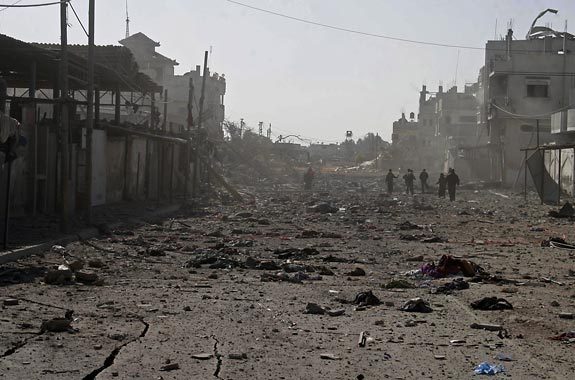
Palestinians walk in the rubble following an Israeli airstrike Wednesday in Rafah refugee camp in the southern Gaza Strip. Photo by Khaled Omar, The Associated Press.

Why did Israel start this War?
by Amr al-Azm, Brigham Young University

There are several answers to this question depending on which angle you look at it from.

The facts on the ground (Time Line) run as follows:

June 19 – An Egyptian brokered truce begins between Hamas and Israel. It calls for Hamas to stop cross-border rocket fire and for Israel to gradually ease its embargo on Gaza.

July 27: Israel kills Shihab al-Natsheh, a senior Hamas fighter, in his house in the West Bank city of Al-Khalil. Hamas protests action and Israel claims that the West Bank is not covered by the ceasefire.

November 5: Israel raids supposed smuggling tunnels in the Hamas-controlled region. Six Palestinians killed in the attack. Hamas responds by firing several dozen rockets and mortar shells at western Negev in Israel in retaliation. No casualties or property damage is caused, but three women are treated for shock. Continue reading Reflections on Gaza

Beating Swords into Ouds

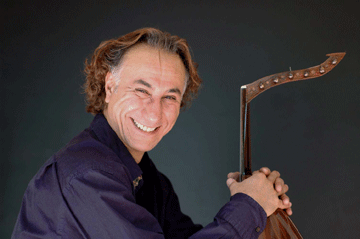
Last night I had the privilege of listening to the Iraqi musician and composer, Rahim AlHaj, who performed a number of his own compositions for solo oud. This was held at Symphony Space in Manhattan as part of the World Music Institute season. AlHaj is not only a talented contemporary artist, but a natural showman. His playful, and at times tearful, interaction with the audience framed his virtuosity. I say “tearful” because the passion in his music spoke to the disharmony in Iraq’s recent history. One of the pieces was named in honor of a cousin, Qasim, who along with four friends was killed by American soldiers while waiting for a cab in Baghdad. Another poured out his sadness at witnessing the tragedy of 9/11 soon after arriving in America. Throughout the show, Rahim asked if we in the audience wanted him to play something “fun” or “tragedy.” Both were present in the theater last night; both pervade Iraqi culture today.

For more information on Rahim AlHaj, check out his superb website. A video of his recording for a Smithsonian cd is available on Youtube. His biography, copied from his website, is provided below. Continue reading Beating Swords into Ouds

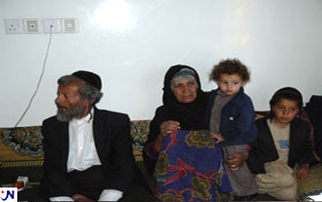
Blood money for Killing Yemeni Jew


Yemeni Jews: source: Yemen Observer

by Nasser Arrabyee, Yemen Observer, March 3, 2009

A Yemeni primary court in Amran, north of the country, ruled on Monday a payment to be made of 5.5 million YR (US$ 27,500) in blood money for the murder of a Jewish man by Yemeni, Abdul Azeez al-Abdi, last December.

The court, chaired by Judge Abdul Bari Aqaba, also ordered that the convict should be placed in a psychotic sanatorium. The father of the Jew refused the sentence and asked for an appeal to be made to demand the death penalty against the convict.

“As long as there is no justice for us, then (they should) deport us to Israel, it’s better for us.” Continue reading Blood money for Killing Yemeni Jew

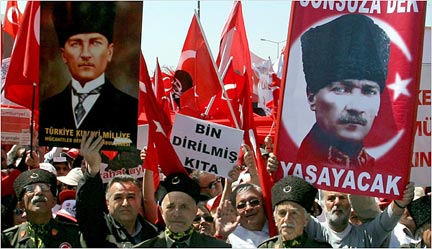
Democracy, Islam, and Secularism: Turkey

Conference: “Democracy, Islam, and Secularism: Turkey in Comparative
Perspective”

Date: March 6-7, 2009
Location: International Affairs Building 1501, Columbia University

Turkey, as a Muslim-majority country, is the only member of NATO and only
candidate member of the European Union. Assertive secularism, multiparty
democracy, and military interventions are other puzzling aspects of Turkish
politics. With its rising activism in the Middle East, Caucasus, and Central
Asia, Turkey has also become an influential actor in world politics. This
conference aims to present an integrated picture of Turkey by bringing
together comparative perspectives on its past, present, and future, and
delving into such issues as the legacy of the Ottoman Empire, secularism,
religion, democracy, civil-military relations, and the European Union
membership. Continue reading Democracy, Islam, and Secularism: Turkey