Category Archives: Countries

Will Obama’s words matter to the Muslim world?


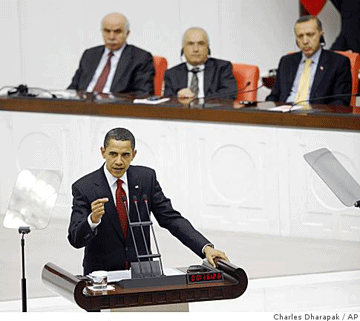
President Obama speaking in Turkey, photograph by Charles Dharapak/AP

by Munir Jiwa, San Francisco Chronicle, Tuesday, April 7, 2009

President Obama has been roundly criticized for his approach thus far to the Muslim world, so it will be interesting to see how the Muslim world receives the words he delivered in Turkey on Monday.

Some critics see Obama’s promise to open a dialogue with the Muslim world as being soft on terrorism. Others wonder why the president would waste time on words, when, they say, now is the time for policies. Others (including Alaa Al Aswany, an Egyptian whose op-ed, “Why the Muslim World Can’t Hear Obama,” was published in February in the New York Times) point to the disappointment felt by Egyptians and others in the Muslim world that President Obama did not take a stand against Israel’s war on Gaza. The criticisms are variations on a theme: Actions speak louder than words.

Many are asking: Will his words matter? And, how might the world benefit now from his words to the Muslim world?

The operative word is “now.” Actions may speak louder than words, but proverbial wisdom also has it that you can’t get there from here. In this case, we can’t get to effective action without words. Continue reading Will Obama’s words matter to the Muslim world?
Repairing American public diplomacy

Repairing American public diplomacy

by William Rugh, Arab Media and Society, Winter, 2009

It is widely believed among academics who study the subject, and among former practitioners, that public diplomacy has not achieved its full potential,[1] and we are hopeful that the Obama Administration will now solve some of its problems. This essay focuses on the most important challenges, which in many ways concern broadcasting to the Arab world.

Public diplomacy is of course not a panacea. America’s foreign policy decisions such as the Iraq war, or its policies at home such as the Patriot Act and Guantanamo detentions, have been strongly criticized abroad, undermining our international reputation and respect. Public diplomacy by itself cannot eliminate all criticism of our policies. It can only help to mitigate objections by explaining the U.S. government’s reasons for these policies, and by reminding foreign audiences of the aspects of America they still admire, in its society, culture and political system.

It is also true that the election of Barack Obama, which has generated a generally positive reaction around the world, will not by itself burnish America’s tarnished image abroad. His new policies may help, but misunderstandings of the United States will continue, out of ignorance or deliberate distortion. Public diplomacy programs can help present an accurate picture of America to foreign audiences, a task more important than ever in this age of 24/7 information proliferation.

What are the systemic problems hindering U.S. public diplomacy and how can the Obama Administration fix them? Continue reading Repairing American public diplomacy

Reforming Islamic family law

Reforming Islamic family law within the religious framework: the « best practices » strategy
by Khalid Chraibi

Many people in the Muslim world believe, wrongly, that shari’ah is a compilation of legal rules which are uniformly applied in all Muslim countries. But, the facts are otherwise: these rules vary significantly from one country to another, as well as over time. As a result, the status of women in Muslim countries, which is ruled by shari’ah, differs in many ways from one country to another. On any given issue, some national “personal status codes” grant more rights to women or better protect their interests than other codes.

According to feminine NGOs working in the field of Muslim women’s rights, if Governments accepted to apply the more favourable rules on any Islamic family law issue (designated as the “best practices”), this would contribute significantly to the reform of family law “within the religious framework”, bringing it closer to contemporary international standards. Continue reading Reforming Islamic family law

Sufi Soul

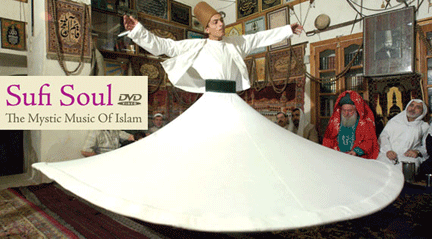
Cyberspace is increasingly crowded with videos, the virtual youtubization of the internet. This is especially the case for documentaries. Youtube has a wide range of videos on Islam, from professional films to homemade khutbas and television reruns. The diversity of Muslim practice is available, as is the worse Islamophobia, with just a click of the mouse and a wifi point. This ease of access is also convenient for professors, who can often find relevant video excerpts to power point into their lectures. Of the numerous videos out there, here is one well worth watching: Sufi Soul – The Mystic Music of Islam, a 50-minute film directed by Simon Broughton for Channel 4 in the U.K. To watch it, click here.

Here is a brief description of the film: Continue reading Sufi Soul

New Age Islam in the Digital Age

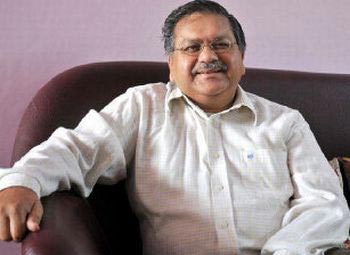
A LONG STRUGGLE AHEAD: Sultan Shahin set up a website that has taken on the religious right head-on.

Praveen Swami, The Hindu, March 24, 2009

Back in the summer of 1999, Sultan Shahin found himself being hectored by an earnest young man outside London’s Finsbury Park mosque.

“You Indian Muslims are cowards,” Shahin was told “but soon you will have just two choices: either to become a true Muslim like us, or to perish.”

For Shahin, the experience was transformative. “It became clear to me that the Islam that I believe in was under serious threat,” he says, “and that I would have to do something if the religion I loved was not to be demeaned by the evil that was being spoken in its name.”

Last year, Shahin set up a website that has taken on the religious right head-on. Though run on a shoestring budget and without the help of full-time staff, New Age Islam (http://www.newageislam.com/) is visited by hundreds of readers every day. Its electronic newsletter has over 29,000 subscribers.

New Age Islam provides its audience to a wide range of original theological and political writing that does not figure in the mainstream media. In recent weeks, New Age Islam has seen debates on Niyaz Fatehpuri, a twentieth-century literary figure with unconventional ideas on the concept of divine revelation, as well as the neo-conservative televangelist Zakir Naik. Continue reading New Age Islam in the Digital Age

Musawah Framework for Action

The following information is taken from a relatively new Muslim organization dedicated to equality and justice in the Muslim family. The name of the group is Musawa.

Musawah was initiated in March 2007 by Sisters in Islam, a Malaysian non-governmental organisation that is committed to promoting the rights of women within the framework of Islam, and a 12-member international planning committee of activists and scholars from 11 countries. The committee came together to consolidate information, experiences, and ideas that have been used by NGOs and activists in countries around the world to advance equality in the family. Women’s groups have been conducting these advocacy efforts for decades (see the background papers for more information). Continue reading Musawah Framework for Action

Heritage in a Global Era

Heritage in a Global Era: The Integration of Modernity and Tradition in the UAE

by el-Sayed el-Aswad, United Arab Emirates University

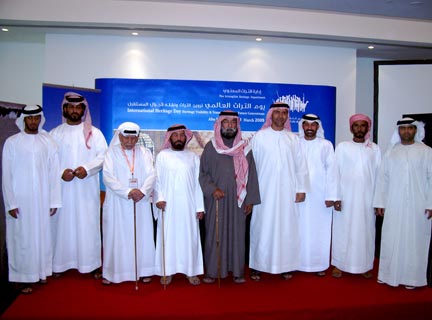
As part of the United Arab Emirate’s celebration of International Heritage Day, the Abu Dhabi Authority for Culture and Heritage (ADACH) organized a conference held on March 18-19, 2009, entitled “Heritage: From Preservation and Documentation to Promotion and Transmission to Future Generations.” The conference provided a fresh perspective by rethinking the oppositions of modernity/tradition and globalism/localism. A number of leading figures in the field of anthropology, folklore and comparative studies participated in the workshop by presenting papers and engaging in discussions and debates concerning various topics including folk tales, child folklore, falconry, symbolism, worldviews, the preservation of oral literature, and heritage promotion. Intangible heritage, more specifically oral literature, is an important component in understanding not only cultural specificities of societies but also enhancing intercultural relations. The following are some basic questions addressed in the workshop: Does the global culture depict the future as relying primarily on economic, technological, and multi-corporate forces that demand systemization, integration and uniformity? Does the traditional culture conceive the future as contingent essentially on the continuation of heritage, value-systems, religion, rituals, and social-kinship relationships? Continue reading Heritage in a Global Era

Towards Theocracy?


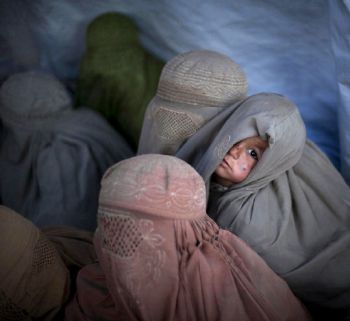
Women in burqas and children from the Bajaur and Mohmand agency areas wait to be registered at a refugee camp near Peshawar in January. Today a full-scale war is being fought in FATA, Swat and other “wild” areas of Pakistan, with thousands dying and hundreds of thousands of displaced people streaming into cities and towns. Photo by Emilio Morenatti/AP.


Towards Theocracy? State and society in Pakistan today.

by PERVEZ AMIRALI HOODBHOY, Frontline, March 14-27, 2009

FOR 20 years or more, a few of us in Pakistan have been desperately sending out SOS messages, warning of terrible times to come. Nevertheless, none anticipated how quickly and accurately our dire predictions would come true. It is a small matter that the flames of terrorism set Mumbai on fire and, more recently, destroyed Pakistan’s cricketing future. A much more important and brutal fight lies ahead as Pakistan, a nation of 175 million, struggles for its very survival. The implications for the future of South Asia are enormous. Continue reading Towards Theocracy?