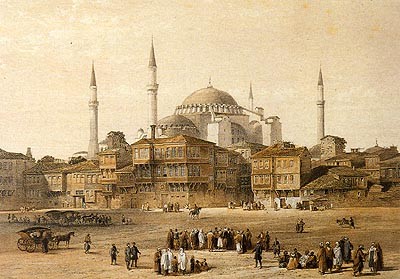
This engraving of the Hagia Sophia in Istanbul was made in 1852 by the Fossati brothers, Swiss architects who carried out a major restoration of the interior. Source: Aya Sofia Constantinople, London 1852, plate 25.
This engraving of the Hagia Sophia in Istanbul was made in 1852 by the Fossati brothers, Swiss architects who carried out a major restoration of the interior. Source: Aya Sofia Constantinople, London 1852, plate 25.
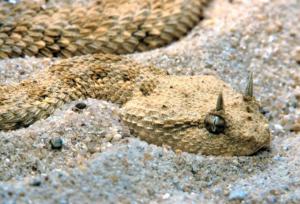
The Desert Horned Viper lurks in sand, only eyes, nostrils and horns above the surface.
Webshaykh’s Note: Cyberspace harbors a host of apocalyptic websites that relate current events in the Middle East to biblical prophecy. From the site Heaven Awaits it would seem that even Iraqi snakes are suspected of being terrorists… after all these snakes have horns. The following commentary stems from a news item in The Independent.
Snakes preparing the way for demons?
from Heaven Awaits website
The Desert Horned Viper lurks in sand, only eyes, nostrils and horns above the surface. Interesting ….that it has “horns.â€
The Bible predicts that the Euphrates River will dry up, and demons will come out. See the latest headlines from Iraq. Continue reading Even Iraqi Snakes are Terrorists
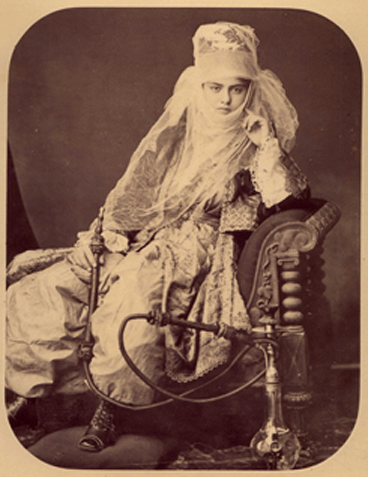
Hooked on Hookah, 1909
No, this is not another post about terrorism, nor the violent protests following the recent Iranian election, nor more reports of suicide bombs in hotel lobbies. The smoke from these tragedies is not about to disappear any time soon. The smoke I am talking about is from the tobacco industry. Newsweek (July 27 issue) provides a breakdown of smokers worldwide. While China leads all populations with almost 334 million smokers (32% of the overall population), they are actually lower percentage wise than Turkey with its 19 million users, accounting for 36% of the population. Other Middle Eastern countries surveyed fare a bit better than the United States (24% of the population) with 21% (28 million users) in Pakistan, 17.6% (9 million users) in Iran and only 14.2% (2.4 million users) in Iraq. I suspect even these numbers are under reported, given the ubiquity of cigarettes in the region. Health warnings or not, tobacco is still sultan in the Middle East and indeed the entire world. Continue reading Smoke Rises in the Middle East
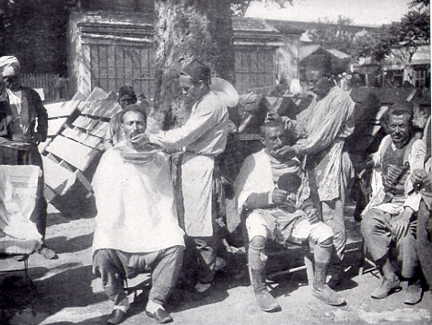
A Turkish Barber: Constantinople
From Mary Mills Patrick, “The Emancipation of Mohammedan Women,†published in the National Geographic Magazine, January 1909 (Volume XX, No. 1, pp. 61-62).
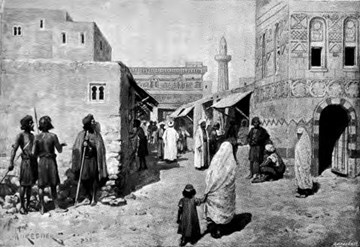
My fascination with flipbooks continues. For an interesting read about Yemen just over a century ago, check out the flipbook version of Walter Harris’s travel account. This has a number of illustrations, as illustrated above.
Among his exploits, Harris obtained an interview with the Sultan of Lahj at the time. Here is his description of the trial of smoking a hubble bubble:
The hubble-bubble was a sore trial. I was gradually, under the guidance of Said, learning to inhale it; but to have constantly to fill my lungs with the strong smoke was by no means a pleasant task to a novice like myself. Continue reading Flipping through Late 19th Century Yemen
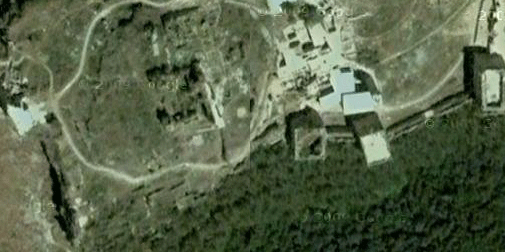
Figure 1: Google Earth map of the southern edge of the fortress area, with north to the top of the picture
[Note: This is the second in a series on a visit to the fortress castle known as Qa‘lat Salah-al-Din, near Lattakiya Syria. For the first, click here.]
Before continuing with my recollections of a tour of the castle fortress of Robert of Saone and Salah al-Din, it might be useful to take an aerial view. Thanks to Google Earth, you can get a bird’s eye view of the fortress, indicated in the above photo (Figure 1) only partially, but available with functions here.
In the Google Earth image above, the formal entrance today is through the tower in the bottom center of the picture, with the mosque and madrasa to the north. The mosque and madrasa were reconstructed with support by the Aga Khan Trust for Culture in 2000. This involved a careful rebuilding of the minaret, which had partially collapsed (Figure 2).
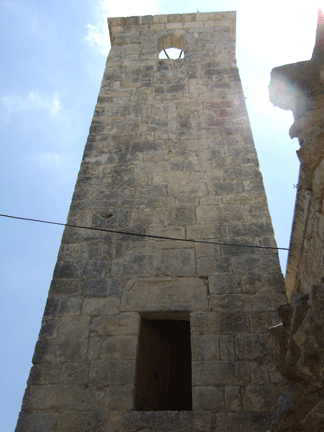
Figure 2: Reconstructed Ayyubid minaret
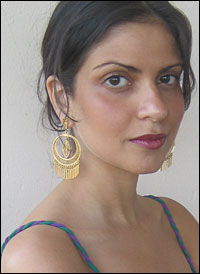
Melody Moezzi, writer, activist, author and attorney
by Melody Moezzi, NPR, July 10, 2009 ·
It has been reported to death since last month’s Iranian presidential election: Young Iranian women are at the forefront of the opposition movement, maybe even at the forefront of the next revolution. What hasn’t been effectively reported, however, is the fact that this isn’t some new, mysterious phenomenon. As an Iranian woman, I can assure you, we weren’t just drinking tea and doing our makeup in the lead-up to all of this.
Women have been fighting for equal rights in Iran for years. Even during the Islamic revolution, women helped lead the struggle against imperialism, for a free and independent nation. They also made huge strides in improving reproductive rights by getting the government to subsidize birth control (hence the acute drop in birthrates after the revolution), and they began entering the work force and universities in ever-increasing numbers. Continue reading This Ain’t Your Mama’s Revolution: Or Is It?
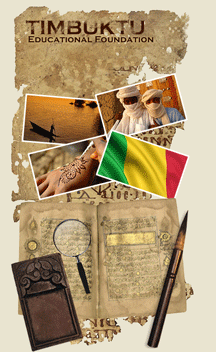
The following information comes from a website devoted to the preservation and digitalization of the many Arabic manuscripts archived in Mali. The main website is http://www.timbuktufoundation.org.
The Timbuktu manuscripts are a symbolic representation of the impact of the early schools and universities (XII-XVIth century) that existed in West Africa (Timbuktu-Gao-Djenné-Kano). However, the manuscripts that remain in Timbuktu are only part of the intellectual heritage of the region because other manuscripts can be found throughout West Africa.
Today, this entire African intellectual legacy is on the verge of being lost. The brittle condition of the manuscripts i.e. pages disintegrate easily like ashes. The termites, insects, weather, piracy of the manuscripts, and the selling of these treasures to tourists for food money pose a serious threat to the future of the manuscripts of Timbuktu. Continue reading Timbukto and Manuscripts too