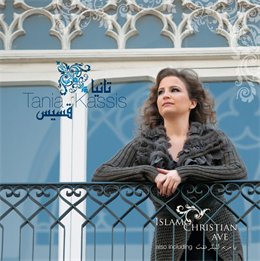
Even if the theology seems mixed, the spirit behind a recent music video by Tania Kassis promoting peace between Christians and Muslims is worth listening to. Check it out on Youtube.
Even if the theology seems mixed, the spirit behind a recent music video by Tania Kassis promoting peace between Christians and Muslims is worth listening to. Check it out on Youtube.
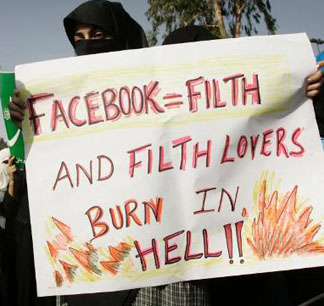
The news out of Pakistan teeters between bad and worse. First, there are the drones targeting Taliban leaders and often taking out civilians as long-range missile attacks tend to do. Then there is the lingering concern about the government’s stability, especially given the fact that Pakistan has nuclear weapons. Throw in the claim that as many as a quarter of the population is below the poverty line and it is hard to see a silver lining in all the doom and gloom statistics. But this is the Internet Era, so virtual reality is not out of touch with reality in contemporary Pakistan. Now it seems that virtual reality has become more important than the price of bread, perhaps in part because of the price of bread. In recent days the government of Pakistan has started blocking both Facebook and Google.
The problem with Facebook is with a group that launched an “Everybody Draw Muhammad Day,” a group that most professional political cartoonists see as “shock for shock’s sake.” Continue reading Facebook vs. the Holy Book
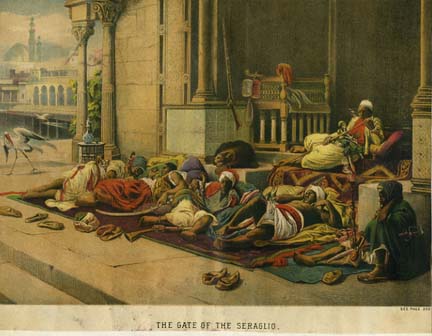
As noted in a previous post, I recently went through a late 19th century scrapbook that belonged to my great, great aunt. She had cut out pictures that interested or amused her. Several of these have Orientalist themes. Sometimes a picture is worth a thousand words; other times the picture says enough for itself. In this series, I leave the image to speak for itself. If you would like to comment on what you see or imagine, please do so in the comments section.
For #1, click here.
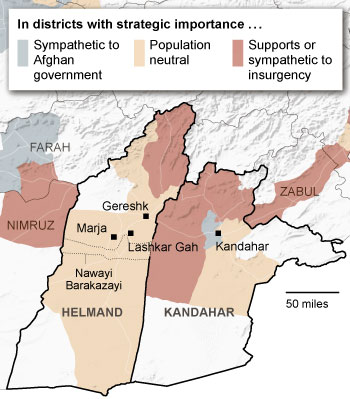
I usually reserve my comments for yellow journalism, but I am very pleased to draw your attention to an example of superb reporting in yesterday’s New York Times. The piece is entitled “Five Fronts in the War in Afghanistan” and looks at five areas of focus for the American military. Check it out.
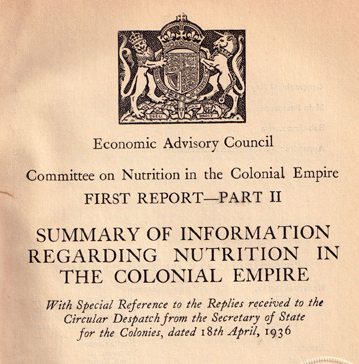
Say what you will about colonial empires, but at least they generate reports. I recently came across a British report to Parliament in 1939 entitled “Summary of Information Regarding Nutrition in the Colonial Empire.†Four pages are devoted to Aden Colony, which is said to have an area of 75 square miles, a population in 1931 of 45,992, a birthrate in 1937 of 32.07 per 1,000, an infant mortality rate in 1937 of 196.61 per 1,000, and a death rate in 1937 of 31.72 per 1,000. For part 1, click here. I attach more excerpts below:
3. Diet and Health (deficiency diseases and other relevant considerations). – On the whole, Aden can boast a high standard of public health. The greatest drawback is overcrowding. Large families occupy inadequate and ill-ventilated accommodations in which, as often as not, the domestic goat also claims a quota of space. In consequence of these conditions, respiratory and alimentary diseases are all too common. Diseases directly attributable to qualitative dietary deficiency are not a prominent feature of hospital returns in Aden and the more classical of the tropical diseases – beriberi, scurvy and pellagra – do not occur. Evidence of qualitative deficiency is found, however, in the incidence of rickets among children and of certain eye infections. An examination of 527 unselected children (consecutive cases treated in the Civil Hospital) showed that 33, 0r 6.2 per cent, were suffering from rickets. Continue reading Nutrition in Colonial Aden, #2

Photograph by Tom Hartwell
Islam and Feminism
by Hania Sholkamy, Contestations, Issue #1
Islam and feminism have had a troubled relationship. Over the last two decades, scholars and activists have questioned the western credentials of feminism and claimed justice as a purpose and possibility that can be captured via religious routes. Religion provides women with an ethical framework and a moral foundation that recognizes their rights as individuals and as a collective, albeit redefining equality in the process. The mosque movement in Egypt has empowered women to find dignity, companionship and comfort through piety and conformity to a religious ideal and challenge the less-than-perfect world around them. Moreover by engaging with religion, Muslim women are able to redefine the tenets that have endowed Islam with an unnecessary bias for men; one which feminist scholars of Islam are certain is antithetical to the spirit and philosophy of our religion.
Such serious engagements are, however, quite separate and distinct from the popularization of religion as a veneer that enables anyone to get away with anything! Continue reading Islam and Feminism

Camel Burger Newest “Healthy” Option on Dubai Menu
DUBAI (Reuters), February 2, 2010
A traditional Emirati restaurant in Dubai has added a new entree to its menu billed as a fat-free choice for carnivorous but health-conscious diners: the Camel Burger.
For 20 UAE dirhams ($5.45), the Local House restaurant offers a quarter pound camel burger, loaded with cheese and smothered in burger sauce, the Xpress weekly newspaper reported on Thursday.
Ali Ahmad Esmail, Local House assistant manager, told the paper that the burger patties were fat- and cholesterol-free. But he declined to say how the outlet tenderized the tough camel meat. Continue reading Where’s the Beef?
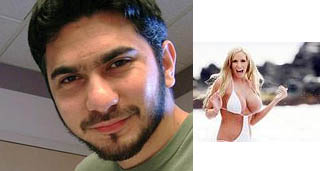
Photos juxtaposed on May 6 by the New York Post, tabloid journalism at its most blatant
Faisal Shahzad, not your typical terrorist: unless you think being a Pakistani Muslim makes you a typical terrorist. Anyone reading yesterday’s New York Post (Wednesday, May 5) and taking the blustered and bloated tabloid rhetoric seriously could easily make such an assumption. I do not, as a rule, read tabloids, although seeing what many others do read is a useful reality check from time to time. But on the train home from Manhattan yesterday there was a crumpled up newspaper under the train seat and at least 45 minutes to unwind. The cover was, for a change, not a pun. It might be called a revelation, as it read: “REVEALED: WHY HE DID IT. EXCLUSIVE. Revenge for US drone attacks on Taliban terrorists.” Six pages (and more) were devoted to the story, although there was little that I found exclusive in the shoddy news reporting and vengeful commentary by the tabloid’s stalking heads.
Let’s start with the cover and what the tabloid pictures for us. Continue reading Hate, Times Squared