Category Archives: Countries

Horn Talk in Lamu


Dhow near Lamu at sunset

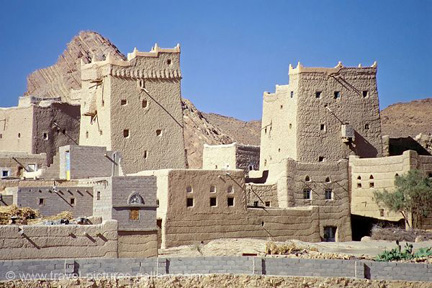
I am writing this from the exquisite Island of Lamu in Kenya. As someone who has spent over thirty years rambling around Yemen, across the Gulf of Aden, it is quite eye-opening to take a look up at the southern part of the Arabian Peninsula from an African perspective, especially a view that has been influenced in many ways by earlier generations of migrants from Yemen. It would be nice if I was here only because it is such a beautiful tourist spot with a rich cultural heritage, and indeed all this is nice, but I am actually attending an annual seminar on the Horn of Africa hosted by the Rift Valley Institute. The organizers recognized that cultural history and contemporary politics in the Horn can hardly be separated from Yemen, which lies so close across the Red Sea and Gulf of Aden. Hence I was invited to contribute on the links between Yemen and the Horn and also to discuss the relevance of Islam and the contentious issue of “Islamism.” Continue reading Horn Talk in Lamu

Iraqi Student Project


Iraqi students on road trip to Niagara Falls

[Editor’s Note: Below is information about an organization devoted to helping Iraqi students. Details are at http://iraqistudentproject.org/]

Iraq: A Cradle of Civilization in Ruins

Iraq’s people were among the first to learn irrigation, to invent the system of writing sounds that is key to our own alphabet, to create a legal system that is the foundation of modern law. During the early Islamic centuries Iraq was a center where ancient learning was translated and preserved, where poetry and music and medicine flourished. In modern times Iraqis have built a thriving system of higher education and have sent thousands of students to study all over the world, returning to teach and work in Iraq. Western institutions of higher learning benefit from the contributions to scholarship and human development that have taken place across the centuries in Iraq. Continue reading Iraqi Student Project

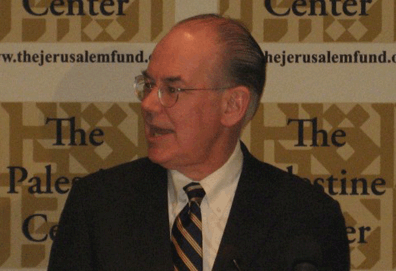
Mearsheimer at The Jerusalem Fund

Edited Transcript of Remarks by Professor John J. Mearsheimer
Transcript No. 327 (29 April 2010)

To view the video of this briefing online, go to
http://www.palestinecenter.org

The Palestine Center
Washington, D.C.
29 April 2010

Professor John Mearsheimer:

It is a great honor to be here at the Palestine Center to give the Sharabi Memorial Lecture. I would like to thank Yousef Munayyer, the executive director of the Jerusalem Fund, for inviting me, and all of you for coming out to hear me speak this afternoon.

My topic is the future of Palestine, and by that I mean the future of the land between the Jordan River and the Mediterranean Sea, or what was long ago called Mandatory Palestine. As you all know, that land is now broken into two parts: Israel proper or what is sometime called “Green Line” Israel and the Occupied Territories, which include the West Bank and Gaza. In essence, my talk is about the future relationship between Israel and the Occupied Territories.

Of course, I am not just talking about the fate of those lands; I am also talking about the future of the people who live there. I am talking about the future of the Jews and the Palestinians who are Israeli citizens, as well as the Palestinians who live in the Occupied Territories.

The story I will tell is straightforward. Contrary to the wishes of the Obama administration and most Americans – to include many American Jews – Israel is not going to allow the Palestinians to have a viable state of their own in Gaza and the West Bank. Regrettably, the two-state solution is now a fantasy. Instead, those territories will be incorporated into a “Greater Israel,” which will be an apartheid state bearing a marked resemblance to white-ruled South Africa. Nevertheless, a Jewish apartheid state is not politically viable over the long term. In the end, it will become a democratic bi-national state, whose politics will be dominated by its Palestinian citizens. In other words, it will cease being a Jewish state, which will mean the end of the Zionist dream. Continue reading Mearsheimer at The Jerusalem Fund

Anwar Al-Awlaki: The Jim Jones of Islam

by Kamran Pasha, The Huffington Post, May 23, 2010

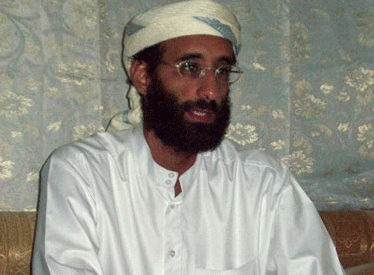
As a Muslim and an American, let me say this loudly and clearly — Anwar al-Awlaki is a servant of evil and a traitor both to Islam and to America. He is intent on misleading the world by spreading the lie that Islam permits the killing of civilians. It does not.

Prophet Muhammad forbade the killing of non-combatants and reacted with horror when he heard of civilian deaths on the battlefield. In order to expound his own political agenda, Al-Awlaki is defaming the Prophet and the global Muslim community, which rejects terrorism. And in the process, he is revealing himself to be a modern Jim Jones — a narcissist creating a death cult.

In 1978, Jim Jones led 900 of his devoted followers to mass suicide by forcing them to drink cyanide mixed in a fruit beverage. The term “drinking the Kool-Aid” has since become synonymous with people who blindly follow their leaders to their doom. And it is clear that al-Awlaki’s followers are very much drinking his brand of Kool-Aid. Indeed, the alleged Fort Hood shooter, Major Nidal Malik Hasan, was apparently a follower of al-Awlaki before he turned on his fellow soldiers in an orgy of murder. Like Jim Jones, al-Awlaki has remarkable charisma and uses it to lead his followers down a very dark path.

I say all of this with great grief. Al-Awlaki was once a highly regarded Muslim scholar who taught a message of peace and brotherhood. But his story is like that of the archetypal villain of the movie Star Wars — Anakin Skywalker, a defender of justice, who devolves into Darth Vader, a monster who cares only for his own twisted quest for power. Continue reading Anwar Al-Awlaki: The Jim Jones of Islam

Facebook vs. the Holy Book

The news out of Pakistan teeters between bad and worse. First, there are the drones targeting Taliban leaders and often taking out civilians as long-range missile attacks tend to do. Then there is the lingering concern about the government’s stability, especially given the fact that Pakistan has nuclear weapons. Throw in the claim that as many as a quarter of the population is below the poverty line and it is hard to see a silver lining in all the doom and gloom statistics. But this is the Internet Era, so virtual reality is not out of touch with reality in contemporary Pakistan. Now it seems that virtual reality has become more important than the price of bread, perhaps in part because of the price of bread. In recent days the government of Pakistan has started blocking both Facebook and Google.

The problem with Facebook is with a group that launched an “Everybody Draw Muhammad Day,” a group that most professional political cartoonists see as “shock for shock’s sake.” Continue reading Facebook vs. the Holy Book