Category Archives: Countries

Tuning into Tunisia

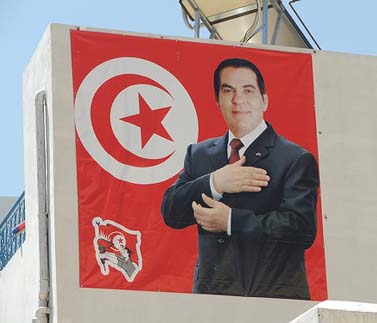
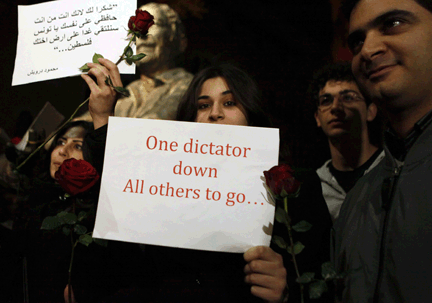
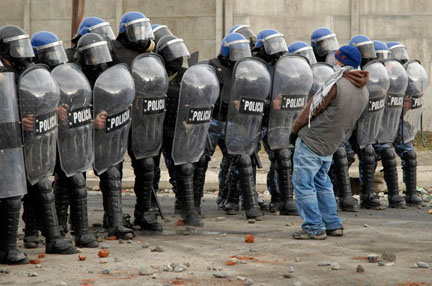
The recent revolution in Tunisia has exploded across the blogosphere, with pundits talking about a popular tsunami that may promote democracy out of the ashes of a lifelong dictatorship. In yesterday’s New York Times, Roger Cohen provided an optimistic view from his journalistic perch in Tunis: “These are heady days in the Arab world’s fragile democratic bridgehead.” Cohen, and others, are wondering aloud if Tunisia can become the new Turkey, a more or less secular democracy in which the “Islamists” are moderate members of a political mosaic. If so, then he warns that the “tired refrain of all the Arab despots that they are the only bulwark against the jihadists will be seen for the self-serving lie it has become.”

Perhaps, but one does not have to go far back into the regime of Saddam Hussein to realize that his Ba’athi party did not tolerate religiously motivated sectarian violence. Brutal as it was, his regime was a bulwark (if such a metaphor really makes sense politically) against the continual round in “liberated” Iraq of sunni killing shi’a and vice versa. But then Saddam was not brought down by a popular street uprising. Continue reading Tuning into Tunisia

Iraqi Voices Project


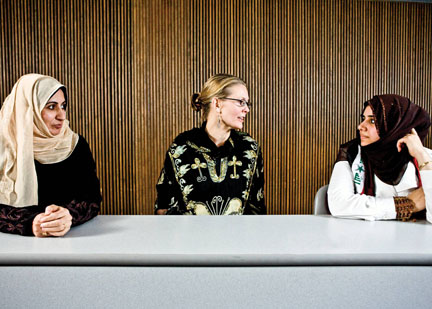
Photo of Khawla Hadi, Kimberly Wedeven Segall and Marwa al-Mtowaq. Iraqi Voices Panel, March 2009; photo by Luke Rutan, Seattle Pacific University.

Iraqi Voices Project: Poetry Workshops, Alternative History, and Community Awareness

by Kimberly Wedeven Segall

The dead . . .
come in shifts . . .
in our dreams . . .
over the houses we left behind.

–Dunya Mikhail, The War Works Hard

How can universities work alongside communities to build understanding of the Iraqi refugee crisis? Historically, Iraq as a state was established in 1920, centered on Baghdad, and controlled first by the British and then by Iraqi governments. As the force of the state made demands upon the people, it caused its residents “to rethink existing political identities, values, and interests,” to engage in “strategies of cooperation, subversion, and resistance,” [1] as Charles Tripp argues, and to construct narratives “to understand and to justify their political engagement.” [2]

How do memories challenge the narratives the West has presented on Iraq? How does family memory record and preserve history, after so much history has been destroyed in the post-occupation loss of valuable historical records and objects from Iraq’s museums?

The Iraqi Voices Project, 2008-2009, was designed as a workshop forum. Reading and responding to Iraqi poetry, the workshop created a forum for telling stories of displacement in Iraq and building awareness of the challenges in relocating in Seattle, Washington. Continue reading Iraqi Voices Project

An Adeni Artist

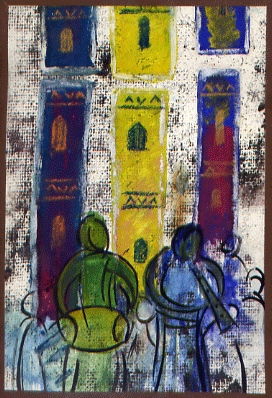
One of my most admired paintings by a Yemeni artist is the painting shown above by the Adeni artist Abdulla al-Ameen. I purchased the painting a decade ago at an exhibition sponsored by Yemen’s Ministry of Culture. Al-Ameen received an M.F.A. in 1984 from the Fine Arts Academy in Moscow. In addition to illustrations in books, he has designed stamps for the Yemeni government. In 1987 he received Kuwait’s “Golden Dhow Medal” for his artistic achievements.

El-Aswad on Bahraini Shi’a


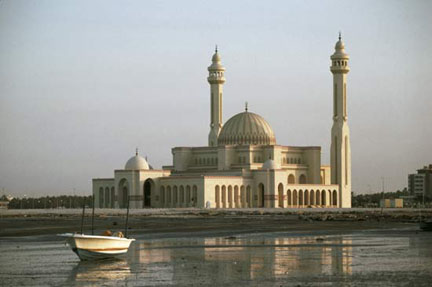
Grand Mosque in Bahrain

Tabsir contributor El-Sayed el-Aswad recently published an article entitled “The Perceptibility of the Invisible Cosmology: Religious Rituals and Embodied Spirituality among the Bahraini Shi’a” in Anthropology of the Middle East, Volume 5, Number 2, Winter 2010 , pp. 59-76. The article is available to subscribers of the journal or for purchase. The abstract is cited here:

This article analyses the relationship between the seen and the unseen in the cosmology and practices of Bahraini Shi’a. Rather than contrasting the visible and the invisible, the study delineates the hierarchical relations between them, within a whole or cosmology, as reflected in various discursive and non-discursive actions that are supported by the religious beliefs of Bahraini Shi’a. Issues of the Hidden Imam, concealment, dissimulation and other unseen dimensions of the cosmos are discussed. The article finds that the Shi’a construct the invisible in their social world by using visible ways of creatively enacting their hidden thoughts and beliefs, as represented in their religious discourses, rituals and body symbolism. Their belief in a divine higher power provides a source of emotional, spiritual and socio-political empowerment.

Ottomaniacs


Süleyman the magnificently polemical

ISTANBUL – Hürriyet Daily News, Sunday, January 9, 2011

A new TV soap has generated a massive reaction from conservative circles in Turkey, with claims that the Ottoman dynasty is portrayed in the show as both “indecent” and “hedonistic.”

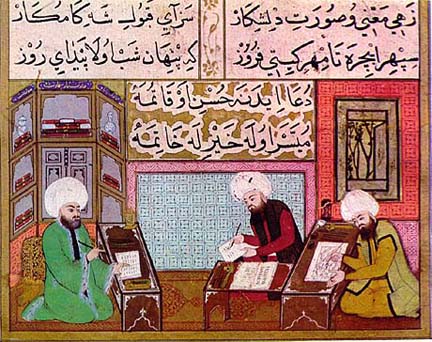
The soap, titled “Muhteşem Yüzyıl” (The Magnificent Century), is based on events that occurred during the reign of Süleyman I, also known as Suleyman the Magnificent.

Surviving heirs of the Ottoman dynasty and members of the ruling Justice and Development Party, or AKP, are among critics of the show.

Reactions started to flow in following the broadcast of the trailer, even before the first episode was aired on Jan. 5.

The Supreme Board of Radio and Television, or RTÜK, is reported to have received thousands of complaints, most of which focus on the Sultan’s alcohol consumption and activities in the harem with his concubines. Continue reading Ottomaniacs