Category Archives: Countries

THE STORY OF CRUEL PSAMTEK


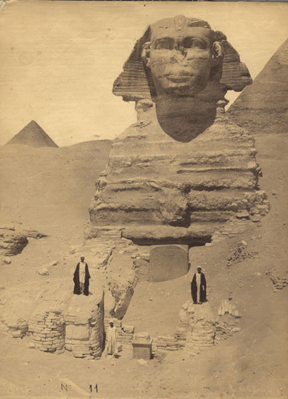
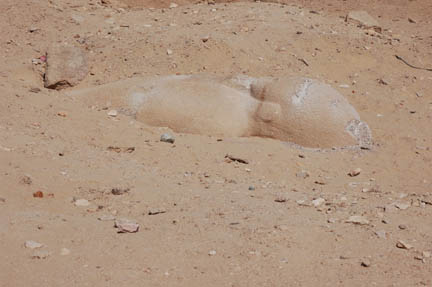
The Great Sphinx, G. Lékégian & Co.

THE STORY OF CRUEL PSAMTEK

HERE is cruel Psamtek, see.
Such a wicked boy was he!
Chased the ibis round about,
Plucked its longest feathers out,
Stamped upon the sacred scarab
Like an unbelieving Arab,
Put the dog and cat to pain,
Making them to howl again.
Only think what he would do –
Tease the awful Apis too
Basking by the sacred Nile
Lay the trusting crocodile ;
Cruel Psamtek crept around him,
Laughed to think how he had found him,
With his pincers seized his tail,
Made the holy one to wail ;
Till a priest of Isis came,
Called the wicked boy by name,
Shut him in a pyramid,
Where his punishment was hid. Continue reading THE STORY OF CRUEL PSAMTEK

The Owl’s Cry


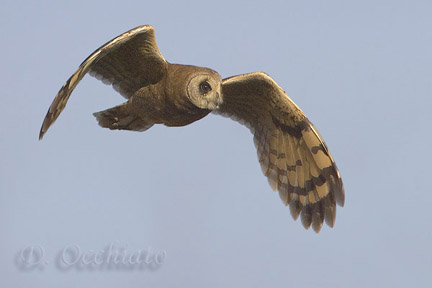
Marsh Owl, Morocco, Merja Zerga February 12th, 2006 © Daniele Occhiato

by Anoaur Majid, Tingis Redux, March 1, 2011

Now that the fever for freedom has seized the minds of Arabs and others across the world, the question of what exactly needs to be done is sure to be the next preoccupation. The list of demands is obvious across the board—end of corruption and abuse of power, free quality education and health care for all, the right to work (which is, by the way, a human right enshrined in the United Nations’ Universal Declaration of Human Rights), a social order based on respect and dignity, and several other rights that may be specific to one community but not to others.

For example, the Moroccan magazine TelQuel recommends a secular constitution for Morocco that doesn’t make Islam the official religion of the state; the absolute end of polygamy and full rights for women; the ability to discuss the royal and military budgets; better wages, unemployment benefits and social security coverage; freedom of religion; freedom of the press; prison reform and the formal abolition of the death penalty; making the darija Morocco’s national language (something I called for years ago); and so on. TelQuel lists 50 items and the reader, I am sure, could add a whole lot more.

The thing to remember, however, is that meaningful sustained reform is going to take time. Some of these objectives could be implemented in short order, others may take at least a decade, and a number of projects could easily involve the work of generations. I like to tell people that Morocco will probably be the place of my dreams after I have left this world. I know many opportunities were wasted since 1956 (the year Morocco got its independence), but I also know that no one can bend the arc of time to suit a political agenda. Most change doesn’t happen overnight, and progress depends on the seeds we plant today. In any case, now that the people’s genie is out in the streets, one thing’s for sure: There is no going back to the status quo ante. Continue reading The Owl’s Cry

A Geography Lesson from 1879: #4: Arabia and Turkey


In a previous post I continued a thread from an 1879 school geography text. At the time much of the Arab World was under the control, nominal at times, of the Ottoman Empire. This text divided the Ottoman holdings into those in Asia, discussed below, and those in Europe, to be given in a separate post.

1. Arabia is a great plateau, abounding in deserts, and possessing but few fertile districts, except along the coast. Its area is about 1,000,000 square miles.
2. The Climate is the dryest in the world, rain seldom falling anywhere, and the heat being intense, especially in the lowlands and deserts.
Arabia has been divided into three parts: – ARABIA FELIX, happy or fertile; ARABIA PETRAE, stony; and ARABIA DESERTA, desert. The fist of these divisions borders on the Persian Gulf, the Indian Ocean, and the Red Sea; the second lies on the northeastern shore of the Red Sea; and the third includes all of the central portion of the country. The cultivated tracts are generally near the mountains, from which rivers descend in the rainy season and thus enrich the soil. Numerous oases re found in the desert regions. Continue reading A Geography Lesson from 1879: #4: Arabia and Turkey

Vote for Sanaa Water


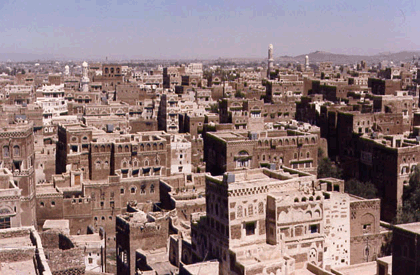
There is currently a contest for interesting sustainable living concepts in the Philips Livable Cities Award. One of these is about collecting rainwater in the Yemeni capital from rooftops. There is a short video on this that can be accessed here. You need to scroll down to the option called “Rainwater Aggregation.” Voting continues until March 24, 2011. If you vote, you might win a trip to the handing out of the award in The Netherlands.

Gaddafi: odd and daffy to the end


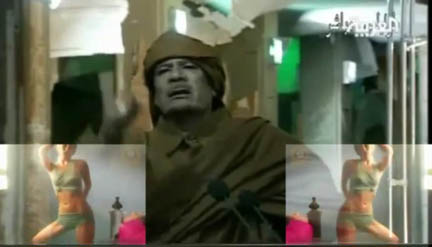
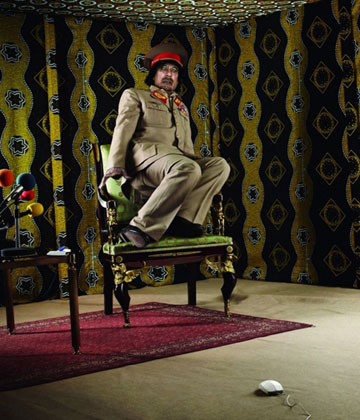
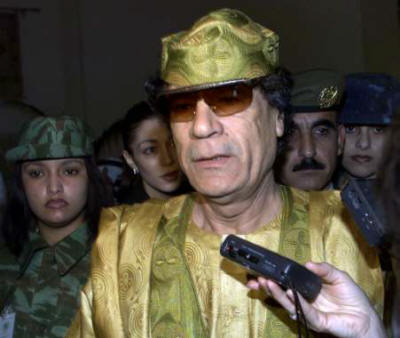
After the outing of two long-standing autocrats in Tunisia and Egypt, the domino theory pizza delivery is now at the shores of Tripoli. What can one say about Colonel Muammar Gaddafi that does not sound like a bad Hollywood movie? He is, of course, also a dear friend of Italy’s clown prince Berlusconi. If Gaddafi did not exist in his Libyan tent, guarded by a bevy of young ladies, Monty Python would have invented him. Here is a guy who came to power at age 27 in the year that Led Zeppelin dominated the pop chart with ‘Whole Lotta Love.” That was over four decades ago. It appears that in Libya today there is not a whole lotta love for this odd and daffy caricature.

Gaddafi is too easy to satirize. Blaming Al-Qaeda for putting drugs in the coffee of young Libyans is about as bizarre a claim as one can imagine. One of the few admirable qualities may be that Gaddafi never promoted himself to General; although he hardly needed to do so given his absolute power. His ruthless response to the recent peaceful protests follows on his long history of brutality against Libyans who dare to oppose him. At present he is clinging on to power in Tripoli with mercenaries and a few surviving “loyal” supporters. Those who stand to lose may stay “loyal” for the moment, but as his power grip nears the end I suspect he will have few if any willing to follow him into exile (or die fighting). Thus far perhaps as many as 2,000 Libyans have been killed with indiscriminate firing in the squares and side streets. The scene has become far uglier than anything that transpired in either Tunisia or Egypt. Fortunately, it appears that a large part of the army has deserted Gaddafi. Continue reading Gaddafi: odd and daffy to the end

On Egypt and Islam

Uprising in Egypt: Islam and the compulsion of the political
by Jeremy F. Walton, The Immanent Frame (SSRC), February 23, 2011

Invariably, contemporary discussions of Islam seem to begin and end with the relationship between Islam and politics—both anti-Islamic pundits and critics of Islamophobia vigorously assert that the mechanics and kinetics of this relationship are central to the evaluation of Islam today. A nexus of paranoia, fear, ignorance, and old-fashioned bigotry typically animates arguments on one side, while those on the other tend toward the polemics and apologetics of subaltern critique. Both camps, however, assume that discussions of Islam necessarily traverse and trouble the domain of the political. This exclusive emphasis on the political marks the difference between Islamphobia à la mode and the older Orientalist discourses of Edward Said’s interrogation: unlike today’s Islamophobia, classical Orientalism constituted a total romance of the East that subsumed political, aesthetic, religious, and cultural forms. In contrast, contemporary Euro-American public debate about Islam evinces what I call the compulsion of the political. While this compulsion achieved hegemony rapidly in the wake of September 11, 2001, it stretches back at least to the seventies and eighties, with high water marks during the Iranian Revolution and the Rushdie Affair.

Much commentary on the recent events in Tahrir Square, throughout Egypt, and across the Middle East has inevitably recapitulated the compulsion of the political in relation to Islam. Despite the deeply ambiguous relationship between the Egyptian pro-democracy demonstrations and politically-oriented Islamic organizations such as the Muslim Brotherhood, pundits from across the political spectrum have seized on the relationship between Islam and politics as the crux of the matter. Arguments have crystallized around two poles, dystopian and utopian, respectively: either the dismantling of Hosni Mubarak’s autocracy will yield the nightmare of a theocracy led by the Muslim Brotherhood (as Ayaan Hirsi Ali fulminated in the New York Times on February 3), or the post-Mubarak era will witness the triumph of pluralist, liberal democracy, with the Muslim Brotherhood as one prominent voice among a multitude (as Tariq Ramadan asserted in a recent interview on al-Jazeera). Continue reading On Egypt and Islam