Category Archives: Countries

Yemen after Ali Abdullah Salih


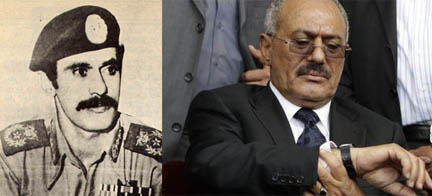
Ali Abdullah Salih, from 1978 to 2011

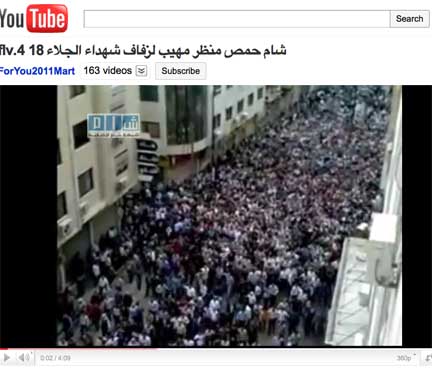
From the latest news reports in the region it appears that President Ali Abdullah Salih has agreed to step down within a month in an agreement brokered by the GCC. The plan calls for Salih to hand over power to his Vice President one month after the opposition signs on to the agreement, which they have reportedly done. Although, as I write this Salih’s decision to step down has not been broadcast in the state-run Yemeni newspaper al-Thawra or on his personal website. Two months later a national election is to be held. A possible sticking point is the immunity that this agreement provides President Salih and his family. The U.S. administration has already blessed the plan and it seems likely that it will be finally resolve Salih’s departure.

The protests against Salih have left the country divided and the economy, weak as it was to begin with, has basically ground to a halt. The poorest country in the Middle East is even poorer after three months of protests across the country. So what happens now?

The removal of President Salih will not solve the range of economic, ecological and social problems facing Yemen. Unemployment will continue, as the oil production nears an end; water tables will draw down even more drastically; imported Salafi conservatism will divide the population even more. In a sense Salih has been out of power for the past three months, simply hanging on as the protests gained more and more momentum. Unable, and apparently unwilling, to stop the street protests militarily (as Qaddafi is desperately trying), Salih deftly tried to garner his own supporters as a counter to those who wanted him to leave. But the hand writing was on the wall all along, given the wide coalition of groups who had grievances against his regime. The opposition seemingly united in its primary goal of removing Salih, but there is no single leading opposition party or leader waiting in the wings. Continue reading Yemen after Ali Abdullah Salih

History repeats itself: The case of Egypt


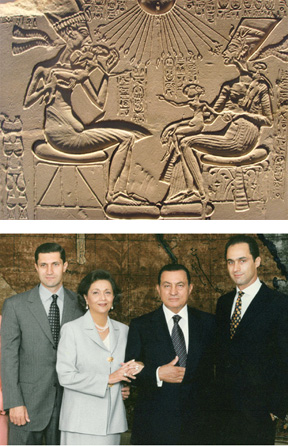
Ruling families not fondly remembered in Egypt

The history of divine kingship and dictatorial hubris has a consistent theme: elevating a ruler’s name above all others and stamping that name on just about everything in sight. In Saddam Hussein’s Iraq his image was everywhere, at times in the heroic proportions of a Babylonian king; visit Syria and you will find Assad and son lionized in every nook and cranny; Timur is resurrected in Uzbekistan. Then there is Hosni Mubarak, whose fall from power is now accompanied by an erasure of his public visage. As reported in Al Jazeera:

An Egyptian court has ordered the names of Hosni Mubarak, the country’s former president, and his wife Suzanne, to be removed from all public places, including streets and parks. Judge Mohammad Hassan Omar ordered on Thursday that Mubarak’s name and picture be removed from sport fields, streets, schools, libraries and other public establishments, according to the state-run al-Ahram newspaper. Currently, various public spaces, including squares, streets and about 500 public schools bear the names of either Hosni, Suzanne or Gamal Mubarak.

Continue reading History repeats itself: The case of Egypt

Viewing the Shanamah in Manhattan


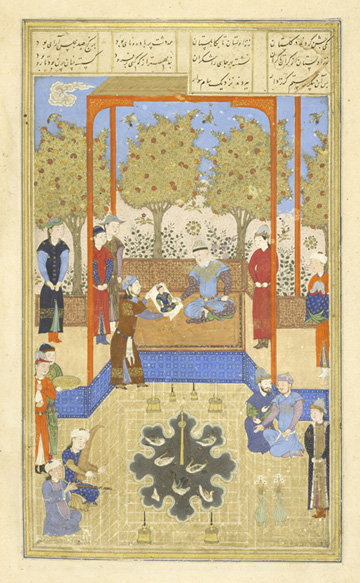
Portrait of the infant Rustam shown to Sam (folio 30b)

On Thursday night I had the privilege of attending a reading of portions of the Shanamah by Iraj Anvar.
The reading was held as part of the superb series called “Illuminated Verses: Poetries of the Islamic World,” which is a series of readings and events that began in March with a lecture by Bruce Lawrence on the Quran and continues through May 7. This is an extraordinary opportunity to hear and learn more about the variety of poetic production in Islamic cultures worldwide.

While the reading of the Shanamah is over, you can still see the exhibit of the mid 15th century Muhammad Juki’s manuscript of the Shanamah at the Asia Society through May 1.

The Legacy of Donny George Youkhanna


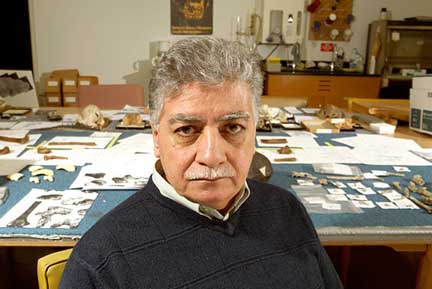
A memorial conference entitled “Cultural Heritage Now – The Legacy of Donny George Youkhanna” will be held Wednesday, April 27, 2011 from 4:30 – 6:30 at the Rutgers Student Center in New Brunswick , New Jersey. Details below.

Cultural Heritage Now:

Iraq and Beyond
The Legacy of Donny George Youkhanna

Wednesday, April 27, 2011
4:30-6:30

Rutgers Student Center
Rutgers, The State University of New Jersey
126 College Ave
New Brunswick, NJ 08901

The event is open to the public, but pre-registration is required. Those wishing to contribute remarks must indicate this at the time of registration.

Presentations by:

John Russell
“Preserving Iraq’s Past”

John Malcolm Russell teaches the art and archaeology of the ancient Middle East and Egypt at the Massachusetts College of Art and Design in Boston, Massachusetts. He is the author of numerous articles and four books on ancient Assyria, one of which, The Final Sack of Nineveh (Yale), investigates the destruction of Sennacherib’s palace in Iraq by looters in the 1990’ s. Professor Russell has conducted archaeological excavations at Nineveh, Iraq, and Tell Ahmar, Syria. In 2003-2004 he served with the Coalition Provisional Authority as an advisor to the Iraqi Ministry of Culture in Baghdad, Iraq, where he focused on renovating the Iraq Museum and protecting archaeological sites. Continue reading The Legacy of Donny George Youkhanna

Yemen beyond the protests


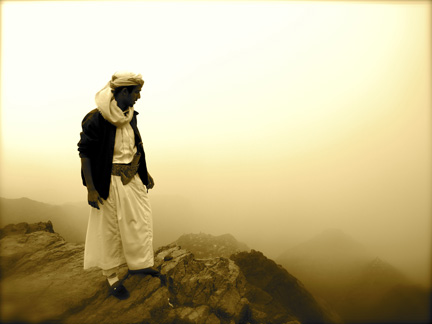
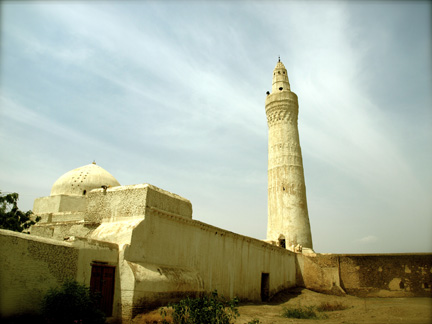
The recent protests that have shaken the Middle East from North Africa to Yemen so dominate the news these past couple of months that it is almost as though we see nothing else. Whether pictures are worth a thousand and one words, or even more, here are some superb photographs of Yemen by Raiman al-Hamdani, taken with his permission from his Flickr account.


One of the important mosques in the coastal town of Zabid

If Salih read the Qur’an


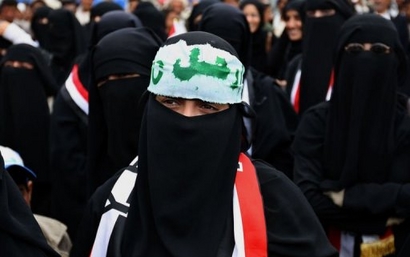
The rhetorical standoff in Yemen continues with only a limited amount of violence even while hundreds of thousands of people have been protesting, mostly against the decades-old regime of President Ali Abdullah Salih. Yesterday the New York Times commented that the protests in Yemen remain remarkably peaceful, with isolated cases of individual violence (mainly by those who support Salih) but no major clashes with the army or between tribal groups. President Salih holds a weekly rally of his supporters (some of whom have clearly been paid to come to the rally, as reporters note) as a counterpart to the far greater numbers protesting all over the country against his continued rule. He is holding on to power with a very thin string; indeed it is hardly even ‘power” any more given that much of the country is basically ignoring him and he is diplomatically isolated.

The only thing more incongruous than dictators (a military man installed in a coup after an assassination of the previous leader and who has remained in power for over three decades is at least an honorary dictator) talking about democracy is when dictators start talking about religion. Unlike Yemen’s Zaydi imams, whose millennium long rule was abolished in 1962, none of the military leaders of Yemen are noted as Quranic scholars; some could barely read and write when they came into office. Continue reading If Salih read the Qur’an

Pornographic War Gazing: Why We Don’t Look Away


[This commentary was origially published in Religion Dispatches, April 12, 2011.]

When it comes to grabbing attention bad news is the best news. Whether selling war or natural disaster or a fugitive serial killer, the competitive edge goes to the media outlet that can scoop the most violence, brutality or sheer inhumanity in an event.

The most recent news cycle of political protests started out on a hopeful note. As the spirit of frustrated youthful protest spread at tweet speed to dictatorial regimes and elitist monarchies, journalists flocked to North Africa and the modern day Holy Land. Live coverage has shifted from country to country, depending in large part on where the most violence is erupting. Yet, as much as the story may be promoted as one of hope and liberation, the hook is all about devastation. Continue reading Pornographic War Gazing: Why We Don’t Look Away