Category Archives: Countries

Picturing Aden a Century Ago


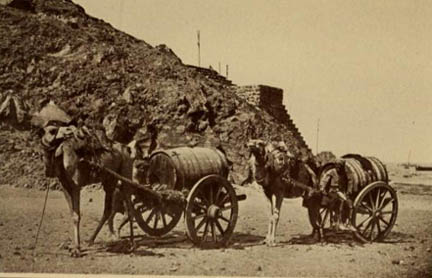
“Water carts used at Aden to bring water from the wells to the city.”

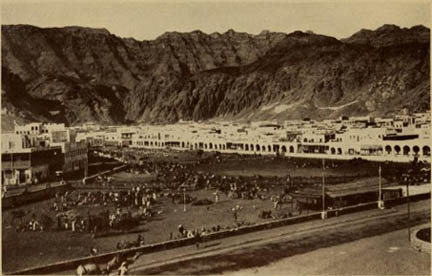
In a previous post I published a chapter from the 1911 book Zigzag Journeys in the Camel Country by Samuel and Amy Zwemer. The book has several photographs of Aden and the surrounding area, which are well worth a look a century later.


“The Big Camel market in the crater at Aden where we preached our first sermon in 1891.”

Continue reading Picturing Aden a Century Ago

Interview with Abu Bakr al-Qirbi


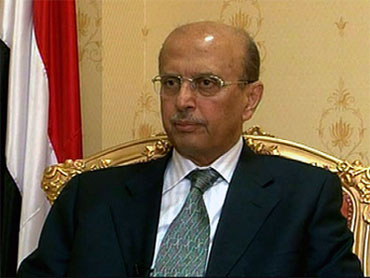
Asharq Al-Awsat talks to Yemeni Foreign Minister Abu-Bakr al-Qirbi

By Mohammed Jumaih, Asharq Al-Awsat, July 31, 2011

London, Asharq Al-Awsat-
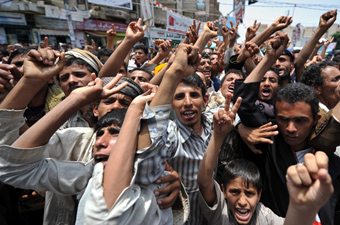
During the visit by Yemeni Foreign Minister Abu-Bakr al-Qirbi to the British capital, London, Asharq Al-Awsat met him and interviewed him on the latest developments on the Yemeni scene. Al-Qirbi spoke about the regional and international roles in helping to resolve the Yemeni crisis. Al-Qirbi spoke about the efforts of the vice president and his discussions with the UN secretary general’s envoy in this regard. Al-Qirbi pointed out that the Gulf Initiative is the appropriate grounding for the solution while taking into consideration the views of the United Nations. Al-Qirbi stressed that if matters proceed in the right direction then they are heading toward announcing early elections in the country. Al-Qirbi spoke about the Al-Qaeda file in Yemen and other issues during this meeting.

Following is the text of the interview:

[Asharq Al-Awsat] First, what is the nature of your visit to the United Kingdom?

[Al-Qirbi] As you know, many British, German and American envoys visited us in Yemen and there is communication with European and Gulf decision-makers. We in Yemen prefer that meetings be held at the highest levels with the officials in these countries in order to explain the picture in a more detailed way and to discuss views that are close to reality regarding the Yemeni issue.

As a journalist you know that what is written about Yemen has been exaggerated to the point an expert analyst finds it difficult to follow, let alone a minister who is busy with other matters. Above all, the decision-makers in these countries are receiving a kind of simplified synopsis that does not reflect the picture fully and accurately. This is why we in Yemen want to hold such meetings with brotherly and friendly officials so we can portray a clear picture of the true situation in Yemen in a balanced way despite what is being said in the media which often lack accuracy and objectivity.

[Asharq Al-Awsat] What is the nature of the European and American role toward what is witnessed on the Yemeni scene today in terms of popular movements, which the opposition calls a revolution and you call a political crisis? Continue reading Interview with Abu Bakr al-Qirbi

Tabsir Redux: Islam, A Diplomatic View

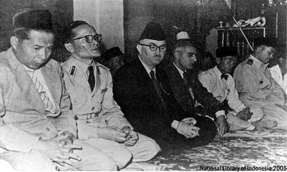
Dr. Mohammad Fadhil Jamali (third from left) at the Grand Mosque, Bandung.

There are many ways of describing Islam. One of the more profound personal testaments is a letter from Muhammad Fadhl Jamali, Prime Minister of the Kingdom of Iraq in the 1950s. As a top government official, he was imprisoned after the July 1958 Revolution in Baghdad and for a year and a half lay under a death sentence. While in prison he wrote the following letter (dated 25 March 1961) to his son, ‘Abbas, at the University of Beirut. The translation from Arabic is by Dr. Jamali.

Dear ‘Abbas,
After presenting you my good greetings, I pray for your safety, success and guidance…. Continue reading Tabsir Redux: Islam, A Diplomatic View

Brother, can you spare a revolution


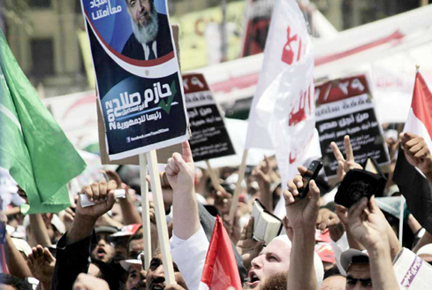
An Egyptian shouts slogans during a protest of Islamist groups at Tahrir Square, the focal point of Egyptian uprising, in Cairo, Egypt, Friday, July 29. (AP Photo/Amr Nabil)

Egypt rally not harbinger of Islamic state: analysts

By Jailan Zayan / Agence France-Presse, thedailynewsegypt.com July 31, 2011

CAIRO: A massive show of force by Islamist groups at a rally in the Egyptian capital on Friday may have showcased their organizational skills, but their actual political clout remains limited, analysts say.

Hundreds of thousands of Islamists from across the country packed Cairo’s Tahrir Square to defend what they called “Egypt’s Islamic identity” in the country’s largest protest since a revolt ousted president Hosni Mubarak in February.

But while the protest may have been visually dramatic, divisions within the Islamist groups and their lack of nationwide support are bound to restrain their strength, analysts said.

Chants calling for Egypt to “implement the law of God” rang across Tahrir in an impressive display of religious banners and slogans, dotted with Saudi flags.

Hardline Salafis (fundamentalist Muslims) in coordination with the Muslim Brotherhood have been organizing the rally for weeks, sparking fears of clashes with secular protesters who have been camped out in the square since July 8.

The sheer size of the protest appeared to have angered, and in some cases intimidated, secular activists.

But analysts say that while Friday’s rally showcased the Islamist groups’ organizational skills and their ability to mobilize members efficiently, its political impact remains limited. Continue reading Brother, can you spare a revolution

Old World Travel 90 years on: #4 Cheops’ Anthill


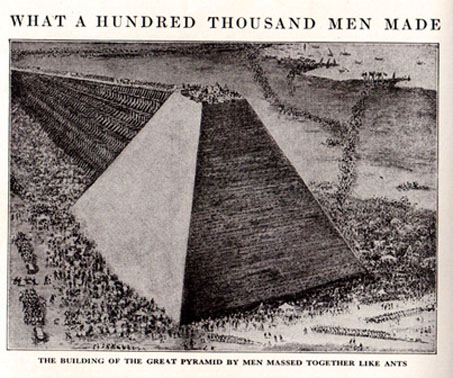
Exactly 90 years ago a four-volume set of encyclopedia-like human interest books was published as The Human Interest Library: Visualized Knowledge by Midland Press in Chicago. In a previous post I commented on its thoroughly “Orientalist” flavor. The section on Egypt covers mainly the archaeological history with only a few brief comments on the then contemporary state of Egypt. One of the great mysteries over the years has been an explanation for how the massive pyramids were built. Here is a novel idea, if a picture is worth a thousand scholarly words: ants.

Digitalizing Yemeni Manuscripts


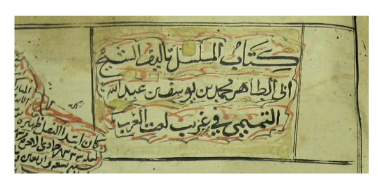
Detail from the title page of MS Glaser 20, Staatsbibliothek zu Berlin

Given the current unrest and economic turmoil in Yemen, little thought is being given to Yemen’s vast cultural heritage. But there is hope, at least for preservation of manuscripts. The German Archaeological Institute in Sanaa has recently released a report in English and Arabic entitled Preserving Yemens’ Cultural Heritage: The Yemen Manuscript Digitization Project and written by Sabine Schmidtke and Jan Thiele. This is available for reading online or as a pdf download.

Tabsir Redux: A Taylor Made Bath in Damascus

The American man of letters Bayard Taylor (1825-1878) was one of many travelers to the Near East of his time. His tour in 1853 resulted in a travel account above the common lot of Holy Land roller overs. Of particular interest is his frank account of a Turkish bath in Damascus.

“The Bath is the ‘peculiar institution’ of the East. Coffee has become colonized in France and America; the Pipe is a cosmopolite, and his blue, joyous breath congeals under the Arctic Circle, or melts languidly into the soft airs of the Polynesian Isles; but the Bath, that sensuous elysium which cradled the dreams of Plato, and the visions of Zoroaster, and the solemn meditations of Mahomet, is only to be found under an Oriental sky. The naked natives of the Torrid Zone are amphibious; they do not bathe, they live in the water. The European and Anglo-American wash themselves and think they have bathed; they shudder under cold showers and perform laborious antics with coarse towels. As for the Hydropathist, the Genius of the Bath, whose dwelling is in Damascus, would be convulsed with scornful laughter, could he behold that aqueous Diogenes sitting in his tub, or stretched out in his wet wrappings, like a sodden mummy, in a catacomb of blankets and feather beds. As the rose in the East has a rarer perfume than in other lands, so does the Bath bestow a superior purification and impart a more profound enjoyment… Continue reading Tabsir Redux: A Taylor Made Bath in Damascus