Category Archives: Countries

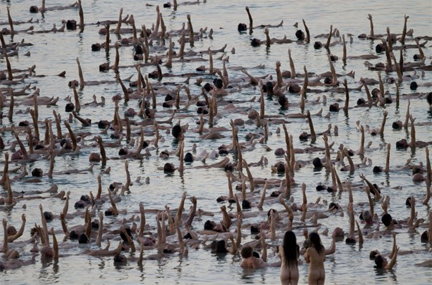
Lively action at the Dead Sea

Palestine and Israel are back in the news. As Abbas prepares to request recognition for Palestine from the U.N. and Israelis themselves stage protests following the “Arab Spring,” the installation (sans clothing) photographer Spencer Tunick has returned to the legendary site of Sodom and Gomorrah to unclothe the political tensions in the area. I think he is on to something by having his subjects take everything off. Forget about turning swords into plowshares, just strip and dive in. And here is one part of the region where you are guaranteed not to sink.

Montesquieu, St. Augustine and Libya


Photograph by Murad Sezer/Reuters

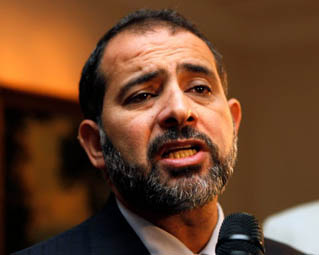
A Man of God and Technology, Trying to Steady Libya
By ANNE BARNARD, The New York Times, September 16, 2011

Tripoli, Libya

AREF NAYED was sipping cappuccino in the soaring marble lobby of the Corinthia Hotel near Tripoli’s seafront, quoting Montesquieu on law and Augustine on forgiveness in a conversation that had begun with earthier subjects, like the challenges of restoring Libya’s water supply and counting its dead.

He held forth on how Bedouin poetry shaped a moderate Islam in Libya, and he was just starting to explain the relevance to Libyan politics of the mathematical theory of complexity — it had to do with something called “flocking phenomena” — when his cellphone rang.

“I have to take this,” he said, glancing at the number. “Somebody wants to surrender.”

An associate of Col. Muammar el-Qaddafi, the deposed Libyan leader, wanted safety guarantees before turning himself in. Mr. Nayed wanted to make it happen, and not just because fostering reconciliation is one of his many jobs for Libya’s de facto government.

He is also a Muslim theologian who, in addition to running a technology business, spent his time before the Libyan rebellion writing erudite papers arguing that compassion is the paramount value in Islam, that pious Muslims can thrive within a liberal secular state and that even the most righteous ones should adopt a “humble recognition” of their own fallibility.

Now, as the Transitional National Council’s coordinator of a Libyan stabilization team being asked to solve problems like fuel shortages and human rights abuses, he suddenly finds himself in an ideal laboratory to test his signature theological propositions — and to try to make them government policy.

“I don’t think there should be a witch hunt, purges or cleansings,” he said Monday at the hotel cafe, adding that those who committed crimes under Colonel Qaddafi should be tried. “Any time you deal with human beings with that kind of terminology, you end up with unfairness and persecution.” Continue reading Montesquieu, St. Augustine and Libya

Tabsir Redux: Déjà Voodoo

Consider the opening line of the lead story in yesterday’s New York Times:

BAGHDAD — Saudi Arabia and Libya, both considered allies by the United States in its fight against terrorism, were the source of about 60 percent of the foreign fighters who came to Iraq in the past year to serve as suicide bombers or to facilitate other attacks, according to senior American military officials.

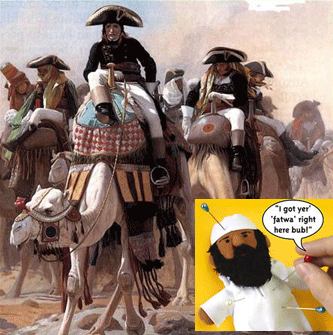
In the long durée, as Napoleon might say if he were alive today, politics makes strange embedded fellows of nation states. There are three nations at play here in the field of lording over by the world’s reigning super power. Iraq and Libya had European imposed (and later revolution-deposed) monarchs at mid-stream in the 20th century. At the same time Saudi Arabia’s royal line evolved an iconclastic religiously mandated kingship that has withstood toppling and seems likely to do so far into the security based future. All three states are where they are today largely because of the world’s thirst for crude oil. The same three states, should Iraq survive de facto federation, face a future defined by a mega-politicized war on terrorism, a war with no state-like enemies being fought by a coalition of nation states willing to arm themselves to the teeth with conventional weapons and make airline passengers take their shoes off each and every time they fly. Two centuries from now a future Napoleon, whatever his or her nationality, may look back on the current political climate and have a hindsight sense of déjà vu, or will it be more of the voodoo politics mass mediated today? Continue reading Tabsir Redux: Déjà Voodoo

If a young [Arab] man wants sex

Now that we are about to officially head into the Autumnal paradox of the Arab Spring, there is no limit to the excess of punditry about why it happened, is happening and will continue to happen. Back in February, the historian Bernard Lewis weighed in on the current uprisings for an interview in The Jerusalem Post (which, for those with any historical memory, is not your parent’s Jerusalem Post). The article begins with Lewis’s summation in a nutshell: “The sort of authoritarian, even dictatorial regimes, that rule most of the countries in the modern Islamic Middle East, are a modern creation,” he notes. “The pre-modern regimes were much more open, much more tolerant.” Ah, yes, that Golden Age of Islam when the caliphs of the Arabian Nights were the community organizers of their eras. Surely Al-Hakim bi-Amr Allah did not really mean to destroy the church of the Holy Sepulcher in Jerusalem a millennium ago. That “more open, much more tolerant” pre-modern political paradise is as absurd as the more common Islamophobic trope that Muslims have always ruled by the sword. Indeed, as Lewis notes, the modern dictators in the region are a modern creation, but (as Lewis does not mention) largely the result of Western carving up and interference after World War I.

But the part of the interview that is most telling is the Freudian framing of the Arab twitter generation. I note here the question from the interviewer and the response by Lewis:

As we look at this region in ferment, how would you characterize what is unfolding now? Can we generalize about the uprisings that are erupting in the various countries? Is there a common theme?

There’s a common theme of anger and resentment. And the anger and resentment are universal and well-grounded. They come from a number of things. First of all, there’s the obvious one – the greater awareness that they have, thanks to modern media and modern communications, of the difference between their situation and the situation in other parts of the world. I mean, being abjectly poor is bad enough. But when everybody else around you is pretty far from abjectly poor, then it becomes pretty intolerable.

Another thing is the sexual aspect of it. One has to remember that in the Muslim world, casual sex, Western-style, doesn’t exist. If a young man wants sex, there are only two possibilities – marriage and the brothel. You have these vast numbers of young men growing up without the money, either for the brothel or the brideprice, with raging sexual desire. On the one hand, it can lead to the suicide bomber, who is attracted by the virgins of paradise – the only ones available to him. On the other hand, sheer frustration.

The fact that a young man (or woman) in Tunisia, Egypt, Libya or Yemen cannot get a job and make a living at home is not the tipping point for Lewis; no, it is pure jealousy — give me hamburgers and blue jeans or give me death — don’t tread on my cell phone. Then there is that particular “another thing.” If as a young Arab man you can’t get laid, then you might as well go out in the streets and brave the dictator’s thugs and tanks. After all, unlike the casual West, you can only get sex in marriage and in the whore house. Continue reading If a young [Arab] man wants sex

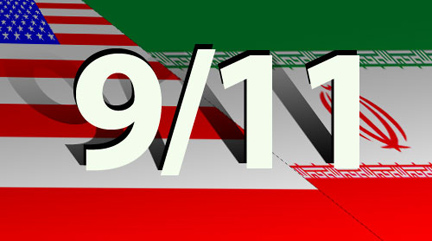
9/11 Raised Unrealized Hopes in US-Iran Relations


by William O. Beeman, New American Media, Sep 11, 2011

As the United States remembers the events of September 11, 2001 on their tenth anniversary, it is important to remember that the tragedy was commemorated around the world, not just in America. And one of the nations that expressed the most profound and sincere grief over the loss of life was Iran.

Candlelight vigils were held throughout Iran and professions of sorrow and sympathy for the United States citizens who lost family and friends were ubiquitous. This was even more impressive when one notes that these were not government organized events, but were the spontaneous outpouring of Iranian citizens. On an official level, many Iranian religious leaders condemned the attacks, despite their differences with the United States administration. It was also noteworthy that no Iranian was involved in any way with the 9/11 attacks.

The 9/11 tragedy also resulted in a brief thaw in U.S.-Iran relations as Iran offered its air space and landing fields to the United States in its attacks on al-Qaeda and the Taliban in Afghanistan. It created increased positive feeling on the part of ordinary Iranian citizens for the United States and its people.

It is a secondary tragedy that this brief halcyon period in U.S.-Iran relations did not last. Continue reading 9/11 Raised Unrealized Hopes in US-Iran Relations

The State of Agriculture in Late 13th Century Rasulid Yemen, 5


Tax document of al-Malik al-Afḍal, mid 14th century CE

By Daniel Martin Varisco

[In 2003 I attended a conference in Rome and gave a paper which was eventually published in Convegno Storia e Cultura dello Yemen in età Islamica, con particolare riferimento al periodo Rasûlide (Roma 30-31 ottobre 2003 (Accademia Nazionale dei Lincei, Fondazione Leone Caetani, 27, pp. 161-174, 2006). As this publication is virtually inaccessible, I am reprinting the paper here (with page numbers to the original indicted in brackets). For the previous part of this article, click here. The references are provided at the end of the first entry.]

ARCHIVING AGRICULTURAL ECONOMICS

Al-Ashraf’s Milh al-malāḥa provides a textbook survey of the mechanics of the agricultural system, but there is nothing on production costs, yields or the marketing system. Fortunately, some microeconomic details can now be filled in with information from the Muẓaffar archive, compiled from field reports sent to the Rasulid court between 691-95/1292-96 at the very end of al-Muẓaffar’s reign. Particularly valuable is a survey made in Ramadan 692/1293 from the lands of a shaykh Muḥammad ibn IbrāhÄ«m al-Ḥawm (?) of Ta‘izz and shaykh RashÄ«d al-DÄ«n Manṣūr ibn Ḥasan in Mikhlāf Ja‘far, as well as some data from ‘Abadān. (26) Details are provided on fees and shares for ploughing and virtually every agricultural activity with special emphasis on the obligations in sharecropping agreements and regional differences.

For the Ta‘izz case, the grain yields of sown sorghum are said to be up to 400 fold (i.e. one zabadī of seed will yield a crop of 400 zabadī) on good land, 150 fold on middle-range land and only 90-100 fold on poor land. Sorghum is also important in Yemen for its stalk (‘ajūr), used as fodder and fuel. The stalk yield for the sowing on good or medium land will be three camel (?) loads, but reaches five loads on land of poor quality; the reason given for this is that such sorghum is grown mainly for its stalk value. [p. 171]

For wheat in Ta‘izz, the increase is 15 fold on good land, 10 fold on medium land and only 3 fold on poor land. Emmer wheat (‘alas), on the other hand, yields 10 fold on good land, 4 fold on medium land and 2 fold on poor soil. Barley is said to yield 10 to 1; this is sown only in the mountain areas and not usually on the best land. Information is also provided on the straw (tibn) yields. Continue reading The State of Agriculture in Late 13th Century Rasulid Yemen, 5