There is a dangerous dualism that has haunted Islamic societies since the very start of the faith. I am speaking about the haram that results from individuals and groups that seek to enforce a distinction between haram and halal through violence. The recent waves of sectarian killings are a chilling reminder of the harm that can be caused in the name of stamping out haram. In the north of Nigeria, as reported by al Jazeera, as many as 150 people may have been killed in a single day by Boko Haram, a militant group whose name means “Western education is sacrilege.” The irony of this name is tragic. When I think of the hadith “Seek Knowledge even unto China,” I do not think that the Prophet only meant to look eastward for knowledge. When I think of the extraordinary contributions Muslim scientists and philosophers made to the earlier classical heritage of knowledge, I do not think the Prophet would have disapproved. When I think of sacrilege, I remember that the Prophet forbade his followers to violate the truce of the sacred month and prohibited those who fought for him from mutilating the bodies of those who fought against him. There is much that is haram in this world, but it appears that the value of human life is not as sacred for some Muslims as it is for Allah as the Merciful One or for Muhammad as a Prophet for peace. Continue reading The haram that is not sacred
Category Archives: Countries
Tabsir Redux: Apocalypse Watch: The Man Who Knows Squat

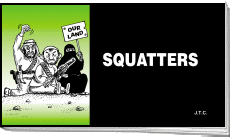
Most people find it hard to take cartoons seriously, apart from political satire and that can become a deadly issue, depending on the target. Given the recent Danish cartoon controversy it would seem that comics and religion do not mix well or at least settle well for the believers who see themselves as the target. But what about comic relief for the political struggle between Israel and the Palestinians? Fundamentalist tract artist Jack Chick, whose comic empire is dedicated to winning souls for Christ by drawing on God’s hate, has been using his pen to spread a rather sinister version of the fundamentally reduced Gospel for over 40 years. One of his more recent offerings is called “The Squatters†and it provides a virtual roadmap to apocalypse. Continue reading Tabsir Redux: Apocalypse Watch: The Man Who Knows Squat
Thugs join the protests
Yemen Post is reporting that the thugs hired by the government to attack and molest the protesters in Yemen are now themselves protesting because the government is not paying them what it promised. As one Yemeni doctor noted, “I don’t know whether to cry or laugh! Have Yemeni stoop so low that criminals dare now protest? Is there anything sacred anymore, any shame at all left in this country.”
Over and almost out (of Iraq)

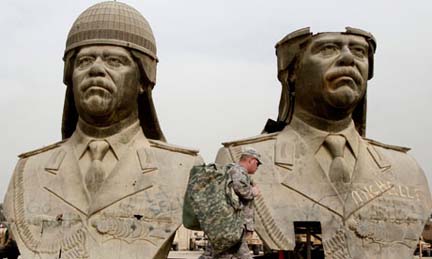
The Iraq war is finally over. And it marks a complete neocon defeat
by Jonathan Steele The Guardian, October 23, 2011
The Iraq war is over. Buried by the news from Libya, Barack Obama announced late on Friday that all US troops will leave Iraq by 31 December.
The president put a brave face on it, claiming he was fulfilling an election promise to end the war, though he had actually been supporting the Pentagon’s effort to make a deal with Iraq’s prime minister Nouri al-Maliki to keep US bases and several thousand troops there indefinitely.
The talks broke down because Moqtada al-Sadr’s members of parliament and other Iraqi nationalists insisted that US troops be subject to Iraqi law. In every country where they are based the US insists on legal immunity and refuses to let troops be tried by foreigners. In Iraq the issue is especially sensitive after numerous US murders of civilians and the Abu Ghraib scandal in which Iraqi prisoners were sexually humiliated. In almost every case where US courts tried US troops, soldiers were acquitted or received relatively brief prison sentences.
The final troop withdrawal marks a complete defeat for Bush’s Iraq project. The neocons’ grand plan to use the 2003 invasion to turn the country into a secure pro-western democracy and a garrison for US bases that could put pressure on Syria and Iran lies in tatters.
Their hopes of making Iraq a democratic model for the Middle East have been tipped on their head. Continue reading Over and almost out (of Iraq)
Night and Day at the Movies

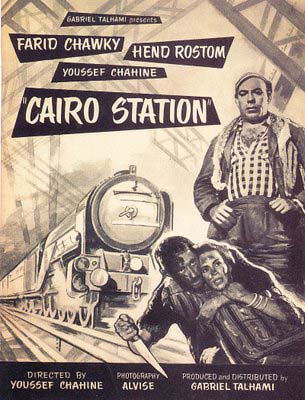
There are quite a few classic Arabic movies available in full on Youtube, if you search by the Arabic name. An example is the early Youssef Chahine film Bâb al-Hadîd (Cairo Station in English) in the original Arabic without subtitles.
Heather Raffo at Hofstra

“Art as Cultural Diplomacy – performance and talk with Heather Raffoâ€
Wednesday 10/26, 8PM in the Cultural Center Theater
as part of the Day of Dialogue
Celebrated actress and Playwright Heather Raffo comes to Hofstra University for discussion about the role theater plays in our understanding of contemporary war. Through the performance and discussion of selected monologues from her acclaimed play 9 Parts of Desire about the lives of Iraqi women, Raffo, takes the audience deep into the heart of why theater can best communicate the complex issues still facing Iraq and America today.
Heather Raffo is the recipient of a Susan Smith Blackburn Prize Special Commendation and the Marian Seldes-Garson Kanin Fellowship for her play 9 Parts of Desire. Most recently she has received a 2005 Lucille Lortel award for Best Solo show as well as an Outer Critics Circle Nomination and a Drama League nomination for Outstanding Performance. Premiering in 2003 in, Edinburgh, the play then moved to London, where critics hailed it as one of the five best plays in London in late 2003. It ran for nine sold out months in New York City before touring the U.S. and internationally. Heather has also performed widely in a range of celebrated productions in NY and beyond, earning a Drama League Nomination among other accolades. She has also offered discussion-presentations in a variety of educational settings. She received her BA from the University of Michigan, her MFA from the University of San Diego and studied at the Royal Academy of Dramatic Art, London. Originally from Michigan, Heather now lives in New York. Her father is from Iraq and her mother is American. For more information, see http://www.heatherraffo.com/
Co-sponsored by the Women’s Studies Department, Middle Eastern and Central Asian Studies Program (MECA), The Center for Civic Engagement, Comparative Literature and Languages, and Dance and Drama
Tabsir Redux: With Ratzel in North Africa

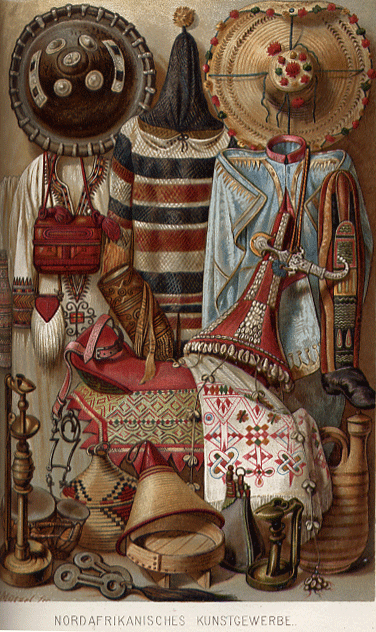
One of the most important German geographers of the late 19th century was Friedrich Ratzel (1844-1904), whose three-volume Völkerkunde (Leipzig and Vienna, Bibliographisches Institut, 1890) is one of those encyclopedia cultural accounts that circulated just as the discipline of anthropology was getting off (in this case literally “on”) the ground. While now a text for curiosity rather than critical scholarship on peoples and cultures, Ratzel’s work is still a fascinating portrayal of cultures being colonized for both revealing the biases of the day and the then-contemporary illustrations of people and material culture. My university library recently divested itself of uncirculated books in storage and one of these was an 1890 edition of the third volume on “Die Kulturvölker der Alten und Neuen Welt.” Whether it was the eye-watering althochdeutsch script of the volume or the mere fact it was written in German, no student or professor at Hofstra ever checked this volume out.
In salvaging a third of Ratzel’s opus for a mere dollar, I could not help but be drawn to the illustrations, mostly lithographs but with a few beautiful color plates. Continue reading Tabsir Redux: With Ratzel in North Africa
Lecture in New England

On Monday, October 24, 2011, I will be delivering a lecture entitled “What’s Happening in Yemen?” at the Portland campus of the University of New England in WCHP Lecture Hall at 6 pm. For more details click here.
This talk will focus on the impact of the “Arab Spring†political protests that started in Yemen, located at the southwestern corner of the Arabian Peninsula, in February. These led to unrest that brought the country to the brink of civil war and economic collapse. Yemen has been ruled by a military leader, Ali Abdullah Salih, who came to power in 1978. In 1990, North and South Yemen were united, followed by a brief civil war in 1993. Before the recent protests there was a secessionist movement in Yemen’s south and an open tribal rebellion near the border with Saudi Arabia. In the past decade the United States has given millions of dollars in aid to President Salih to theoretically combat al-Qaida in Yemen. Questions addressed include the influence of conservative Saudi-backed salafism, the nature of Yemeni tribalism, the role of youth and students in protesting for their own future in a democratic Yemen, and the exaggerated fears about Yemen as a terrorist haven. President Salih once remarked that ruling Yemen was like dancing on the heads of snakes. Now that the snakes have bitten, what is next?