Category Archives: Palestine

Leaves from an old Bible Atlas #6


Hurlbutt’s Atlas, p. 118

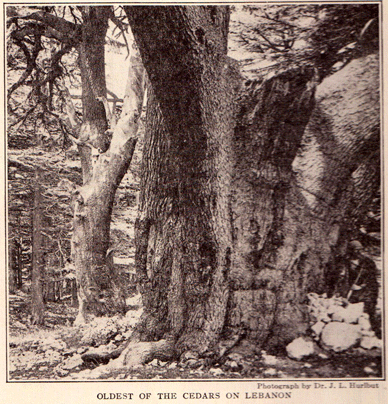
The Christian fascination with the Holy Land as a window into interpretation of the Bible has a long and indeed fascinating history of its own. Here I continue the thread on Jesse Lyman Hurlbutt’s A Bible Atlas (New York: Rand McNally & Company, 1947, first published in 1882). Ah, those cedars of Lebanon, hewn for Solomon’s temple but a few being left for the intrepid explorer, in this case Rev. Hurlbutt himself. Here is his sketch of that temple. Continue reading Leaves from an old Bible Atlas #6

The Surprising Effect of Religious Devotion on Suicide Attacks


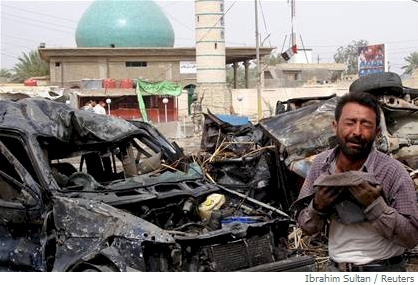
2007 suicide blast at Baghdad hotel

by Matt J. Rossano, The Huffington Post, September 27, 2010

We all have our personal “theories” about what motivates religious terrorists. To go from personal theories to real ones, we need to study the issue scientifically. One recent study draws the provocative conclusion that ritual participation more than religious belief may be behind suicide attacks.

From a scientific standpoint a suicide attack represents an extreme form of parochial altruism — a self-sacrificial act made on behalf of one’s in-group, involving aggression against an out-group. Religious belief, some have argued, is the prime motivator for such an attack. The attacker believes that his or her sacrifice will lead to a glorious reward in the afterlife (e.g., Islam’s famous 70-some-odd virgins-awaiting). This explanation can be called the “belief hypothesis,” and it would predict that those who demonstrate increased devotion to religious beliefs or deities would be more supportive of suicide attacks. In the context of a recent study (Ginges et al., Psychological Science, 20, p. 224), devotion was measured by prayer frequency. Thus, those who prayed more were assumed to be more devoted, and some preliminary analyses confirmed that this was indeed the case. Continue reading The Surprising Effect of Religious Devotion on Suicide Attacks

UN Fact-Finding Mission Says Israelis “Executed” US Citizen Furkan Dogan


Furkan Dogan, a 19-year-old US citizen of Turkish descent, was aboard the Mavi Marmara when he was killed by Israeli commandos. (Photo: freegazaorg; Edited: Jared Rodriguez / t r u t h o u t)

by Gareth Porter, t r u t h o u t Monday 27 September 2010

The report of the fact-finding mission of the Office of the United Nations High Commissioner for Human Rights (OHCHR) on the Israeli attack on the Gaza flotilla released last week shows conclusively, for the first time, that US citizen Furkan Dogan and five Turkish citizens were murdered execution-style by Israeli commandos.

The report reveals that Dogan, the 19-year-old US citizen of Turkish descent, was filming with a small video camera on the top deck of the Mavi Marmara when he was shot twice in the head, once in the back and in the left leg and foot and that he was shot in the face at point blank range while lying on the ground.

The report says Dogan had apparently been “lying on the deck in a conscious or semi-conscious, state for some time” before being shot in his face. Continue reading UN Fact-Finding Mission Says Israelis “Executed” US Citizen Furkan Dogan

Leaves from an old Bible Atlas #4


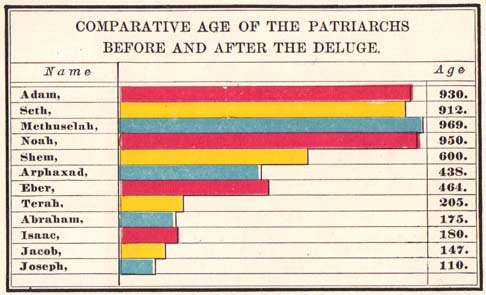
Hurlbutt’s Atlas, p. 17


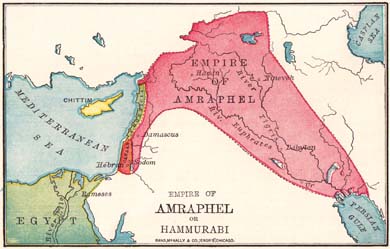
Hurlbutt’s Atlas, p. 17

The Christian fascination with the Holy Land as a window into interpretation of the Bible has a long and indeed fascinating history of its own. Here I continue the thread on Jesse Lyman Hurlbutt’s A Bible Atlas (New York: Rand McNally & Company, 1947, first published in 1882). After describing the physical geography, Hurlbutt proceeds directly the “The Journeys of the Patriarchs.” He writes (p. 17):

The journeys of Abraham extend over nearly all the lands of the Old Testament from Chaldea to Egypt. They represent the separation of a Semitic clan from the great body of the race, which was then ruled by an Elamite dynasty; and they bring to our notice the political relations of the world about two thousand years before Christ, in the early Chaldean period of the East.

Continue reading Leaves from an old Bible Atlas #4

Leaves from an old Bible Atlas #3


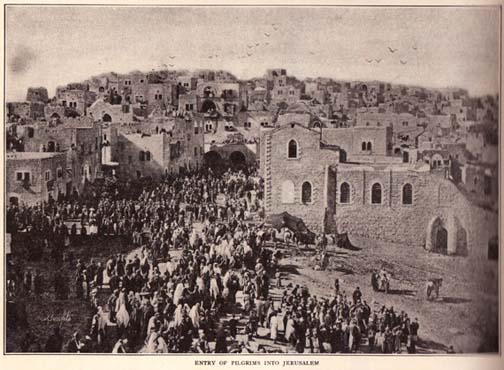
Entry of pilgrims into Jerusalem, Hurlbutt’s Atlas, p. 150

The Christian fascination with the Holy Land as a window into interpretation of the Bible has a long and indeed fascinating history of its own. Here I continue the thread on Jesse Lyman Hurlbutt’s A Bible Atlas (New York: Rand McNally & company, 1947, first published in 1882). The photograph above is actually the last in the atlas, just before a colorful foldout chart of Bible History.

The edition I am using includes an Introduction by Bishop John H. Vincent, whose memories of a visit to Palestine are quite typical of this Holy-Landaphilia. The following is a good example of the preacher’s rhetoric:

At one time I was permitted to spend forty days and forty nights in Palestine. I saw Abraham at his tent door; Rebekah veiling herself at the approach of the stranger; the long caravan of camels and Midianites on their way toward the south. I saw the wailing mourners at the house of death; the roof that might easily have been broken up; the wedding procession; the grass on the housetops; the sparrow making a nest for her young in the synagogues of Jerusalem. I saw the elders in the gates; David the shepherd, with his sheep, on the hillside; the Jewish mother, teacher Timothy, the words of the old Book in the old city on the hill. Verily, it is the old land; it is the old life; it is the memorial presentation in concrete form of what the Book says was true there thousands of years ago.

To be continued …

Leaves from an old Bible Atlas #2


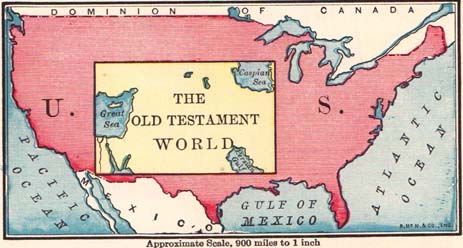
Comparative view of the United States and Old Testament world, approximate scale, 900 miles to 1 inch (in the original map which is only 3 3/4 inches across)

The Christian fascination with the Holy Land as a window into interpretation of the Bible has a long and indeed fascinating history of its own. Here I continue the thread on Jesse Lyman Hurlbutt’s A Bible Atlas (New York: Rand McNally & company, 1947, first published in 1882). I love the irony of the map above. Long before the political map devolved into Blue States vs. Red States, here is the Old Testament squarely in an expanded Bible Belt.

Here is Hurlbutt’s summary of the physical space defined as the Old Testament world:

The Old Testament world embraces the seas and lands between 30° and 54° east longitude, or from the mouth of the Nile to the head of the Persian Gulf; and between 27° and 40° north latitude, from the parallel south of Mt. Sinai to the north of Mount Ararat. The total extent of territory is about 1,400 miles from east to west and 900 miles from north to south, aggregating 1,260,000 square miles. If the space occupied by the Mediterranean Sea and other large bodies of water is deducted from this, the land will include about 1,110,000 square miles, or one-third of the extent of the United States, excluding Alaska. Unlike the United States, however, nearly two-thirds of this area is a vast and uninhabitable desert, so that the portion actually occupied by man is less than an eighth of that included int he American Union.

I wonder what Sarah Palin would think about Hurlbutt excluding Alaska, but at least it was not a state yet and some still referred to it as Seward’s folly.

To be continued …
Leaves from an old Bible Atlas #1

Perhaps there is a geographical inclination gene in my ancestry, since I have always loved Bible atlases. Many years ago my father was given a copy of Jesse Lyman Hurlbut’s A Bible Atlas, first published in 1910; his volume was a 1947 revision. But for the most part I assume the photographs were taken around the turn of the 20th century, give or take a decade. The author lived from 1843–1930 and as early as 1882 had published a Manual of Biblical Geography, the perecursor to this atlas. The 1910 version is archived online. There is also a website devoted to maps from his 1904 Story of the Bible.

So here I begin a thread of photographs of the Holy Land from at least a century ago. Let’s begin in Tiberias … Continue reading Leaves from an old Bible Atlas #1

Hands Up after seven decades


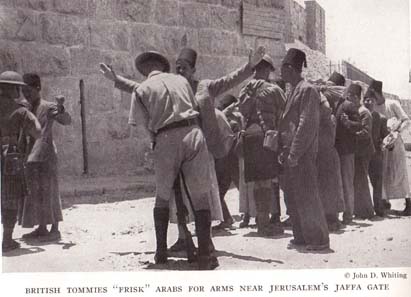
The plight of the Palestinians has a long history, one engaged on the ground before the creation of modern Israel. The photograph above, taken by John D. Whiting, is from The National Geographic Magazine December 1938 issue (p. 696). The caption reads:

BRITISH TOMMIES “FRISK” ARABS FOR ARMS NEAR JERUSALEM’S JAFFA GATE
In fighting between Arabs and Jews, hundreds on both sides have been killed and wounded from gunfire, bombs, and mines set under highways. Both peoples object to the proposed partition of the country, whereby each would be colonized in a separate district and Britain would retain control of a corridor from Jerusalem to the sea and of certain other regions.

One is reminded of Solomon’s lament that there is nothing new under the sun or the old French saw that the more things change, the more they remain the same. Regardless of who has done the frisking, the image of civilians standing in line before soldiers and with their hands up in the air is a telling reminder of the inability of politicians to resolve one of the most intractable disputes of the 20th century. The aftermath of two world wars and the thawing of the Cold War would seem more difficult to resolve than sharing space in a small corner of the Middle East. But then, this is a corner with a history of bloodshed that is unrivaled anywhere else. How ironic that the city where Christians believe the “Prince of Peace” will save the world from ultimate evil has been the site for so much continuing mistreatment of people.