Category Archives: Art

Islamophobia 101, A call to analyse

[Webshaykh’s Note: This is the start of a new blog thread dedicated to energizing scholarly and pedagogical attempts to combat, or at least mitigate, the ongoing volume of Islamophobia in the media, especially on the Internet. The question is simple: what can be done to respond to Islamophobia in the media by our efforts in the blogosphere, formal media outlets, classroom, community and scholarly forums? I invite fellow scholars, professors and teachers and anyone concerned with this issue to contribute to the discussion here at Tabsir.]

People of any particular religious faith are understandably offended when someone or something they hold to be sacred is dragged through the media-made mud of ridicule. There is no way to completely stop desecration, even when hate crime laws are in place. As long as there are synagogues with walls and anti-Semites with paint, swatstikas will be painted. As long as there are artists who stretch their creative energies to the limit of tolerance, animal dung will adorn the body of the Madonna. And as long as so many individuals in Western societies fear Islam through the veil of their own ignorance and historically constructed disdain, the Prophet Muhammad will be pictured as a profligate. The Danish cartoon controversy was only the tip of the iceberg, one that created a titanic rift in the Muslim community worldwide. The irony is that portraying Muhammad in any form is considered wrong in Islam, so that placing a stud missile in the turban of a caricatured Mahound (to drop a literary motif of the same controversial dimension) glosses over the level of misunderstanding motivating those who made and appreciated the cartoon images.

So what is the proper response to the volume of prophet bashing out there, not only in the case of Islam. Here are a few suggestions to jumpstart the process of analysis so that we as scholars can mitigate the paralysis created by an Islamophobia that is only a mouse click away.

• Identify resources (books, relevant articles, websites, speakers) which provide a scholarly and objective-as-possible perspective on Islamophobia
• Discuss the merits of whether or not to provide examples of Islamophobic writing, art and videos that are admittedly offensive to many Muslims
• Provide lesson and project ideas to encourage students to critically assess the Islamophobia in specific examples they are likely to find in the media and on the Internet
• Engage with fellow scholars and concerned Muslims about the most effective and least offensive ways to combat and mitigate Islamophobic writing and art
• Link examples of Islamophobia to other forms of verbal and artistic ridicule of sacred materials.
• Expose Islamophobic rhetoric by politicians, celebrities and other people in the news.

Having set out the goals, I invite colleagues contribute comments, commentaries and examples for and against Islamophobia for this series, please email the webshakh at daniel.m.varisco@hofstra.edu. I will post the first commentary tomorrow.

Daniel Martin Varisco
In Pursuit of the Exotic

Museum Exhibits

January 29 to March 29, 2009: Napoleon on the Nile: Soldiers, Artists and the Rediscovery of Egypt

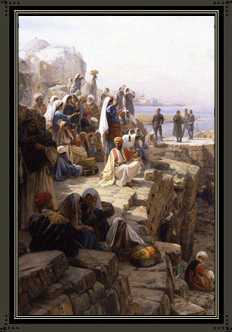
March 24 through April 30, 2009: In Pursuit of the Exotic: Artists Abroad in 19th Century Egypt and the Holy Land

New York, New York – The Dahesh Museum of Art and Syracuse University Art Galleries today announced the formation of a partnership, which will include the Museum’s organizing several exhibitions annually from its own collection of 19th-century art in the academic tradition, complemented by works in the University’s rich collection, for presentation at the SU Art Galleries in Syracuse, as well as The Palitz Gallery/ Lubin House, located on 11 East 61st Street, off Fifth Avenue. The Palitz Gallery has recently attracted artworld attention with the exhibition Michelangelo: the Man and the Myth on view through January 4th 2009. Continue reading In Pursuit of the Exotic

Lithographica Arabica 6: Rev. Wood’s Bible Animals, 3

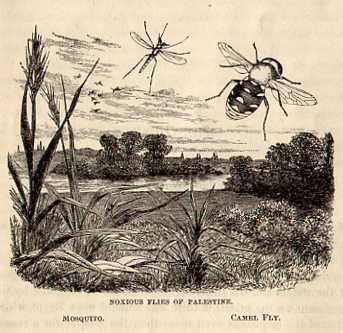
This is the third in a series on the illustrations in Rev. John George Wood’s Story of the Bible Animals. What do you get if you strain at a gnat? Read on…

Gnats

It has already been stated that only one species of fly is mentioned by name in the Scriptures. this is the Gnat, the name of which occurs in the familiar passage, “Ye blind guides, which strain at a ghat and swallow a camel” (Matt. xxiii. 24).

I may again mention here that the words “strain at” ought to have been printed “strain out,” the substitution of one for the other being only a typographical error. The allusion is made to a certain custom which is explained by reference to the preceding article on the fly. In order to avoid taking flies and other insects into the mouth, while drinking, a piece of thin linen stuff was placed over the cup, so that if any insects, as was usually the case, had got into the liquid, they would be “strained out” by the linen. Continue reading Lithographica Arabica 6: Rev. Wood’s Bible Animals, 3

Interflow: The Art of Emna Zghal

INTERFLOW
organized by
The Museum for African Art
Thursday Feb 19th, 2009
5-7pm on the 15th Floor of Ogilvy New York
Worldwide Plaza 309 West 49th St.
RSVP to ogilvyrsvp@gmail.com

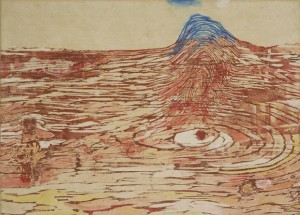
Interflow presents recent painting and mixed media works on paper by New York-based artist Emna Zghal. Color and line continually search for boundaries they never find. Forms emerge to take on shapes that feel simultaneously familiar and foreign. Though the canvas fights to act as a boundary, poetic lines overflow into infinite space. Each mark acts in unison with the next to challenge the seemingly simple nature of line itself. Emna Zghal’s artwork elicits a never-ending network of nerves pulsing with colorful abstractions and an energy that suggests organic patterns in a continual search for form. Continue reading Interflow: The Art of Emna Zghal

Lithographica Arabica 5: Rev. Wood’s Bible Animals, 2

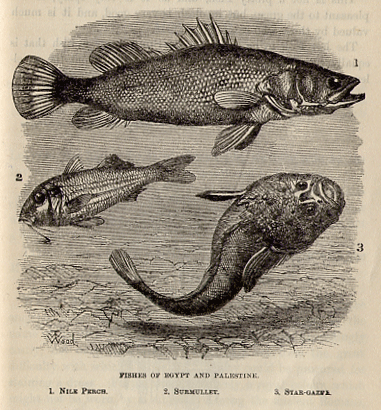
The illustrations provided in the books of Rev. John G. Wood are interesting not only for what they portray, but how they are described. Here is Wood’s folksy spin on three major fishes of Egypt and Palestine:

In order that the reader may see examples of the typical Fish which are to be found in Egypt and Palestine, I have added three more species, which are represented in the following illustration.

Continue reading Lithographica Arabica 5: Rev. Wood’s Bible Animals, 2

Lithographica Arabica 4: Rev. Wood’s Bible Animals, 1


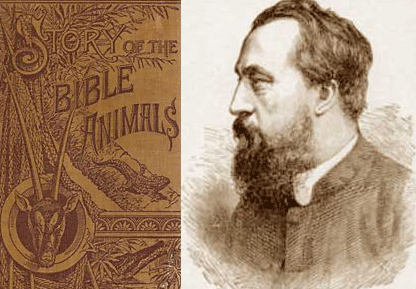
Rev. John George Wood, author of Story of the Bible Animals

Fascination with Bible Lands was so keen in the 19th century that illustrated volumes of scenes and objects were always in high demand. One of the treasures, in a figurative sense, of this age is the work of Rev. John George Wood (1827-1899), an English cleric and writer of popular books on natural history. One of the books passed on to me several years ago is Wood’s Story of the Bible Animals (Charles Foster Publishing Company, 1886), one of several editions of this popular work. The illustrations in my copy are not of the highest quality, but they can still mesmerize across their faded and fraying pages. Continue reading Lithographica Arabica 4: Rev. Wood’s Bible Animals, 1

These Sons of Adam


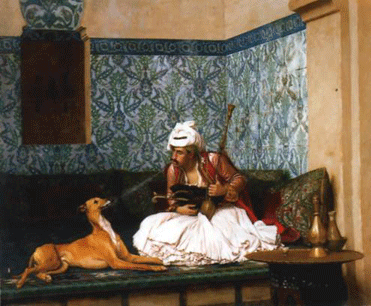
Arnaut Blowing Smoke at His Dog by Jean-Léon Gérôme, 1882.

In two previous posts, The Immovable East and An Unbelievable White Man, I published excerpts from the first-person narrative by Philip J. Baldensperger, published in 1913 about experiences in Palestine during the last half of the 19th century. His sense of humor was acute. Here are the words he imagined that a dog would bark out about life as a canine in an Arab village.

“The sons of Adam disdain dogs, but in many places they raise us up and utilise us. Thus, in the camp where I lived, there were shepherd dogs, with thick fur, and watch dogs, with a smooth coat all over, and the tall, thin greyhounds which are raised for hunting the gazelles on the broad plains of Philistia, near my first home.

I was born in camp, south of Beersheba, and belonged to a family of Azazmeh Arabs. On account of my jet black fur the called me Lail – Night… Continue reading These Sons of Adam

The Sultan of the East


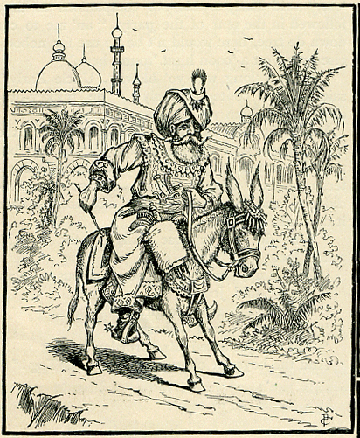
Illustration of his poem by Palmer Cox, 1882


The Sultan of the East

by Palmer Cox

There was a sultan of the East
Who used to ride a stubborn beast;
A marvel of the donkey-kind,
That much perplexed his owner’s mind.
By turns he moved a rod ahead.
Then backed a rod or so instead.
And thus the day would pass around,
The Sultan gaining little ground.
The servants on before would stray
And pitch their tents beside the way,
And pass the time as best they might
Until their master hove in sight. Continue reading The Sultan of the East