Category Archives: Travel

Tabsir Redux: Resolving the New Year


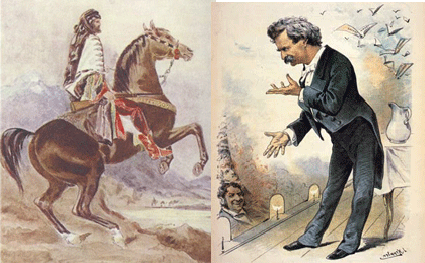
Wilfrid Scawn Blunt, left; Mark Twain, right

There is a curious annual custom inherited in many of our families, but one I am resolved not to take too seriously this year. I refer to the half-drunk notion of making resolutions for the new year (which I see no sound reason to capitalize, as my German blood is very far removed), as though the arbitrary turning of the calendar is a time to reflect on what went wrong over the last 365 days and pretend that things should go better in the next eighteen and a quarter score days. I have heard the rural urban tale that the pin-up 19th century cowgirl sharpshooter Annie Oakley started the custom of sending out Christmas Cards, but I am not sure which genius came up with penning new year’s resolutions, unless it was Johnny Walker in one of his more sober moments. Most people, and I surely fall into this anomalous category, do not remember the resolutions made a year ago. But then most godfearing redneck Americans could not repeat the 10 Commandments in order to save their souls, unless perhaps they were dead drunk. So my re-solution, since it is the defacto one I have been following for quite a few years, is to resolve to forget any resolution before I even make one. This saves me from having to make up a resolution, which is the same as making as silly a resolution as I can imagine.

I am not the first person to take aim at this impotent cultural pastime which has long since ceased to have any influence on what people really do. Mark Twain said it well over a century and a half ago:

New Year’s Day–Now is the accepted time to make your regular annual good resolutions. Next week you can begin paving hell with them as usual. Continue reading Tabsir Redux: Resolving the New Year
Doha Dèjá Vu


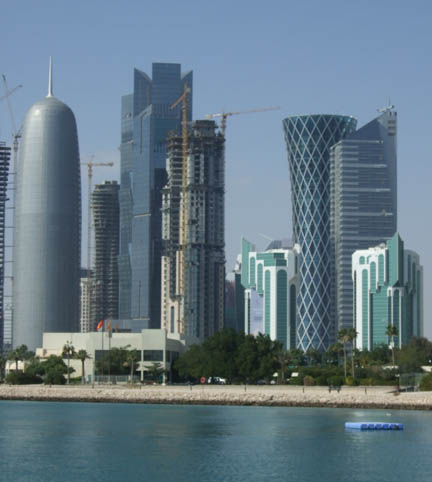
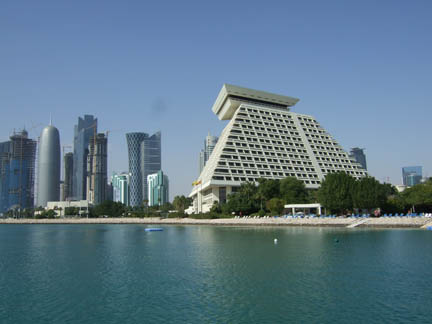
Skyscrapers dominate the modern skyline of Doha

In 1988-1989 I received a Fulbright Islamic Civilization Research Grant to carry out research on the Arab almanac tradition. Most of this time I was sponsored in Doha, Qatar by the Gulf States Folklore Center. Tempus fugit, to be sure. The folklore center no longer exists and Doha is quite a different city these days. A week ago I arrived in Doha to give two lectures at Qatar University, one on the sailing seasons around the Gulf and one on traditional agriculture in Yemen. In the two decades plus since I last visited Doha it is obvious that the city has changed dramatically. I do not remember any skyscrapers on my first visit. Doha was a sleepy little haven with the grand Doha Sheraton the eye candy. And quite an eyeful it was and remains.

I arrived at an auspicious moment, the evening of Qatar’s National Day. The entire day was devoted to celebration. Thus the trip that would normally take less than 20 minutes to go from the airport to the Sheraton was accomplished in six hours. The roads were blocked with SUVs and Mercedes colorfully marked and many with young boys on top waving the Qatari flag and sporting scarves with the image of the emir and his heir apparent. I missed the fireworks, but the enthusiasm of the throng made the long journey well worth it.


The majestic Doha Sheraton Hotel

The Doha Sheraton is a grand old place. Having been erected in 1982, such a luxury hotel is an architectural shayba. But it still inspires, with a pyramid exterior and inside right out of an arabesque garden from the 1001 Nights. Back then it stood alone, a harbinger of change; today it is almost dwarfed by a series of skyscrapers jutting out of the ground in various original shapes. Here is an architect’s paradise with almost every building sporting a unique design.


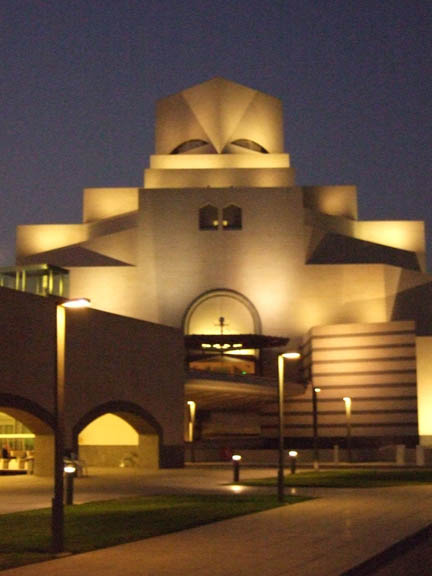
The Museum of Islamic Art at night

My last day I visited the Museum of Islamic Art, which houses a magnificent spread of Quranic manuscript pages, pottery, metalwork and jewelry from all over the region, especially from Iran. Their website has a number of impressive e-cards available. The main Qatar Museum is being renovated, but the Arab Museum of Modern Art has opened and one on Orientalism is in the works. Qatar’s wealth is making Doha a museum Mecca, one that is sure to draw a large number of tourists in the years to come.


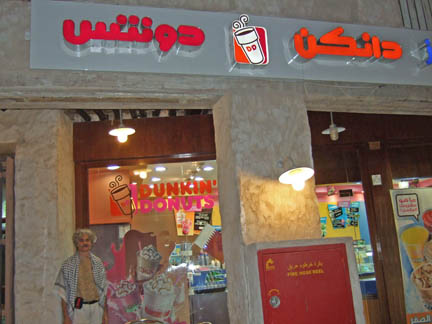
Dunkin’ Donuts invades Suq Waqif

When I first visited the Doha suq, it was hardly worthy of the title; to put it mildly, it was quite miskin. But now it has been recreated as a tourist attraction (with paid parking) and live music. It has many of the old kinds of shops, from textiles to spices, but then there are the foreign intrusions, such as a Dunkin’ Donuts located near the parking lot. Just what Doha needs: stale globalized donuts.

Flying to and from New York was on Qatar Airways, which has the most outstanding business class I have ever experienced. It is hard to imagine a better first class experience. Next time you are traveling to the Gulf, consider a stop in Doha. Midst the turmoil embroiling the region, Qatar remains a stable oasis of growth. Such a tiny nation, but one that is really making a mark culturally and politically in the region.

Is There a Middle East?


Announcing a new book from Stanford University Press…

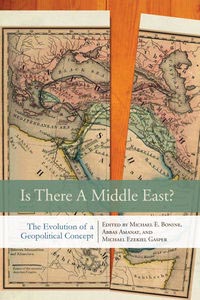
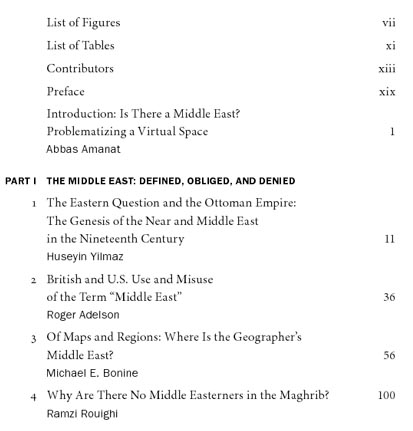
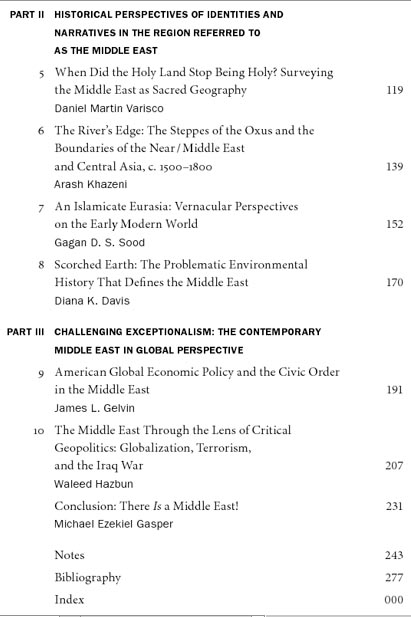
Is There a Middle East?: The Evolution of a Geopolitical Concept
Edited by Michael E. Bonine, Abbas Amanat, and Michael Ezekiel Gasper
Stanford: Stanford University Press, 2011.

Is the idea of the “Middle East” simply a geopolitical construct conceived by the West to serve particular strategic and economic interests—or can we identify geographical, historical, cultural, and political patterns to indicate some sort of internal coherence to this label? While the term has achieved common usage, no one studying the region has yet addressed whether this conceptualization has real meaning—and then articulated what and where the Middle East is, or is not.

This volume fills the void, offering a diverse set of voices—from political and cultural historians, to social scientists, geographers, and political economists—to debate the possible manifestations and meanings of the Middle East. At a time when geopolitical forces, social currents, and environmental concerns have brought attention to the region, this volume examines the very definition and geographic and cultural boundaries of the Middle East in an unprecedented way.


A Madventure in Yemen


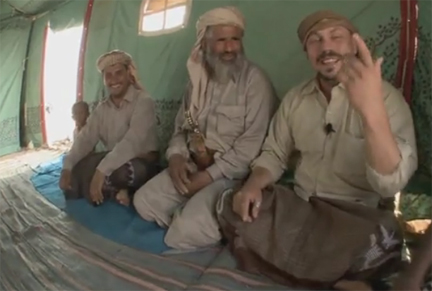
Take two rather weird Finns, a camera and a mountain of jocularity. The result is one of the stranger travelogues you will ever encounter: Madventures YEMEN. This film was made shortly after the attack on the U.S. Embassy in 2008. The two travelers are hardly experts on Yemen and much of what they say (about tribes and geography, for example) should be taken with a grain (at times a pillar worthy of Lot’s wife) of salt. But I love this film, once you get by the Ali-G-ness of the two f-ing (a word they use to the hilt) Finns. First, the cinematography is fantastic and you hear from a number of Yemenis, who often make far more sense than their guests. Second, it does not treat qat as a drug and the Yemenis come across as anything but the “terrorists” portrayed in the media. Indeed, at one point, the traveler Rika notes that despite the number of weapons in Yemen it probably has less crime than the country you are watching the film from.

Check it out and enjoy…

There are three parts to the film available on Youtube: Part 1, Part 2, Part 3.

Gems of Arabic Literature #3: On Sicily

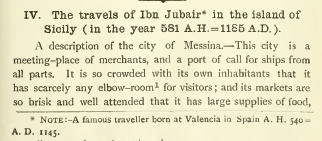
With the virtual flood of book digitalization online quite a few obscure books are now available online either at archive.org or through Google. I recently came across a gem: a translation of a high school Arabic text used in Aden by the British at the start of the 20th century. The title page was shown in a previous post. The full text can be downloaded as a pdf here. The excerpt below is from Ibn Jubayr’s travel account of a visit to Sicily. The Arabic text of Ibn Jubayr can be downloaded in pdf form here. Since my grandfather (hence the name Varisco) came from near Palermo, I take great pleasure in providing his account here.


Continue reading Gems of Arabic Literature #3: On Sicily

Tabsir Redux: “when I asked him what a Moslem was”

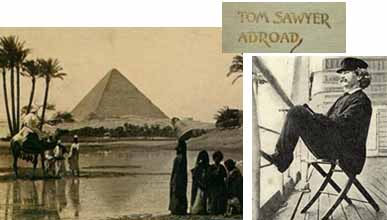
According to all three major monotheisms even God needed time to take a rest and so the sabbath was created. With the spate of mosque bombings, torture of prisoners and outright mayhem dominating the news about the Middle East these days, it might help to sit back and read what the American humorist Mark Twain wrote about his Missouri-born creation Tom Sawyer set loose in the Holy Land more than a century ago. Continue reading Tabsir Redux: “when I asked him what a Moslem was”