Category Archives: Poetry

ON MILITANCY AND THE ART OF THE EGG

The Colloquium for Unpopular Culture and NYU’s Program for Asian/ Pacific/ American Studies present a new series: AUSCULTATIONS: sound, noise, (nervous heart)beats

FLAGG MILLER (University of California at Davis)
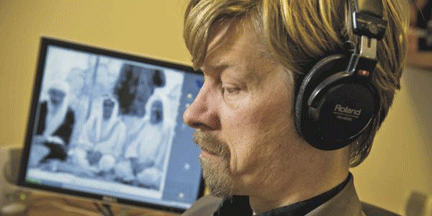
ON MILITANCY AND THE ART OF THE EGG: THEOLOGICAL LESSONS FROM THE OSAMA BIN LADEN AUDIOCASSETTE COLLECTION

Cosponsored by NYU’s Hagop Kevorkian Center for Near Eastern Studies

When: Monday 19 April 2010, 12:30pm
Where: Room 471, 20 Cooper Square (East 5th and Bowery)
Free and open to the public

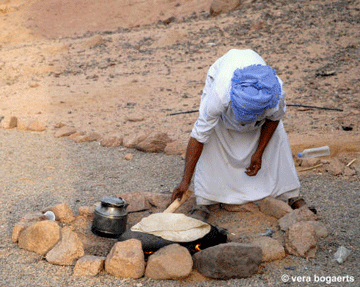
The alleged fantasies of Islamic militants provide Western audiences with an ample repertoire not only for stereotyping Muslims but also for severing acts of terror from realms of human experience. With the aim of bringing Muslim militants’ narratives of violence back to the complexities of situated cultural interaction, Flagg Miller will investigate the ways in which militancy is conceptualized through audiocassette-mediated sound production. In the winter of 2002, over 1500 audiocassettes from Osama Bin Laden’s former compound in Qandahar, Afghanistan were acquired by Cable News Networks. Miller will focus on one cassette entitled “With the mujahidin” (ma` al-mujahidin) that features participants cooking breakfast in a makeshift Afghan Arab kitchen. Continue reading ON MILITANCY AND THE ART OF THE EGG
Arabian Idol: for better and for verse

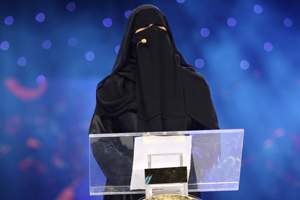
The BBC has an interesting video available online on the popular Emirates television show take-off on “American Idol” but for poets speaking Arabic. Among the final contestants was Hissa al-Hilal, whose frank response to sexist clerics has made her a household name despite being under almost a full hijab. If you think poetry does not pay in this part of the world, think again. The winner walked away with about 1.4 million dollars and Hissa earned 817 thousand dollars. She apparently won the votes of the panel of critics, but lost out to the audience.

Sinan Antoon on Poetry

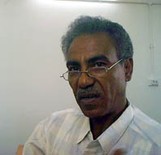
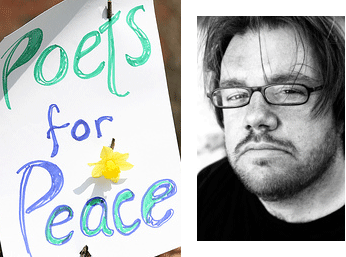
The Iraqi poet Sinan Antoon, attending the Split This Rock Poetry Festival in Washington, D.C. last weekend, was interviewed along with two other poets on NPR on March 10. Here is a brief excerpt, but there is more at the website.

CONAN: Careful listeners can hear another person there in the studio with you at the Radio Foundation in New York City. That is Sinan Antoon, a poet and novelist originally from Iraq, and it’s good of you to be with us today, too.

Mr. SINAN ANTOON (Poet; Novelist; Assistant Professor, New York University): Thank you for having me.

CONAN: And in your tradition, we just heard about that “Poet’s Millions” program broadcast in the Gulf area. Poetry is revered in the Arab world.

Mr. ANTOON: Yes, it is. I should say about this “Million’s Poets” program, it’s not necessarily the best phenomenon we have nowadays because it supports and promotes a certain kind of populist poetry, which is important, and it has its audience. But yes, the tradition of poetry in the Arab world is 14 centuries old, and it’s been integral for the collective identity of people.

But in the modern, contemporary period, it was a very important forum for the anti-colonial struggle, for liberation and for a lot of people in expressing their resistance against dictatorships. So being a poet in the Arab world and saying what poets should say and defending the public and truth meant that, you know, poets are taken to court and are put in prison and are exiled, so… Continue reading Sinan Antoon on Poetry

Exercises in Struggling with Loneliness


Shaqi Shafiq, Adeni poet

Exercises in Struggling with Loneliness

by Shawqi Shafiq, Translated by Sinan Antoon, Banipal

Rub the heart’s ring

rub it well

to erase the dust of depression

Rub it again carefully

so that the wall of forgetfulness shines

or

draw a circle/put a dove, or two, inside it/watch the wings move (that is if there are any)

You will ask: What if the circle crumbles?

What if the dove flies away

or if I am bothered by the wings’ noise

I will say to you: erase the circle

for all the traces to disappear

or put a fresh woman

instead of the dove

to seek revenge

for the aridity of an apartment

devouring your mouth

An Archic Sonnet


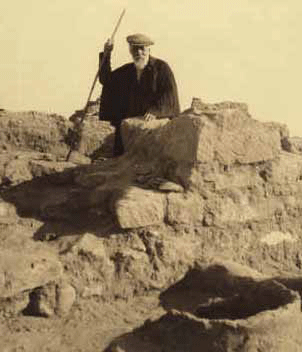
Sir Flinders Petrie, Egyptologist

An Archic Sonnet

To know what man was, ere he wrote his name,
Inscribed the laws and precepts on the rock,
And sacrificed the best lamb of the flock,
We dig the mound, and wander o’er the plain.
To learn the mysteries of the past, we fain
Would search for hidden slabs, and keep in stock
The Relics we so love. Oh, to unlock
The door, and gain an entrance to the same! Continue reading An Archic Sonnet

Poetry out of Arabia

[Webshaykh’s note: Dr. Saad Sowayan, as the post below will explain, has been collecting, analyzing and documenting the oral poetic traditions of the Arabian Peninsula, especially his native Saudi Arabia, since his graduate research. He has now completed two major works, available for reading on the internet, but still in search of an appropriate publisher. I invite readers to look over his impressive documentation and analysis and communicate with Dr. Sowayan any ideas that may help forward his project.]

by Dr. Saad Sowayan, King Saud University

After 10 years of continuous hard work, I managed to finish the two books, which, taking the size and importance of each, I consider to be my lifetime projects.
A) Legends & Oral Historical Narrative from Northern Arabia (1131 pages)
B) The Arabian Desert: Its Poetry & Culture Across the Ages: An Anthropological Approach (820 pages).

The first work, as its title says, is a collection of Bedouin narratives and poems relating to tribal genealogies, camel marks, tribal territories, water wells, sheikhs, warriors, tribal judges, tribal poets, personal histories, as well as narratives relating to raids and counter raids amongst tribes and other events. All of these are told by competent narrators & reciters in the various tribal dialects and all go back to pre and early 20th century. I have been engaged in taping this voluminous material during the span of the 4 years extending from 1982 up to 1985. Since 1995 I have been engaged in archiving, indexing, transcribing and editing this taped material which came to a total of several hundred hours of recorded interviews. Legends & Oral Historical Narratives from Northern Arabia (1131 pages) is the result of this effort very carefully transcribed and edited in Arabic script with full voweling tashkeel. The work comes with a very detailed table of contents and an introduction explaining the nature of the material along with some linguistic remarks and explanation of the transcription method I used. All in all, the work is a primary source on Arabian nomadic tribal culture, oral literature and vernacular language. This work constitutes a compliment to the works of P. Marcel Kurpershoek published in English by Brill in Leiden. Continue reading Poetry out of Arabia

For the Love of Bread

Arab poets extolled just about everything under the soon and in the moonlight. Even a loaf of bread could inspire passion. The following is a poem by Abu al-Mukhaffaf, an early 9th century Baghdadi poet. Here is the introduction (nasîb) in his ode:

Please, no abodes abandoned in the wastelands!
Spare me your lines about expensive wines;
No virgin girls with narrow waists and waistbands.
Describe a noble loaf: a sun that shines,
Or like the moon when it is full and round;
For only them my poetry is sound.

I’ve given up all contacts with attractive girls.
I’ve sobered up: no more consorting with all those
Who please the eye until you die from love. Continue reading For the Love of Bread

Rumi-nations on Houris

Houris
by Rumi, translated by William C. Chittick

If anyone asks you about houris, show your face and say, “Like this.”

If anyone speaks to you about the moon, rise up beyond the roof and say, “Like this.”

When someone looks for a fairy princess, show your face to him.

When someone talks of musk, let loose your tresses and say, “Like this.”

If someone says to you, “How do clouds part from the moon?”

Undo your robe, button by button, and say, “Like this.”

If he asks you about the Messiah, “How could he bring the dead to life?”

Kiss my lips before him and say, “Like this.” Continue reading Rumi-nations on Houris