Category Archives: Anthropology/Sociology

History of Modernity and Telephony in the non-West

Call for Papers for CyberOrient
Vol. 8, Iss. 2, 2014
Submission deadline: 30 April 2014 (Full Papers)

Special Issue: History of Modernity and Telephony in the non-West
Guest Editor: Burçe Çelik

Aim

For the past few decades, history of modernization began to be written by focusing on how technologies as components of modernization processes change the lives of humans, their daily practices and imaginations, and the ways in which they construct and express their identities. Telephony, which functions in both public and private spheres and witnesses social and political changes in private as well as professional relations, is regarded as especially important for historical analysis. Functioning on multiple levels, social history of telephony can unearth the ways in which technologies obtain meanings and values in changing cultural contexts and the dynamics of social, political and cultural transformations. The history of modernization in the non-western societies is often studied by focusing on the projects of the rulers and on the discourses of the ruling parties that aim a social/political change in accordance with a particular Occidentalism – where modernity is imagined with a model of the western modernization processes. Yet, the question of how people of these landscapes contributed to the modernization processes and how they produced their own modern practices in daily organizations, relations and experiences, did not receive enough scholarly attention.

This special issue of CyberOrient invites articles that focus on the history of modernity and telephony in the non-west that take the user perspective to the center. Topics could include the daily practices of users with telephone technology, the meaning and values that have been attributed to this technology by users, the role of telephony within the social, cultural and political struggles of users, and the effect of the ownership or non-ownership of telephony in social, cultural and political lives of individuals and collectives. We welcome submissions from across disciplines and methodological approaches that are empirically and critically grounded.

Submission

Articles should be submitted directly to Burçe Çelik (burce.celik@bahcesehir.edu.tr) and Vit Sisler (vit.sisler@ff.cuni.cz). Articles should be between 6,000 and 8,000 words (including references), and follow the AAA style in referencing and citations. Upon acceptance, articles will be published online with free access in autumn 2014.


CyberOrient, Latest Issue Online

The latest issue of CyberOrient is available online.

Articles

Online and Offline Continuities, Community and Agency on the Internet
Jon W. Anderson
http://www.cyberorient.net/article.do?articleId=8355

The Earth Is Your Mosque (and Everyone Else’s Too): Online Muslim
Environmentalism and Interfaith Collaboration in UK and Singapore
Lisa Siobhan Irving
http://www.cyberorient.net/article.do?articleId=8336

Telling the Truth about Islam? Apostasy Narratives and Representations
of Islam on WikiIslam.net
Daniel Enstedt and Göran Larsson
http://www.cyberorient.net/article.do?articleId=8459

Comments

Digital Images and Visions of Jihad: Virtual Orientalism and the
Distorted Lens of Technology
Raymond Pun
http://www.cyberorient.net/article.do?articleId=8391

Reviews

Review: Arabités numériques. Le printemps du Web arabe
Luboš Kropáček
http://www.cyberorient.net/article.do?articleId=8352

Review: Media, Power, and Politics in the Digital Age. The 2009
Presidential Election Uprising in Iran
Zuzana Krihova
http://www.cyberorient.net/article.do?articleId=8386

Review: iMuslims: Rewiring the House of Islam. Islamic Civilization
and Muslim Networks
Vit Sisler
http://www.cyberorient.net/article.do?articleId=8385

Lebanon: Comments on “Communities of Suffering”

The artificial polarization of “communities of suffering”: when political violence paves the way to a common ground

by Estella Carpi

I still remember when the Secretary-General of Hezbollah, Sayyid Hassan Nasrallah, in the speech he held on occasion of the Martyr’s Day on 12th November 2012, used the term munafis (rival) to indicate the Lebanese opposition parties, instead of ‘adu (enemy), which is only used by the party to point to their enemy par excellence, the Zionist entity. This detail helps create a picture of the Lebanese political scenario of the last two years, in the constant attempt of local parties to maintain relative stability within the country’s boundaries, in spite of the aging bloodshed in neighbouring Syria.

In the currently increasing insecurity of life in Lebanon, community as an interpretation grid – and specifically the “belonging” to a given community – seems to be, again, a sine qua non of any understanding of local suffering, historical scars, and individual worldviews. Community, meant as a primordial notion, has always been used as a protective identity shelter in time of crisis: Lebanon constitutes the perfect historical case in point. As such, community is imagined by all of us as a comforting source for empathy and solidarity, particularly in the chronicity of a fragmented and flimsy state sovereignty. After the bombing in Dahiye – as the southern suburbs of Beirut are locally called – last 15th August, and in Tripoli, in North Lebanon, last 23rd August, all residents apparently have come to reshape two separate communities of suffering. Continue reading Lebanon: Comments on “Communities of Suffering”

An 1873 Geography Lesson #3

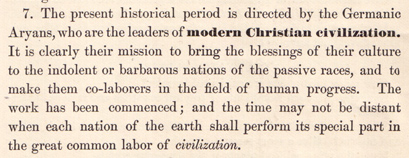
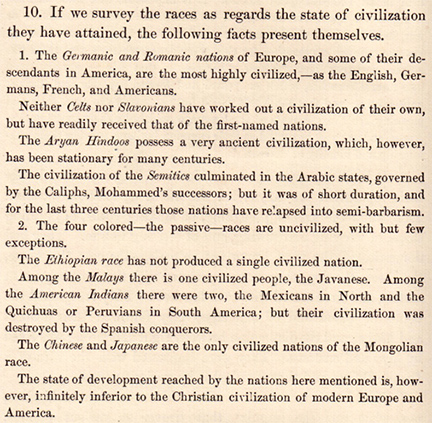
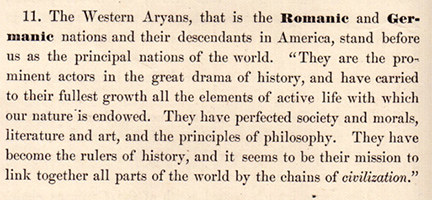
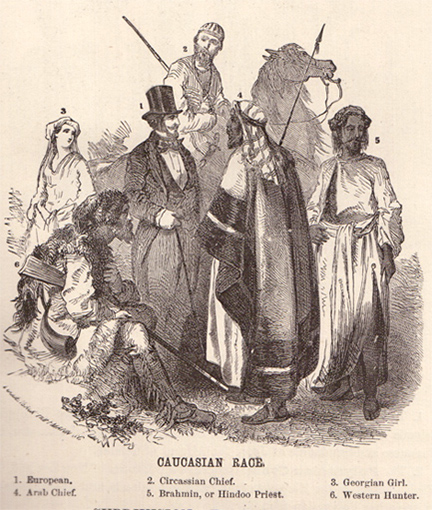
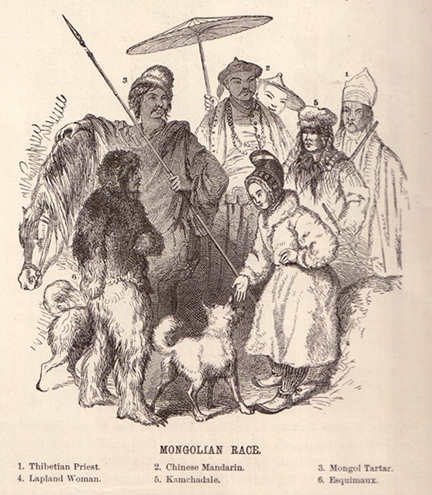
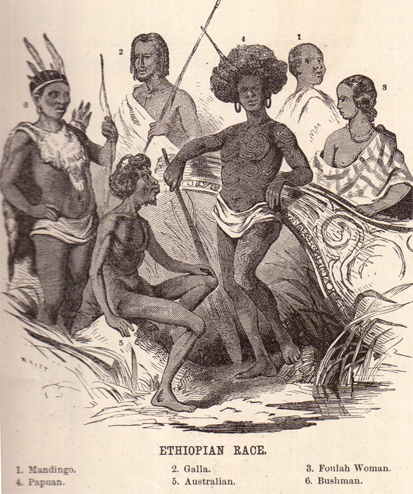
My grandmother’s aunt, Ms. Ida Hoyt, owned an 1873 geography textbook entitled An Elementary Treatise on Physical Geography by D. M. Warren (published by Cowperthwait & Co of Philadelphia). For Part 1, click here and for Part 2, click here. A vital part of geography at the time was the issue of “race,” which was as misunderstood after the American Civil War as before it. “Arabs” were admitted into the Caucasian Race, on a par with the “Western Hunter.” The five major racial categories are shown below.

Continue reading An 1873 Geography Lesson #3

Airing out on Area Studies: Confessions of a Middle East Area Specialist

[These remarks were written on the train back to New York after the 1997 AAA meetings in Washington. I had earlier provided extemporaneous remarks on the subject at the business meeting of the Middle East Section. I found these in a set of old files and decided such a confession is timeless, at least in my case. And this year I will again be presenting papers at both AAA and MESA. ]

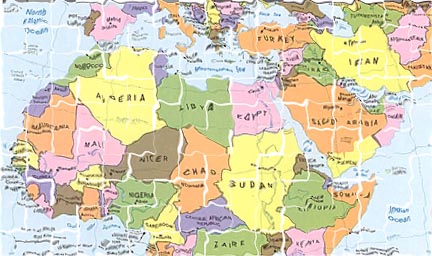
The idea of “Area Studies,” especially those areas where several centuries of Western colonialism have helped define the modern boundaries, is under attack. One of the more besieged areas is the Middle East, once the Near East and part of the politically uncorrected Orient as such. I am not particularly interested in defending Area Studies as such. But I am dismayed at the weakening of Middle East Studies programs at major universities. As an anthropologist who encourages other anthropologists to work in the Middle East, I appreciate the teaching of Middle Eastern languages, literature, culture, history, politics, economics, etc. as potentially useful information for ethnography. I do not know how trying to learn “too much” about the region could distort one’s anthropologizing.

Each fall I have a major decision to make: should I go to AAA or MESA? Continue reading Airing out on Area Studies: Confessions of a Middle East Area Specialist

Sex Education in Yemen


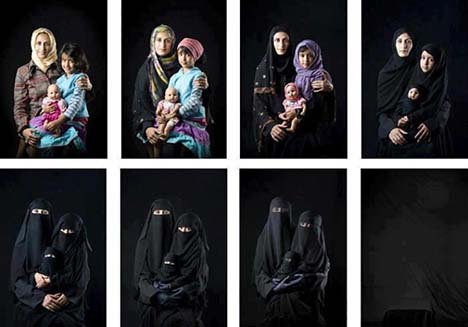
Photography by Boushra al-Moutawakel

from Yemen Times, June 24, 2013

It’s a sensitive subject in this conservative and religiously observant country. Who is talking about safe sex? In a recent online survey carried out by the organization Time to Talk, lasting 11 days—from May 11 to May 22, 2013—the organization asked 300 Yemenis that question, among others. Here are the results of their survey:

More men than women completed the survey, approximately 93 percent men and 7 percent women, all of them holding Yemeni nationality and spread over different age groups, with the largest prevalence among the 19-25 age group (28 percent), and less participation on the part of people in the age of 15-18 (6.12 percent).

The Yemeni respondents cannot be considered to be a representative sample of the Yemeni population because while there are currently as many males resident in Yemen as there are females, the number of men who voluntarily took part in our survey outnumbered the women, with an account for approximately 93 percent of all respondents.

However, almost all age groups present in the Yemeni population are well represented in our group: 19-25 (28.57 percent), 26-30 (19.39 percent), 30-35 (23.24), 36-40 (13.27 percent). The Yemeni age groups least well-presented were young people aged between 15-18 (6.12 percent) and the over 40’s (9.18 percent). Of those who responded to the survey, 54.17 percent are single and 45.83 percent are married. Continue reading Sex Education in Yemen

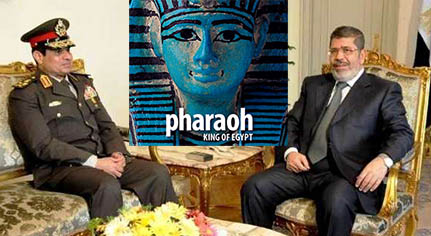
On Pharaohs, Pundits and Scholars

by Daniel Martin Varisco, Middle East Muddle, Anthropology News, July, 2013

The removal of Mohammed Morsi as president of Egypt has generated a frenzy of talking head punditry that shows little sign of abeyance, at least until another Middle Eastern leader bites the dust. Was it a coup? Was it yet another people’s revolution? Was it a failure of democracy? Did the Obama administration support the ouster? Was Morsi trying to make himself into a modern day Pharaoh? Tut, tut, sings the chorus of pundits.

Beyond the rhetoric back and forth, here is a reality check. The military has always been in charge of Egypt since Nasser took power in a well-recognized coup in 1952 that toppled a puppet king. Sadat and Mubarak came from the military, no matter what the status of their election. The military owns Egypt, quite literally, and is its main economic player. Morsi was not elected over the objection of Egypt’s top brass, but his attempt to weaken the power of the military is probably the main reason for his downfall.

In one sense of course it is a coup. It was the military, not the protesters, who really stormed the Bastille. It is the military who is keeping charge of Morsi and pushing for legal action against him. But in another sense it can hardly be called a coup when the military never gave up its power. Morsi was given slack, perhaps to let him fail on his own, but he never had any real power. Despite the official rhetoric, the leaders of most, if not all, Western nations are quite happy to see Morsi out of the way. At least a bloody corpse was not posted on state television, as happened at times in old-style army coups in the region. No American or European policy makers wanted to work with the Muslim Brotherhood any more than they do with Hamas in Gaza or with the militants calling for a new caliphate in Syria.

But here is the dilemma for scholars who study Egypt and have lived there. Egypt’s history, ancient, post-Arab conquest and modern, is a gold mine for researchers in a number of disciplines…

For the rest of this commentary, click here.