Category Archives: Anthropology/Sociology

American Grassroots and Democratic Change

by el-Sayed el-Aswad, United Arab Emirates University

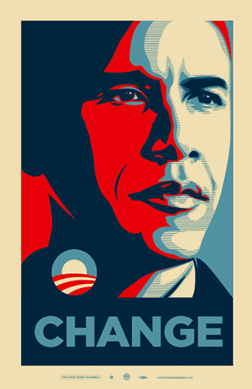
The historic victory of Barack Obama, the first African American president, is the outcome not only of a politically talented and eloquent leader hoping for and acting toward change but also of the relentless will and determination of American grassroots demanding openness, fairness, equality and freedom. American people, with their diverse, rich and dynamic culture, voted for change so as to have not just something new, but to attain liberation and reconstruct fair and peaceful relationships with all people. What is happening inside the most powerful nation in the world must be reflected and enacted in different parts of the globe. People around the world are hoping and expecting that the United States will work to promote peace and a healthy democracy through dialogue, diplomacy and persuasion after eight years of power mismanagement leading to unjustified intervention and irrational wars. Continue reading American Grassroots and Democratic Change
Connecting Histories in Afghanistan


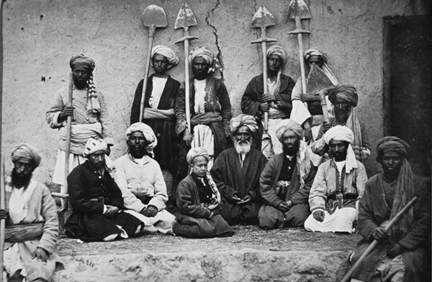
Landowners and Laborers in Kabul from the Burke collection that comprises the first series of photographs relevant to the market region and period of our concern that were taken in the context of the second Anglo-Afghan war. Image courtesy of the the National Army Museum, London.

Connecting Histories in Afghanistan: Market Relations and State Formation on a Colonial Frontier by Shah Mahmoud Hanifi. New York: Columbia University Press, 2008.

Preface

This book situates nineteenth-century Afghanistan in the context of British Indian colonialism. The general focus is commerce, mainly how local actors including Afghan nomads and Indian bankers responded to state policies regarding popular and lucrative commodities such as fruit and tea. Within those broad commercial concerns, specific attention is given to developments in and between the urban market settings of Kabul, Peshawar, and Qandahar. The colonial political emphasis on Kabul had significant commercial consequences for that city and its economic connections to the two cities it displaced to become the sole capital of the emerging state. The Kabul hypothesis therefore represents a colonial political strategy, and its effects on Kabul-Peshawar and Kabul-Qandahar economic relations are the subject of this book. Continue reading Connecting Histories in Afghanistan

In Memoriam Elizabeth Fernea

Webshaykh’s Note: For the many people whose lives crossed those of BJ Fernea this is a sad note from the University of Texas, where she taught for many years.

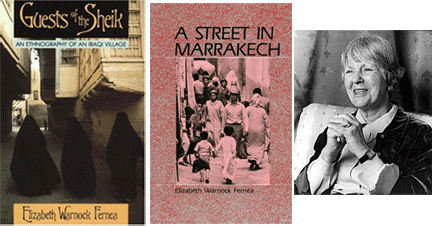
It is with great sorrow that we report that Elizabeth Warnock Fernea, Professor Emerita of Comparative Literature and Middle Eastern Studies at the University of Texas at Austin, passed away on Tuesday afternoon, December 2, 2008, at the home of her daughter, Laila Stroben, in La Canada, California. She is survived by her husband, Robert A. Fernea (Professor Emeritus of Anthropology and Middle Eastern Studies), daughters Laura Ann and Laila and son David, and several grandchildren. Continue reading In Memoriam Elizabeth Fernea

The Anthropologist’s Son

The Anthropologist’s Son
by Ruth Behar, Chronicle of Higher Education, November 28, 2008 and History News Network

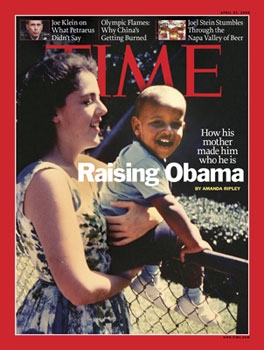
Stanley Ann Dunham Soetoro earned a Ph.D. in anthropology with an 800-page dissertation about blacksmithing in Indonesia. She spent long stretches of time learning to love and rescue the cultures and communities of total strangers, at the cost of not always being around while her son was coming of age in Hawaii. Yet she had an indelible impact on him, teaching him to appreciate cultural diversity and have faith in people’s ability to understand each other across borders and identities. Continue reading The Anthropologist’s Son

Obama’s Iranian Opening

by William O. Beeman, New America Media, News Analysis, November 12, 2008

New America Media Editor’s note: Diplomacy between the United States and Iran has been at a standstill. President-elect Barack Obama has a great opportunity to end the cold war between the two nations. NAM contributing writer William O. Beeman is professor and chair of the Department of Anthropology at the University of Minnesota.

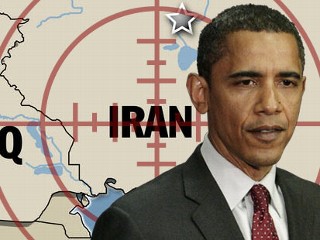
President-elect Barack Obama has a serious opening to improving relations with Iran, if he knows how to exercise it. Unfortunately, his transition advisory team is weak on Middle East affairs, and almost non-existent on Iran. This leaves the president-elect prey to the same forces that have tried to sabotage progress on rapprochement with Iran during the Bush administration.

Paradoxically the Bush administration in its last days is flirting with a thaw on Iranian relations. They have been giving serious consideration to establishing a real United States Interests Section in Tehran. Iranians have had an Interests Section in Washington for decades. By contrast, the Swiss Embassy has represented U.S. interests with Swiss personnel. Continue reading Obama’s Iranian Opening

Literacy through Poetry


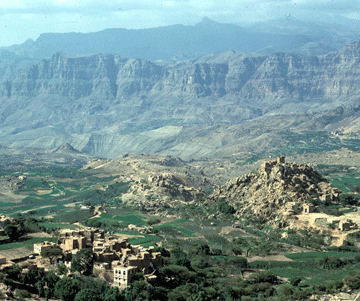
Highland valley of al-Ahjur in central Yemen

The following report was recently published online by dvv international at the Institut für Zusammenarbeit des Deutschen Volkshochschul-Verbandes. It can be read in English, French or Spanish. The report describes an innovative World Bank-funded literacy project coordinated in Yemen by anthropologist Najwa Adra in 2002/2003.

Learning through Heritage, Literacy through Poetry
by Najwa Adra

I have just read Henrik Zipsane’s fascinating article on heritage learning (Zipsane 2007) in the latest issue of this journal. Zipsane describes several highly effective programs for lifelong learning provided by Jamtli Open Air Museum in Sweden. He argues that each person’s heritage includes “many coexisting histories” and that there is a need to provide diverse learning experiences. He suggests that one can learn “through cultural heritage” and not only about this heritage. In a part of the world far from Sweden, geographically and culturally, I too have found that heritage can be an effective learning tool “in the present” and not just an interesting artifact of the past.
The Project

In 2002-2003, I piloted a literacy project for adults in Yemen, on the SW corner of the Arabian Peninsula, in which learners created their own texts through their stories, poems and rhyming proverbs (Adra 2004). 2 Classes began with a discussion of a photograph of a scene familiar to the students or a topic of their choice. Students were encouraged to insert poetry and proverbs into their discussion, as is their custom when discussing issues of importance to them. With the teacher’s help, the class developed a short story based on the discussion. This story, which was written on large paper taped to the wall, along with poems and proverbs generated by the discussion, became the text through which students learned to recognize and read phrases, words and letters of the alphabet. In order to reinforce letter and word recognition, texts often focused on particular letters, words or syllables. Continue reading Literacy through Poetry

Lucie Wood Saunders, 1928-2008

Lucie Wood Saunders, 1928-2008

One of AMEWS’ earliest members and warmest supporters, Lucie Wood Saunders, passed away on July 26, 2008. Lucie received her PhD in Anthropology from Columbia University in 1959. Her dissertation research was on parallel cousin marriage in Arab families. She carried out research in Egypt, at the invitation of Laila el Hamamsy, Director of American University of Cairo’s Social Research Center, starting in 1961 and into the 1980’s in the Egyptian Delta village, Tafahna el-Ashraf. She worked with Sohair Mehanna of the SRC, authoring many articles with her on Tafahna el-Ashraf. Lucie was among the first Anthropologsits to write on issues of gender in the Delta villages. Her research inspected family and gender relations, the local zar cults, women and development issues around small businesses such as poultry, and medical anthropology. Her early work focused more on psychological issues and her later work more on economic issues. Continue reading Lucie Wood Saunders, 1928-2008

Reading Bin Laden


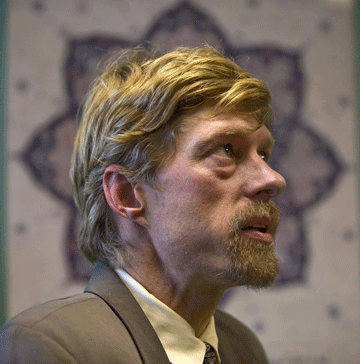
Flagg Miller, an assistant professor of at UC Davis, translated and analyzed about 20 tapes of Osama bin Laden. Photography by HECTOR AMEZCUA

UC Davis researcher delves into the mind of bin Laden

By Bobby Caina Calvan, The Sacramento Bee, Thursday, September 11, 2008

For five years, a University of California, Davis, researcher has been replaying hundreds of hours of audiocassettes that, he says, yield deeper – and more complex – insights into the intellectual development of Osama bin Laden.

A collection of 1,500 audiocassettes was carted away from bin Laden’s compound in Kandahar, Afghanistan, in 2001 and provides a glimpse into bin Laden’s rise leading up to the Sept. 11, 2001, terrorist attacks.

Certainly, few would dare humanize the man the United States calls its most wanted, who seven years after the country’s deadliest terrorist attacks is still being sought dead or alive.

On the seventh anniversary of the attacks, the most brazen ever carried out anywhere in the world, bin Laden still looms large on the American psyche, its politics and public life. Continue reading Reading Bin Laden