Category Archives: Anthropology/Sociology

Satanic or Silly: Does Yale Press Censorship of Cartoons Insult Muslims?


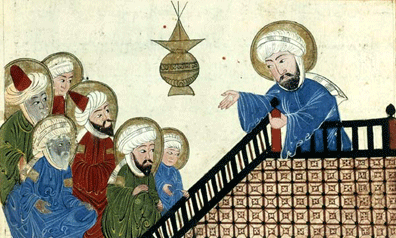
The Prophet Muhammad, 17th century Ottoman copy of an early 14th century (Ilkhanate period) manuscript of Northwestern Iran or northern Iraq (the “Edinburgh codex”). Illustration of AbÅ« Rayhān al-BÄ«rÅ«nÄ«’s al-Âthâr al-bâqiyah ( الآثار الباقيةة ; “The Remaining Signs of Past Centuries”). Source: Wikipedia article on Muhammad

Satanic or Silly: Does Yale Press Censorship of Cartoons Insult Muslims?
By Daniel Martin Varisco, Religion Dispatches, September 8, 2009

Two decades ago, the publication of Salman Rushdie’s The Satanic Verses caused a tsunami of protest in the Muslim world. The author was forced into hiding for nearly a decade after Ayatollah Khomeini called on Muslims to kill him and his publishers. Rushdie was accused of blasphemy, both for slandering the prophet Muhammad by subverting his character to Mahound (a medieval English term synonymous with the devil) and for reducing the holy city of Mecca to Jahiliya (a term used by Muslims to refer to the pagan past of Arabia). It was only a novel, but the fact that it was written by an Indian-born Muslim and published in the West was enough to frustrate even moderate Muslims.

Academic books rarely cause riots in the streets, but a forthcoming study on the recent Danish cartoon controversy may come close. Continue reading Satanic or Silly: Does Yale Press Censorship of Cartoons Insult Muslims?
MECA Study Day at Hofstra

Hofstra University Announces Middle Eastern and Central Asian Study Day
A Series of Presentations Focused on Faculty Research

Who: Hofstra faculty who have conducted research on Middle Eastern and Central Asian (MECA) studies
What: MECA Study Day
When: September 16, 2009
Where: 310 C.V. Starr Hall and 117 Berliner Hall, South Campus
Why: To highlight and learn about the research Hofstra faculty have done on MECA studies

Hofstra faculty from a variety of departments such as fine art, art history, anthropology, history, comparative literature, economics, political science and religious studies will give presentations on their research in MECA studies. Topics from their research will include archeology, women’s issues, history and the contemporary Middle Eastern and Central Asian world. These talks are free and open to the public.

MECA Schedule

Western and Central Asia in the Middle Ages
9:30 – 11:15 a.m., C.V. Starr Hall, 310
Moderator: Dr. Stefanie Nanes, Department of Political Science

• Greeting by Dr. Bernard Firestone, Dean of Hofstra College of Liberal Arts and Sciences
• Opening remarks by Dr. Daniel Martin Varisco, Department of Anthropology

• Dr. Aleksandr Naymark, Department of Fine Arts/Art History
Amazing Sogdians: Masters and Creatures of the Silk Road

• Dr. Anna Feuerbach, Department of Anthropology
The Damascus Steel Sword

• Dr. Daniel Martin Varisco, Department of Anthropology
The Sultan’s Green Thumb: Yemeni Agriculture in the 14th Century Continue reading MECA Study Day at Hofstra

Reviewing the Review

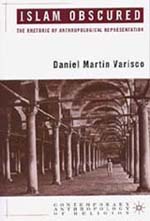
In 2005 I published Islam Obscured, a critical assessment of four books widely read as “the” anthropology of Islam. The books I examined were by Clifford Geertz, Ernest Gellner, Fatima Mernissi and Akbar Ahmed. Having wielded an iconclastic hammer over the first four chapters, I concluded the book with a brief question-and-answer survey of the ways in which “Islam” has and should be studied by anthropologists who value the role of ethnographic fieldwork. At the time, the publisher failed to send the book out for review, although some review copies finally went out over a year ago. There are many, many books out there on “Islam,” but my text was, to not mire myself in humility, somewhat unique. It faulted these texts for not using ethnographic data but rather essentializing their own views of what Islam should be.

I recently received a lengthy review by Ken Lizzio, whose research was on Sufi texts, in The Journal of North African Studies (14:309-316, June, 2009). Having written my book in large part for non-anthropologists, I was quite interested in how a specialist in Near Eastern Studies would react to it. The thrust of the reviewer strikes me as quite positive, especially when he states: “As Varisco proceeds to fell some of the giants in the anthropological forest, he does so with an axe sharpened with impeccable logic and refreshing intellectual honesty” (p. 310). The reviewer agrees with me that both Geertz and Gellner both fail to apply data from fieldwork to their assertions. So far, so good. Continue reading Reviewing the Review

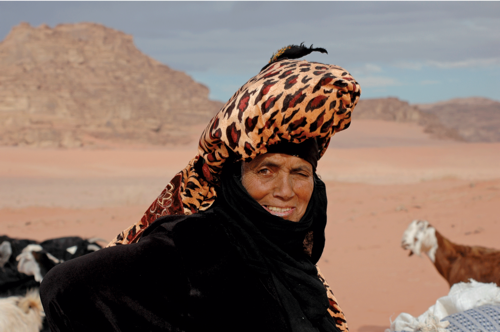
A Photographer among the Syrian Bedouin


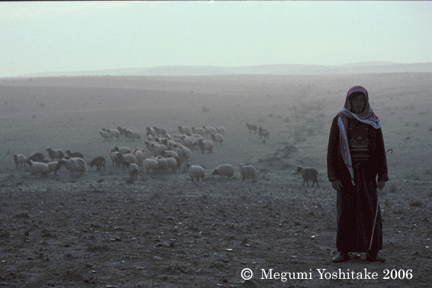
Morning Mist

A Life with a Bedouin family in Syria — from the Far East to the Middle East —

by Megumi YOSHITAKE, JAPAN

At the age of 15 the story of T. E. Lawrence [Lawrence of Arabia] captured my heart and mind. Ever since, I have yearned after deserts and been enchanted by the Arab world, and wanting to convey the essence of these places in my own way is what caused me to choose photography as my path.

I first visited Syria in 1987, and have spent part of every year from 1995 onwards living with a family of Bedouin in the Syrian Desert. Initially I was single, but visited again on my honeymoon after getting married and introduced my husband. I returned once more in 2004, this time bringing along my 16-month-old son. The time I have spent photographing the Bedouin — amounting to some 14 years — is unique among Japanese and rare even worldwide.


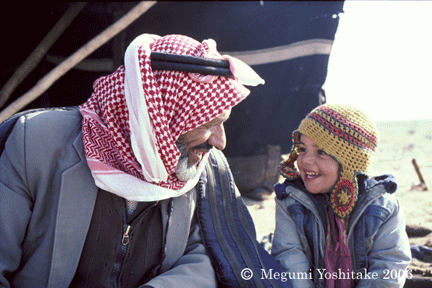
A Bedouin father and his daughter

To read the full story and look at the gallery of photographs, click here.

The Propaganda Value of a Detained Journalist


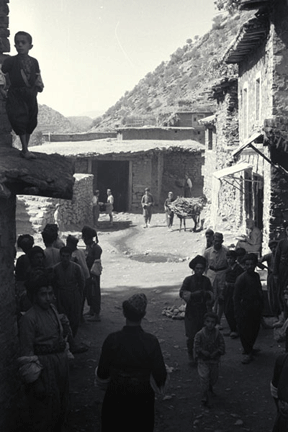
A street in Tawila, a Kurdish village near the border with Iran. Iraq, 1950, Photo by Wilfred Thesiger

by William O. Beeman, New America Media, August 06, 2009

New America Media Editor’s Note: New America Media correspondent Shane Bauer is one of three Americans presumed to be detained by the Iranian government near the Iran-Iraq border last weekend. Commentator William O. Beeman writes that their situation raises profound political questions.

“In the wrong place at the wrong time” is an apt description for three Americans currently being detained in Iran. They will likely be released, but not before Iranian authorities have wrung maximal publicity over their situation, painting them as Western intelligence operatives. The process could take months.

The timing for this event could not be more inopportune. Iran is on high emotional alert. It is flush with righteous indignation and paranoia vis-à-vis Western nations. It has undergone a contentious election where opponents of President Ahmadinejad were accused of collaboration with Western powers. Understanding the current state of mind in Iran is crucial to predicting the fate of the three travelers. Continue reading The Propaganda Value of a Detained Journalist

Sociology of Islam and Muslim Societies Newsletter


Charles Kurzman, Department of Sociology, University of North Carolina

The Sociology of Islam and Muslim Societies website is an important resource for anyone interest in the study of Islam from a sociological perspective. The current summer issue is available online at the main website. In the current edition, Charles Kurzman has an introduction well worth reading. He observes,

The sociology of Islam and Muslim societies is “hot,” for all the wrong reasons. It is not because globalization has drawn the world closer together, or because sociology is internationalizing its focus beyond its historical interest in Western Europe and North America. No, the sociology of Islam is “hot” because of the common but inaccurate association of Islam with terrorism and international conflict. The world wants to know why we are seeing such violence in the name of Islam, and sociologists — along with other social scientists — are expected to have answers. Violence and stereotypes related to Muslims are, sadly, good for business in the sociology of Islam. Continue reading Sociology of Islam and Muslim Societies Newsletter

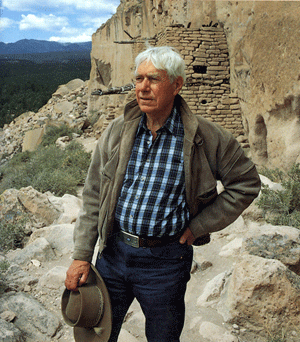
Edward T. Hall (1914-2009)

One of the most readable anthropologists of the 20th century passed away earlier this month on Monday, July 20. Most known for his The Silent Language (1959) and The Hidden Dimension (1966), Edward T. Hall specialized in the analysis of body language and established his theory of proxemics. Hall received his Ph.D. from Columbia University in 1942. In 1979 Hall was interviewed by Kenneth Friedman in the August issue of Psychology Today for an article entitled “Learning the Arabs’ Silent Language.” His comments on Arab culture are worth revisiting:

Kenneth Friedman: Do we Americans understand the Arabs, or do we tend to caricature or stereotype them?
Edward Hall: I don’t think we understand them. We ten to think of Arabs as underdeveloped Americans – Americans with sheets on. We look at them as undereducated and rather poor at anything technological. All we have to do is make believers out of them, get them the proper education, teach them English, and they will turn into Americans. Continue reading Edward T. Hall (1914-2009)