Category Archives: Anthropology/Sociology

Warren’s Geography #1

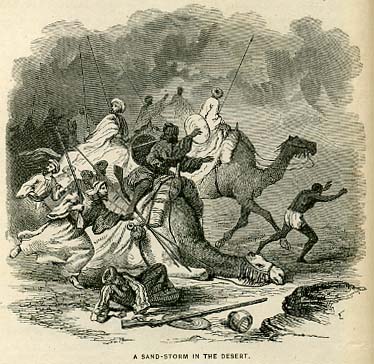
An Elementary Treatise on Physical Geography at the start of the civil war. While rummaging through old books and pictures of my late grandmother I found a copy of the 1873 edition of Warrens’ basic geography text which belonged to my great, great aunt, Ida Hoyt. There are several interesting lithographs in the text on Middle Eastern themes, which I show here.

Continue reading Warren’s Geography #1

Smashing the Silence Around FGM


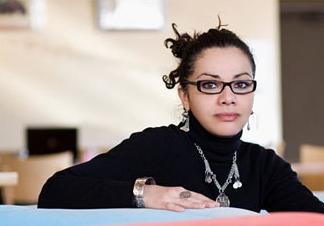
Mona Eltahawy

by Mona Eltahawy, The Huffington Post, February 9, 2010

Imagine if 3 million boys had their penises cut off every year.

Imagine that despite accounts of the unfathomable pain boys endure to ensure chastity and passage into manhood, religious leaders for decades taught their communities that God had decreed such mutilation.

A world tongue-tied by cultural relativism says nothing.

Sounds absurd, doesn’t it?

It’s a painful reality for at least 3 million girls who each year have parts or all of their clitorises cut off in a procedure known as female genital mutilation (FGM). The clitoris has double the nerve endings of a penis so my analogy to chopping off little boys’ organs isn’t too far off.

This past weekend marked International Day of Zero Tolerance of FGM, so allow me to shake you out of oblivion by reminding you that 6,000 girls a day are subjected to one of four types of FGM. Continue reading Smashing the Silence Around FGM

Understanding Islamic Feminism: Interview with Ziba Mir-Hosseini

Understanding Islamic Feminism: Interview with Ziba Mir-Hosseini

Yoginder Sikand, Madrasa Reforms in India, February 7, 2010

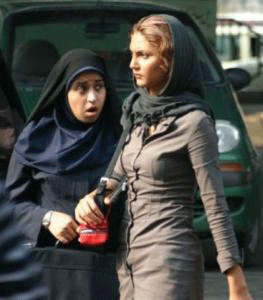
Born in Iran and now based in London, Ziba Mir Hosseini, an anthropologist by training, is one of the most well-known scholars of Islamic Feminism. She is the author of numerous books on the subject, including Marriage on Trial: A Study of Family Law in Iran and Morrocco (l.B.Tauris, 1993) and Islam and Gender, the Religious Debate in Contemporary Islam (Princeton, 1999). She is presently associated with the Centre for Islamic and Middle Eastern Law at the School of Oriental and African Studies, London.

In this interview with Yoginder Sikand she talks about the origins and prospects of Islamic feminism as an emancipatory project for Muslim women and as a new, contextually-relevant way of understanding Islam.

Q: In recent years, a number of Muslim women’s groups have emerged across the world, struggling for gender equality and justice using Islamic arguments. Most of them are led by women who come from elitist or, at least middle class, backgrounds. Many of them seem to lack a strong popular base. How do you account for this?

A: I think the majority of the women who are writing and publishing about what is popularly called ‘Islamic feminism’ are definitely from the elite or the middle class. But then, globally speaking, feminism has always had to do with the middle class, at least in terms of its key articulators and leaders. I believe that Islamic feminism is, in a sense, the unwanted child of ‘political Islam’. It was ‘political Islam’ that actually politicized the whole issue of gender and Muslim women’s rights. The slogan ‘back to the shariah’ so forcefully pressed by advocates of ‘political Islam’ in practice meant seeking to return to the classical texts on fiqh or Muslim jurisprudence and doing away with various laws advantageous to women that had no sanction in the Islamists’ literalist understanding of Islam. Translated into practice, law and public policy, this meant going back to pre-modern interpretations of shariah, with all their restrictive laws about and for women. It was this that led, as a reaction, to the emergence of Islamic feminism, critiquing the Islamists for conflating Islam and the shariah with undistilled patriarchy and for claiming that patriarchal rule was divinely mandated. These Muslim women were confronted with horrific laws that Islamists sought to impose in the name of Islam, and so began asking where in all of this was the justice and equality that their own understanding of the Quran led them to believe was central to Islam. These gender activists, using Islamic arguments to critique and challenge the Islamists, brought classical fiqh and tafsir texts to public scrutiny and made them a subject of public debate and discussion, articulating alternative, gender-friendly understandings, indeed visions, of Islam. That marked the broadening, in terms of class, of the fledgling Islamic feminist movement. Continue reading Understanding Islamic Feminism: Interview with Ziba Mir-Hosseini

Bryan Turner at Hofstra

On Tuesday, Feb. 9 and Wednesday, Feb. 10, internationally known sociologist Bryan Turner will be delivering two guest lectures at Hofstra, and also will be available for smaller meetings with interested students and faculty. Dr. Turner, currently a visiting professor at Wellesley College, was a sociology professor at National University in Singapore and the University of Cambridge. He will become a ‘presidential professor’ at CUNY in September. He has edited or written more than 60 books on a wide range of topics, and his research interests include globalization and religion, concentrating on issues such as religious conflict and the modern state, religious authority and electronic information, religious consumerism and youth cultures, human rights and religion, and religious cosmologies. Turner’s visit is sponsored by the Departments of Anthropology, Religion, and Sociology, Honors College, and the Middle Eastern and Central Asian Studies Program.

Tuesday, Feb. 9, 2:20-3:45 (Breslin 100)
Bodies as Culture/Bodies as Practice. In the last decade and across a wide range of disciplines, the human body has become a key issue in research. However, the dominant approach denies the materiality of the body, treating it as culture or text. The body is always a sign of something else. The result is that we lose any understanding of practice and embodiment. In my own work and in this talk, I look at a number of examples – dance, old age and disease – where practical embodiment cannot be avoided. This denial of materiality and practice has wider ramifications for sociology and anthropology in terms of the equally problematic status of ‘Culture’.

Wednesday, Feb. 10, 11:15-12:45 (Breslin 100)

PROGRAM CANCELLED DUE TO SNOW
Globalization and Cosmopolitanism : the religious and the secular’? Religion was systematically ignored by the major social science thinkers of the 20th century who embraced the idea of inevitable secularization (Althusser, Elias, Dahrendorf, Harvey, Boltanski, Giddens). At the beginning of this century, the academic scene has changed radically with major figures (Berger, Habermas, Vattimo, Rorty) either discovering or rediscovering religion. One curious absence, however, in the current fashion for work on globalization in the social sciences is yet another absence of religion. This is curious since one could argue that the evangelical religions were global all along – only Roland Robertson has perused this idea with some determination. The absence is even more curious when we come to the current study of global cosmopolitanism in which once more the major figures (Appiah, Beck, Giddens, Sassen) do not see the connection. In this paper I examine Alain Badiou’s contention that Saint Paul is our contemporary (Gal.3:28). Following my own work on Vulnerability and Human Rights (2006) I consider, with an intersection of theology and sociology, the idea of cosmopolitan virtue and hospitality. I finish with the provocative question: can Muslims be cosmopolitans?

In addition, Dr. Turner will be available from 4:15 p.m. -5:15 p.m. on Feb. 9 in the Anthropology Department office, Davison, Room 200; and from 9 a.m.-10 a.m. on Feb. 10 in Davison, Room 206.

For more information, contact Dr. Daniel Varisco at daniel.m.varisco@hofstra.edu

Arab Music on American Soil

Arab Music on American Soil: How Music blends Arab Heritage with American Culture

by el-Sayed el-Aswad, United Arab Emirates University

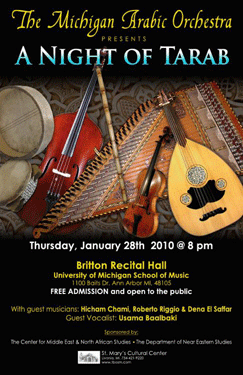
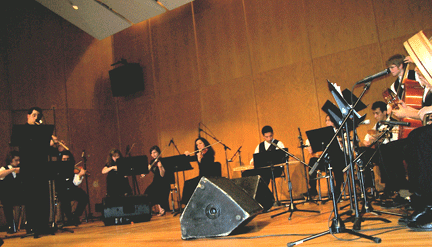
Music is the key not only to understanding various ways of cultural expression and social communication, but also to comprehend peoples’ views of their identities and heritages. In her book, Philosophy in a New Key (1942), the American philosopher, Susanne Langer, states that music is a highly articulated mode of expression symbolizing intuitive acquaintance of patterns of existence or life that regular language cannot express. For her, music represents the composer’s knowledge of the morphological and symbolic forms of emotional life. Such statements were embodied in the behavior of both the musicians and audience participating in A Night of Tarab, organized by the Michigan Arabic Orchestra, on Thursday, January 28, 2010 at Britton Recital Hall, University of Michigan, Ann Arbor.


Michael Ibrahim, playing the flute (nay), with the ensemble

Continue reading Arab Music on American Soil

IUAES Conference in Turkey

The 2010 IUAES Inter-Congress Antalya, Turkey

The Ahi Evran University Department of Anthropology is proud to announce to you the 2010 IUAES (International Union of Anthropological and Ethnological Sciences) Inter-Congress to be held October 3-6 2010 in Antalya, Turkey.

Since our approval to host the congress, preparations and arrangements have been conducted in collaboration with various anthropology departments, professors, and graduate students across Turkey. Our collaborative efforts promise to bring a diverse, exciting, and informative Inter-Congress.

Turkey’s location at a point where three continents of the old world are closest to each other and where Asia and Europe meet has served as a crossroads that is one of the few areas that has been continuously inhabited since the dawn of mankind. The archeological richness is a telling measure of the human history of cultural interaction, conflict, and integration that shape the region. Since the founding of the Turkish Republic in 1925 anthropology as a discipline has assumed an important role in understanding and theorizing cultural exchanges between ethnically, linguistically, and religiously diverse Anatolian peoples and their neighbors; we are honored to strengthen this legacy with IUAES. Continue reading IUAES Conference in Turkey

On Yemen (and some a bit off)


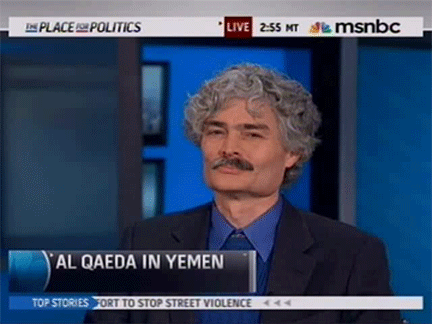
Varisco interviewed about Yemen on MSNBC, January 16

For the past week or so, just before the terrible human tragedy in Haiti, Yemen was once again a front page news story in the Western media. This time it was not about qât, nor about the rhino horn used in Yemeni dagger hilts, but the issue was exotic nevertheless. Yemen is newsworthy because of the recent attempted suicide mission of a Nigerian who met with members of the relatively recently reframed Al-Qaeda in the Arabian Peninsula. At first, the political talking heads were eager to brand Yemen as a lawless tribal haven for the next stop of our continuing war on terror. Joe Lieberman added Yemen to his own version of the axis of evil, which I have previously commented upon. But then late last week Yemeni officials announced that six al-Qaeda figures had been killed in an airstrike, and on Saturday three more had been arrested near the Saudi border.

On Saturday, on my return from delivering two lectures in Toronto, I went straight from the airport to MSNBC, where I was interviewed (if that term works for about two minutes of air time) about the recent strikes on al-Qaeda in Yemen. Earlier in the week, I sat down for an extended interview on the current situation in Yemen with Karla Schuster of Hofstra University, an interview which can be seen on Youtube. Continue reading On Yemen (and some a bit off)

More on the Danish Cartoons

What the Danish Cartoon Controversy Tells Us About Religion, the Secular, and the Limits of the Law
By Winnifred Fallers Sullivan, Religion Dispatches, January 7, 2010

Review of: Is Critique Secular? Blasphemy, Injury, and Free Speech by Talal Asad, Wendy Brown, Judith Butler, and Saba Mahmood (University of California Press, 2009)

This very rich little book seems to me a very good place to begin the new decade. It is smart, informed, thoughtful, urgent—and properly unsettling. It is also very difficult to read quickly or to summarize in short order. It is well worth the effort.

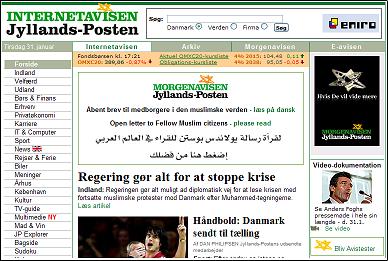
The principal essays, by anthropologists Talal Asad and Saba Mahmood, take the Danish cartoon controversy as a starting point. They review the contexts of the publication of the satirical cartoons of Mohammed in Jyllands-Posten, a Danish newspaper, and the angry responses that ensued; they ask us to take seriously the fundamental incoherence of the assumptions about religion that underlie the dominant narratives of those events (dominant narratives that were repeated again this week in the stories about a recent attack on one of the cartoonists.) The book also includes an introduction by political scientist Wendy Brown and a response to the essays by philosopher Judith Butler. Continue reading More on the Danish Cartoons