Category Archives: Anthropology/Sociology

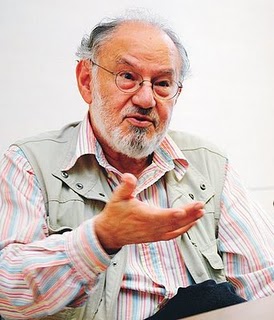
Talal Asad on Egypt after Mubarak


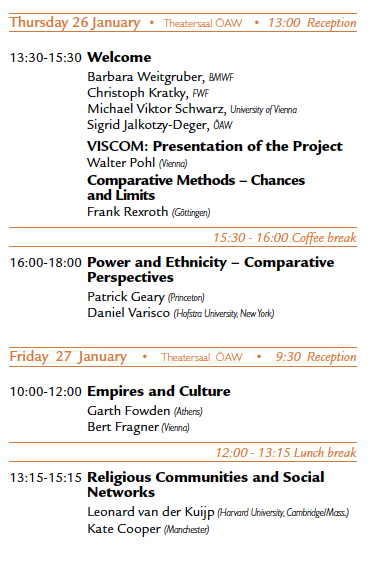
On Friday, February 24, Professor Talal Asad will be speaking in the CUNY Graduate Program in Anthropology series. His topic is Fear and Revolution: Reflections on Egypt after Mubarak. This will be held at The Graduate Center, CUNY, 365 Fifth Avenue at 34th Street, New York, NY 10016 in Room C415A (concourse level). Light refreshments will be served afterward in the Brockway Room, Rm. 6402. For more information, click here.

A Tale of Two Brothers


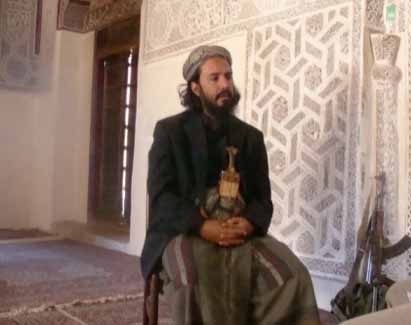
The late Tariq al-Dhahab

Yet another tale of two brothers, this time in Yemen and it is not about brotherly love. What drives a man to kill his brother? For Cain in the Garden of Eden it was jealousy that God preferred his brother Abel’s sacrifice to his own; in effect the God of Genesis wanted blood. Several Abbasid caliphs were adept at taking their brother’s lives, a royal custom that knew no geographic or cultural boundaries. The American Civil War is remembered as a family conflict in which brother at times fought brother. When fratricide does occur, it is always a sad affair, whether the passions are aroused by politics, religion or a more mundane jealousy.

The two Yemeni brothers are Tariq and Hizam al-Dhahab. Tariq gained international attention on January 16 when he seized control of the Yemeni town of Rida’ and declared himself Amir of a new Islamic regime. A self-important proponent of Al-Qaida in the Arabian Peninsula (as useful a banner as any these days in this region), Tariq was related to Anwar al-Awlaqi by marriage and this made the event all the more newsworthy outside of Yemen. But the purpose of the raid, which was symbolic more than bloody, was to negotiate release of prisoners and not jumpstart a new caliphate. After nine days they pulled out when Hizam’s brother Nabil was released, but the main impetus was opposition within his own tribe against such actions. Continue reading A Tale of Two Brothers

Study this Spring in Qatar


Qatar: Religion, Economy, and Sustainability

A course offered in Qatar for the Spring Term 2012 (Travel: March 24 — April 5, 2012)

Led by: Tugrul Keskin, PSU — International and Middle Eastern Studies Middle East Studies Coordinator (INTL)

Over the last twenty years, with the emergence of the global economy, Qatar has become a center of an economic boom in the Persian Gulf. This economic transformation has also shaped the social and political characteristics of Qatar. In the Gulf region, Qatar has one of the fastest growing education systems, increased levels of women’s participation in education and the workplace, and more open media and communications systems. Therefore, Qatar uniquely represents a new trend in the Middle East. In this study abroad course, we will explore and try to understand these changes based on our interactions with Qatari organizations, politicians, citizens, educators and etc.

Study abroad in Qatar offers students the unique opportunity to understand religion, economy and sustainability from the perspective of course materials in addition to discussion with community members and leaders, and visits to historical venues. This will help to contextualize the inter-relationships between contemporary Qatari society, and its historical, economic and geo-political underpinnings. It will enable students to interact with and directly explore issues that are core to the Muslim Societies. Continue reading Study this Spring in Qatar

The Conference on Islam in America


The Conference on Islam in America is a collaboration of diverse Muslim individuals and groups whose mission is to clarify and to further define the modalities for Muslim life in the pluralistic society of America.

The Conference on Islam in America will:

• facilitate dialogue, debate and consensus-building among the diverse theological, ethnic, class-based and political elements of the Muslim community here in the United States on the complex array of social, political, cultural and moral issues that confronts us as Americans;
• facilitate informed civic participation of by American Muslims through conversations with American policy-makers, educators, civic leaders and shapers of public opinion;
• promote the application investment of Muslim resources and talents, through the utilization execution of demonstration-projects and best practices in directed attempts to address on selected American societal issues.

The mechanism for reaching achieving these objectives is an annual conference, webinars and accessible community initiatives.

We hope that you will join us to participate in this exciting and stimulating dialogue on the future of Muslim voices and lend a hand in contributing to this powerful and beneficial event. To register for the conference, please click here to be directed to the registration page or contact Trent Carl at tcoiamerica@gmail.com for more information. We look forward to seeing you in September.

NYPD Blues…


The NYPD: Islamophobia in Blue

by Deepa Kumar, Empire Bytes, February 6, 2012

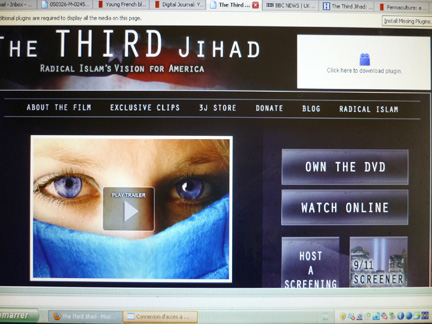
NEW YORK City police officers were shown a movie called The Third Jihad which warns that ordinary Muslims are part of an age-old conspiracy to dominate the world. The police chief and his spokesperson participated in this “counter-terrorism training,” and then lied about their involvement. And Mayor Michael Bloomberg, who touts himself as a champion of religious tolerance, doesn’t plan to do anything about it.

This latest series of events that unfolded in late January only sheds more light on the depth of anti-Muslim racism in New York City. Home to about 800,000 Muslims, as well as the world’s largest police department, the Big Apple has become the crucible of entrenched Islamophobic policies enacted by the state since September 11.

“This is not stereotyping,” Talat Hamdani said at a January 26 press conference at City Hall.

Talat’s son Salman died on 9/11 as a first responder, but his sacrifice has never been officially recognized because police initially viewed him as a suspect in the attacks. “This is legal persecution of American Muslims,” Talat said. “This is our city, our state, our country.”

Almost a year ago, in January 2011, Tom Robbins of the Village Voice broke the story about the NYPD showing this racist film to its officers. At the time, police spokesman Paul Browne claimed the movie was only screened a few times, and that the clips of Ray Kelly in it were from old footageand not the police commissioner’s direct participation with right-wing filmmakers.

But when police were forced to comply with a Freedom of Information Act request from the Brennan Center for Justice, it came to light that the movie was a regular part of training for months, that more than 1,500 officers had viewed the film, and that Kelly had given a 90-minute interview for the pseudo-documentary.

After a year of denials and evasions, the truth was out, and it received some attention in the mainstream media. Yet this is only the tip of the iceberg. Continue reading NYPD Blues…

CyberOrient Call for Papers


“The Net Worth of the Arab Spring”

Call for Papers

CyberOrient: Online Journal of the Virtual Middle East
Editor-in-Chief: Daniel Martin Varisco

Guest Editor: Ines Braune

Submission deadline: 31 May 2012

Aim


As the first anniversary of the “Arab Spring” nears, several long-standing dictators have been toppled, protests still continue in other countries and new governments are being formed. Arguably, throughout this last year digital media have played an important, if not defining, role through Twitter, Facebook, blogs and the extensive news coverage in cyberspace. This is a call for papers across disciplines aiming for critical and evidence-based evaluation of the use of social media in the Arab Spring, the coverage of the Arab Spring in cyberspace and beyond, and the remediation and appropriation between social media and traditional media outlets, including satellite TVs and the press. First-person and ethnographic accounts are welcomed, but CyberOrient welcomes contributions from any field.


About CyberOrient


CyberOrient (http://www.cyberorient.net/) is a peer-reviewed journal published by the Middle East Section of the American Anthropological Association in collaboration with the Faculty of Arts of Charles University in Prague. The aim of the journal is to provide research and theoretical considerations on the representation of Islam and the Middle East, the very areas that used to be styled as an “Orient”, in cyberspace, as well as the impact of the internet and new media in Muslim and Middle Eastern contexts. The articles will be published online with free access in early autumn, 2012.

Submission

Articles should be submitted directly to Ines Braune (ines.braune@uni-marburg.de) and Vit Sisler (vsisler@gmail.com).

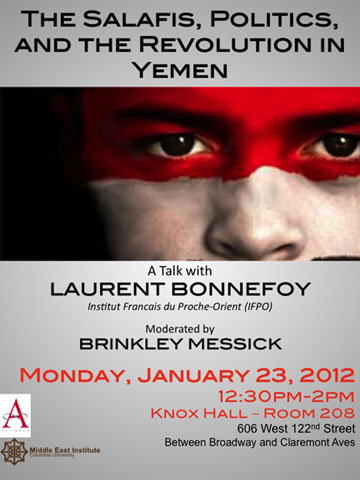
The Salafis, Politics and the Revolution in Yemen

The Salafis, Politics and the Revolution in Yemen

Monday, January 23rd; 12:30pm-2pm
208 Knox Hall ~ 606 West 122nd Street, New York, NY

A lecture by Laurent Bonnefoy
Moderated by Brinkley Messick

Since the early 1980s, Salafism in Yemen has developed as a mostly apolitical movement. Yet, the revolutionary process that emerged in 2011 is changing much of its face in the country and fostering deep recompositions in the Islamist field. This lecture will analyze these changes and concentrate on showing why this political movement matters beyond issues of counter-terrorism.

Laurent Bonnefoy (PhD), born in 1980, is a researcher in political science at the Institut Français du Proche-Orient (IFPO) based in Palestine. Building on four years spent in Yemen, his research focuses primarily on contemporary religious identities in the Arabian Peninsula. He is the author of Salafism in Yemen. Transnationalism and Religious Identity (Columbia University Press, 2012).

Co-sponsored by the Middle East Institute and the Alliance Program.