Category Archives: Orientalism

History in Century Hindsight

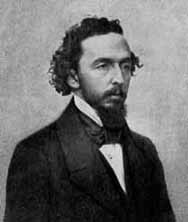
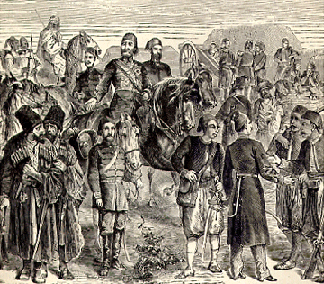
How will the history of the world be written in another century? I am glad I will not be around to find out, although I suspect future historians will look at the post-9/11 operations at home on the patriot front and abroad with patriot missiles as a low point in America’s future past. We can always look back and see how history was written a century ago. Here is a passage from a popular “History of the World” by John Clarke Ridpath, who penned it near the end of the 19th century. Although dated in its racial and ethnocentric overtones, it is refreshing to see some critical assessment on Western stereotypes at work as well. As an exercise, read the excerpt below to sort out the prejudice from the attempt, even if not up to present-day standards, to be less rather than more subjective.

Some allowance, however, must be made for the judgment which the Western peoples have passed upon the Turks. There is no denying the fact that a part of this judgment is prejudiced. The Aryan races have always shown a disposition to reject and contemn those usages with which they themselves are unfamiliar. They have done so. Not because the usages in question have contradicted the laws of right reason, the interests of the state, of the principles of morality, but simply because such facts have been strange, unfamiliar. The intolerance of the Western people in this respect has been as severe and inexcusable as many of the usages which they have contemned and despised. Continue reading History in Century Hindsight
A Candid[e] View of an Honest Turk

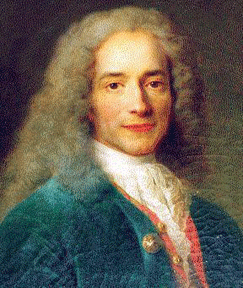
[One of the great moral tales of the 18th century is Voltaire’s (1759) Candide, a book well worth reading and rereading from time to time. Here is an excerpt from the end of the book, but it is not Orientalism in the Saidian sense of negative portrayal; indeed it is the honest Turk which stands in contrast to tyrants of all stripes.]

During this conversation, news was spread abroad that two viziers of the bench and the mufti had just been strangled at Constantinople, and several of their friends impaled. This catastrophe made a great noise for some hours. Pangloss, Candide, and Martin, as they were returning to the little farm, met with a good-looking old man, who was taking the air at his door, under an alcove formed of the boughs of orange trees. Pangloss, who was as inquisitive as he was disputative, asked him what was the name of the mufti who was lately strangled.

“I cannot tell,” answered the good old man; “I never knew the name of any mufti, or vizier breathing. I am entirely ignorant of the event you speak of; I presume that in general such as are concerned in public affairs sometimes come to a miserable end; and that they deserve it: but I never inquire what is doing at Constantinople; I am contented with sending thither the produce of my garden, which I cultivate with my own hands.” Continue reading A Candid[e] View of an Honest Turk

Tableaux Manners Egyptian Style

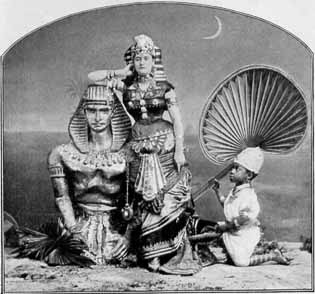
The year was 1875. As reported in The Cosmopolitan (for January, 1898), the governor of New York proposed a fund raiser for the expected visitors in the upcoming American centennial celebrations. New York City’s high society was mobilized under the direction of Mrs. Elizabeth Hamilton Cullen, granddauther of Alexander Hamilton and wife of General G. W. Cullen. Mrs. John Jacob Astor and Mrs. Belmont assisted in gathering 230 elite ladies and gentlemen to pose in various tableaux from “The Puritan Family at Prayer” to “Miss Egypt” shown here. Here is a nostalgic tidbit of vintage American Orientalism when the digs in Egypt were still very fresh. But for a nation that had only abolished slavery slightly over a decade before, it is clear that the race to end racism had only just begun. Continue reading Tableaux Manners Egyptian Style

A Taylor Made Bath in Damascus

The American man of letters Bayard Taylor (1825-1878) was one of many travelers to the Near East of his time. His tour in 1853 resulted in a travel account above the common lot of Holy Land roller overs. Of particular interest is his frank account of a Turkish bath in Damascus.

“The Bath is the ‘peculiar institution’ of the East. Coffee has become colonized in France and America; the Pipe is a cosmopolite, and his blue, joyous breath congeals under the Arctic Circle, or melts languidly into the soft airs of the Polynesian Isles; but the Bath, that sensuous elysium which cradled the dreams of Plato, and the visions of Zoroaster, and the solemn meditations of Mahomet, is only to be found under an Oriental sky. The naked natives of the Torrid Zone are amphibious; they do not bathe, they live in the water. The European and Anglo-American wash themselves and think they have bathed; they shudder under cold showers and perform laborious antics with coarse towels. As for the Hydropathist, the Genius of the Bath, whose dwelling is in Damascus, would be convulsed with scornful laughter, could he behold that aqueous Diogenes sitting in his tub, or stretched out in his wet wrappings, like a sodden mummy, in a catacomb of blankets and feather beds. As the rose in the East has a rarer perfume than in other lands, so does the Bath bestow a superior purification and impart a more profound enjoyment… Continue reading A Taylor Made Bath in Damascus

Letters of an Egyptian Kafir


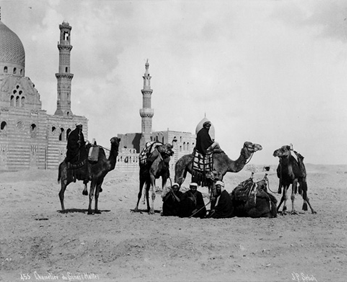
[Illustration: “Camels and Tombs of the Mamelukes” ca 1870]

While conducting research in Oxford’s Bodleian Library two summers ago, I came across an anonymous work entitled Letters of an Egyptian Kafir on a Visit to England in Search of a Religion, enforcing some neglected views regarding the duty of theological inquiry, and the morality of human interference with it. Published in London in 1839, the plot of the lengthily titled treatise is a series of letters allegedly written by a non-Muslim Egyptian to a Muslim friend back home. I rather suspect these were penned in a learned vicar’s study as an attempt to rationalize the superiority of Protestant Christianity over all comers. There is little to be learned about Egypt and much about the arguments Christians might use at the time to convert these descendants of the pharaohs. Continue reading Letters of an Egyptian Kafir

Tancred or the New Crusade


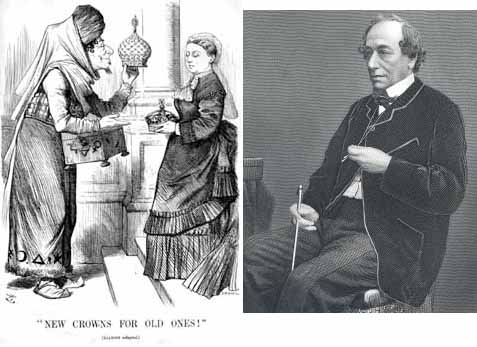
Benjamin Disraeli
(1804-1881) was one of the most colorful and literary of British Prime Ministers in the latter half of the 19th century. Among his novels was one about a young conservative English lord named Tancred who made a spiritual quest to the “Holy Land.” This is his Tancred, of The New Crusade, originally published in 1877. In the novel Tancred is disillusioned with the lack of morality in British politics. Instead of taking his inherited place in high society, he chooses instead to go on a quest for spiritual meaning to the land where his religion began. Disraeli, as novelist, uses the Levant as a backdrop for his psychological portrait of young Tancred, but it is as much about the foibles of the British political scene as it is an “Orientalist” rendering of the cradle of Judaism, Christianity and Islam. The novel is full of intrigue, as adventure stories should be. It has not made canonization as a “great” work, but it is still worth a read (if you can find a copy). Continue reading Tancred or the New Crusade

We’re Not all Orientalists Now


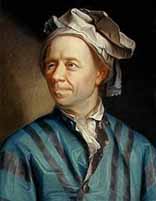
Leonhard Euler, 1707-1783

In a recent commentary for the New Statesman (December, 12, 2005) on the explosive popularity of the puzzle game Sudoku (Japanese for “solitary number”), there is a bit of irony that a writer with the last name of “West” insists that “We’re all orientalists now.” This craze in Britain began with popularization of the puzzle in both the Times and Daily Mail. “Everyone seeems to agree that it has been Japan’s most successful export since Mitsubishi motors, Sony televisions or Ninetendo Game Boy,” notes Patrick West, who then insists, “The problem is that Sudoku is not a Japanese game.”

The origins of Sudoku are said to derive from a Swiss mathematician named Leonhard Euler, who came up with his 81-space square in 1783. Continue reading We’re Not all Orientalists Now