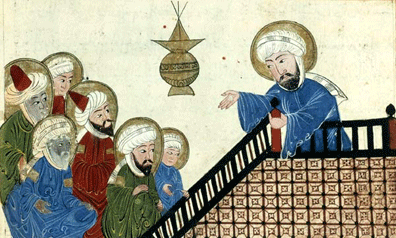
The Prophet Muhammad, 17th century Ottoman copy of an early 14th century (Ilkhanate period) manuscript of Northwestern Iran or northern Iraq (the “Edinburgh codex”). Illustration of AbÅ« RayhÄn al-BÄ«rÅ«nÄ«’s al-Âthâr al-bâqiyah ( الآثار الباقيةة ; “The Remaining Signs of Past Centuries”). Source: Wikipedia article on Muhammad
Satanic or Silly: Does Yale Press Censorship of Cartoons Insult Muslims?
By Daniel Martin Varisco, Religion Dispatches, September 8, 2009
Two decades ago, the publication of Salman Rushdie’s The Satanic Verses caused a tsunami of protest in the Muslim world. The author was forced into hiding for nearly a decade after Ayatollah Khomeini called on Muslims to kill him and his publishers. Rushdie was accused of blasphemy, both for slandering the prophet Muhammad by subverting his character to Mahound (a medieval English term synonymous with the devil) and for reducing the holy city of Mecca to Jahiliya (a term used by Muslims to refer to the pagan past of Arabia). It was only a novel, but the fact that it was written by an Indian-born Muslim and published in the West was enough to frustrate even moderate Muslims.
Academic books rarely cause riots in the streets, but a forthcoming study on the recent Danish cartoon controversy may come close. Continue reading Satanic or Silly: Does Yale Press Censorship of Cartoons Insult Muslims?