Category Archives: Islamic Sects

Iran, Iraq and Afghanistan: Mr. Peabody explains


For those of us who grew up getting our history from Mr. Peabody and his sidekick Sherman, politics was more than fractured fairy tales and a talking Moose (that had obviously escaped the helicopter hunt of Sarah Palin). So if you want to know why the Middle East is so messed up today, forget about Romney’s comic speech on Monday; here is a cartoon that explains it all. Get in your Youtube Not-So-Wayback Machine and enjoy Mr. Peabody’s view on what really happened.

Al Shabab vs. Soccer in Somalia


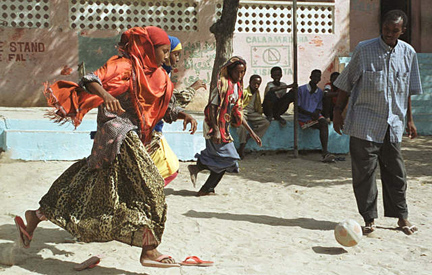
Veiled Somali Girls Playing [“xalaal”] Soccer

Soccer: A barometer of Al Shabab’s retreat in Somalia

By James M. Dorsey, Mideast Soccer Blog, October 5, 2012

Soccer is one barometer of the increasingly successful drive to deprive militant Al Shabab fighters of their grip on large chunks of war-torn Somalia.

With the recent withdrawal of the Al Qaida-linked militants from the port city of Kismayo, the last major rebel-held town, the increasing return of soccer to a football-crazy country where under Al Shahab rule enthusiasm for the beautiful game involved a greater act of courage and defiance than perhaps anywhere else in the world and soccer became a front line in the battle against the Islamists, football highlights the country’s changing battle lines.

The extent of Al Shabab’s retreat is evident from the fact that a campaign that started with the Somali Football Association (SFA) backed by local businessmen and world soccer body FIFA luring child soldiers away from Al Shabab which banned the playing and watching of soccer, and turning them into national youth team stars has mushroomed into the revival of national and regional competitions. For the first time in more than two decades, matches are being played at night, teams travel in relative safety within the country and war-ravaged sports facilities, including Mogadishu’s national stadium, once one of East Africa’s most impressive filled with 70,000 passionate fans during games that was used by the Al Shabab as an arms depot and training facility, are being refurbished. Continue reading Al Shabab vs. Soccer in Somalia

Occupy Mecca


by Omid Safi, Religion News Service, August 28, 2012

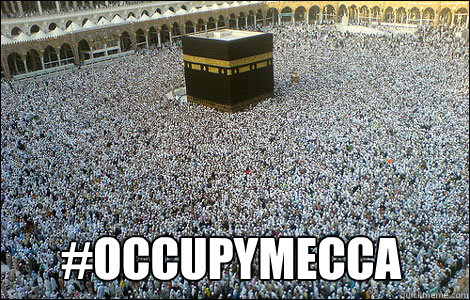
It is time, and past time, to Occupy Mecca.

I am adamantly not talking about a disaster US occupation, a la Iraq and Afghanistan.

What I am calling for is nothing less than millions of faithful pilgrims saving Mecca from destruction.

I would call the destruction imminent, except that it is not imminent. It has already happened.

No, it’s not the Americans, or the Israelis, who would be destroying Mecca.
It’s the so-called Guardians of the two holy sites (Mecca and Medina), the Saudi royal elites, who have negligently stood by over the last two decades as the majority of holy sites in these two most sacred Muslim cities have been destroyed, sacrificed to the false gods of modernization, capitalism, and progress.

Saudi Wahhabis have a long history of destroying shrines, including those of the family of the Prophet in Saudi Arabia and Iraq. Continue reading Occupy Mecca

Thank God it’s Friday? Not in Yemen these days


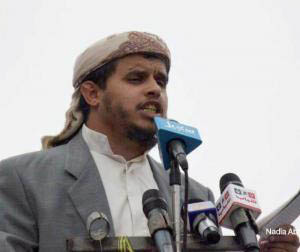
“We want imams to discuss our problems, discuss government decrees and oppose oppression.”

Friday sermons not relevant
by Mohammed Al-Samei, Yemen Times, August 2, 2012

Yemenis have been critical of the performance of imams because of the topics they address in Friday sermons.

They say that the imams do not address the relevant issues from which residents suffer. Moreover, they don’t discuss new topics in their sermons.

Fathi Abu Al-Nassr, a Yemeni journalist, said that many imams don’t touch on the problems of society or new developments among residents. He added that the core of the sermon ought to be the concerns of Yemenis.

Abu Al-Nassr described imams as “parrots who address expired issues.” He pointed out that they are one of the most important reasons behind the ignorance of society.

Although some imams attempt to address different issues, they are discouraged by society members who refuse to discuss such topics.

Khaled Al-Hada’i, an imam who appears in various mosques in Sana’a, told the Yemen Times that many imams don’t shed light on local problems; instead they address religious issues.

He explained that bringing discussion of current affairs to the sermons is a slow process due to the complicated situation in Yemen and lack of awareness among residents. Continue reading Thank God it’s Friday? Not in Yemen these days

Timbuctu too…


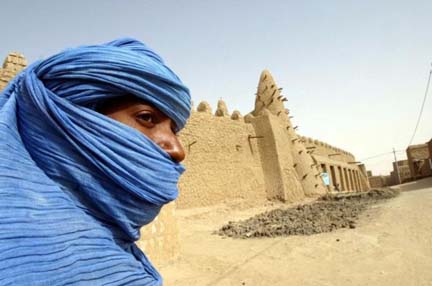
A Tuareg nomad stands near a 13th century mosque in Timbuktu in this file photo [Reuters]

There is an old saw in English: cutting your nose to spite your face. The sorry lot of vigilante Ansar extremists have already desecrated several Muslim saints’ tombs in southern Yemen, but now come reports of lawless fanatics destroying saint shrines in the famed city of Timbuktu in Mali. Al Jazeera is reporting that many, if not all, of the shrines there on the World Heritage List have been damaged or destroyed. These are ritual attractions considered sacred by local Muslims for several centuries, not replicas of the Buddha or foreign idols. So who exactly do these fanatics hate? If you think they are doing this because they hate America and its freedoms, think again.

Iconoclasm has a long history that is hardly unique to the Middle East. The modus vivendi is the idea that if you don’t like something, just get rid of it no matter what other people think. Tolerance and dialogue might as well be Satanic in this twisted worldview. It is important to observe that in both the Yemeni case and now in Timbuktu the destruction takes place because of an almost total breakdown of security. No government, responsible or not to world opinion, is behind this action to such a sacred Islamic site. It is very much a replay of the Wahhabi wave that swept across Arabia with the sword of the Sa’ud clan. The Wahhabis, considered fanatics at the time by most other Muslims, wanted to turn back the clock to a narrow understanding of what they thought life was like in the time of the Prophet. Were ‘Abd al-Wahhab, who died in 1792 (just six years before Napoleon invaded Egypt and proclaimed himself a true Muslim come to rescue Egypt from its corrupt rulers) to come back from the dead and see the palaces, shopping malls and gentrification of the ka‘ba as these have evolved with the vast oil wealth of the Saudi elite, he would no doubt follow Balaam and curse the day he ever met Ibn Sa’ud.

Timbuktu, as a major African center of Islamic education, is also a rich treasury of Islamic manuscripts. Will these fanatics torch the handwritten copies of the Qu’ran, traditions and other religious books in the libraries? ‘Abd al-Wahhab is not about to be resurrected, but there is a need for a modern day Muslim Balaam to get off his ass and curse such sacrilege.

But Are They “The Good Muslims”?

What we talk about when we talk about Egypt’s Salafis
By Haroon Moghul, Religion Dispatches, May 3, 2012

After their strong showing in the Egyptian elections, Salafis are a hot topic. But despite all the talk of Salafis, we still have a difficult time defining Salafism. Take Wendell Steavenson’s recent New Yorker piece, “Radicals Rising,” a portrait of Salafi politicians in Alexandria, Egypt.

Steavenson defines Salafism as “a strain of Islamic fundamentalism that emphasizes the original tenets and practices of the Prophet Muhammad and his companions.” Steavenson’s essay is worth reading—don’t get me wrong. But her definition doesn’t actually distinguish Salafis from most other Muslims.

Islam is rooted in the Qur’an and the Prophet Muhammad. This applies to Salafis (usually considered Sunni) as much as it does to Shi’a Muslims. For both, Muhammad embodies the Qur’an, and they in turn try to embody Muhammad. Continue reading But Are They “The Good Muslims”?

Confessions of a Would be Muslim Reformer (sort of)


by Omid Safi, Religious News Service, April 1, 2012

I have been doing a lot of soul-searching, and I have reached a few important conclusions. Speaking as a moderate Muslim, I realize that my community is primitive, backwards, mired in tradition, and in need of massive help from KONY 2012 people to reform this tradition to catch up with the luminosity of secular West.

I know that there is a trouble with Islam today, and everyday. I also want to have gay-friendly mosques where people can just go have a beer after the optional prayer services, ‘cause that is what it means to be a progressive Muslim.

Because all the secret jihadists (and the FBI people who have infiltrated them) just want to impose this Shari’a thing on us, and for some reason all that beer drinking and hooking up seems to be frowned upon in that Shari’a thing.

With that, and in the name of She who is the source of All-Mercy, here are the fruits of my search. If anyone wants to put me in touch with Fox News or MEMRI, please do so, I’ll recite all these on camera—just contact my agent, and he can tell you my appearance fee. I know that we are in need of a Muslim Reformation, and I am working on my “Martin Luther of Islam” speech. I can’t quite make it up to ML’s 95 theses, but I have got a good head start below. With that, “I give you permission to think freely”:

First, speaking as a Muslim, I am so disappointed in my Muslim brother Barack Hussein Obama. He eats pork, drinks alcohol, regularly attends church service, had his daughters baptized, has yet to set foot in a mosque since becoming president, kisses AIPAC’s behind, authorizes indefinite detentions, and has seen many Muslims killed by his drone attacks and ongoing wars. Really, a pathetic Muslim if ever there was one. I mean, if I wanted a Muslim ruler that would do all the above, I would move back to the Muslim countries where most of the rulers do that kind of stuff anyway, and the food is a little better than here. Continue reading Confessions of a Would be Muslim Reformer (sort of)

The Cost of Orientalism


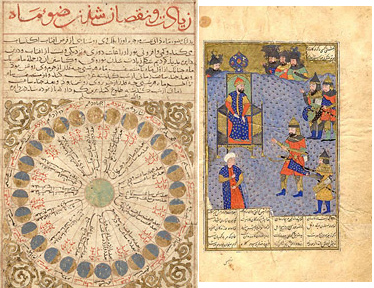
left, Illustration of the phases of the Moon (Or. 133, Golius collection) ;right, Firdawsi, Shahnama (15th century, Or. 494)

There are thousands of Middle Eastern manuscripts preserved in European libraries. One of the famous collections is that of Leiden University. Imagine if those were available online? It would be a dream come true for budding scholars and the old guard alike. A dream, indeed. Leiden University has joined with Brill to provide this collection online, but at a cost. The price posted is a mere (I mean only an emir can afford it) $25,900. I suspect it will take only a few sales to recoup the costs of onlining the manuscripts (and perhaps onlining the profits of both the Leiden libraries (a worthy cause) and Brill (a publisher that already charges so much that few can afford their books). Actually, it may be cheaper to matriculate at Leiden University, since university members have free access.

For those who are interested (either to lament or to have lots of money and little to do with it), here are the details:
Continue reading The Cost of Orientalism