The distinction between sunni and shi’a in Islam has both political and doctrinal issues at stake. In a political sense, the original causes are moot. There is no caliphate today, no unbroken record of temporal earthly dominion for successors of Muhammad in the Islamic ummah. In the older sense to identify on a macro-level as sunni or shi’a follows differences in interpretation of the Quran, statements of the Prophet Muhammad, and the continuing role of descendants in the Prophet’s family from ‘Ali. The actual divergences over mostly issues of Islamic law, apart from succession of the Prophet. These are as varied in the sunni schools as they are between sunni and the various shi’a views. Much of the disagreement can be explained on cultural terms as Muslim communities have evolved almost fromt he start outside of the Arabian heartland.
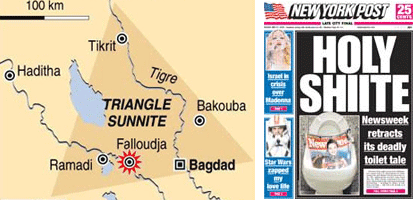
But for anyone interested in disrupting unity or political reconciliation, the embedded historical grievances between sunni and shi’a can be resurrected in a flash. Consider the power-scarred sectarian wedge in the current security chaos of Iraq, where Saddam’s secular Ba’th party had mitigated religious identity politics for several decades. Those in the West who hate Islam, who may even view it as a Satanic plot out to destroy Jews or Christians, must be smiling broadly every time Muslims kill each other, bomb each other’s mosques and treat each other as worse than the “other” infidels. Continue reading Divide and Think You Conquer