Category Archives: Islamic Sects

Guns don’t kill, neither do guns die


For the past week the American media has been fixated on an act of violence that has left six dead and wounded fourteen, including Arizona representative Gabrielle Giffords. Last night President Obama, in a stirring and emotional speech at a memorial service for the victims, urged Americans not to use this tragedy as a staging ground for the usual politics of blame:

But what we can’t do is use this tragedy as one more occasion to turn on one another. As we discuss these issues, let each of us do so with a good dose of humility. Rather than pointing fingers or assigning blame, let us use this occasion to expand our moral imaginations, to listen to each other more carefully, to sharpen our instincts for empathy, and remind ourselves of all the ways our hopes and dreams are bound together.

Beneath the brief aura of civility in this tragedy’s aftermath there lingers an ongoing current of uncivil rhetoric, fueled in large part by media pundits eager to gain an audience. The blame has already been assigned over and over again. In this particular case it appears that the killer, Jared Lee Loughner, was an emotionally disturbed individual who acted on his own. Thus, it is no surprise that a Tea Party icon like Kentucky’s newly elected senator Rand Paul would go on Fox News and remind us all: “But the weapons don’t kill people. It’s the individual that killed these people.”

It certainly is true that the Glock 9 mm pistol did not go off on its own, so obviously there is no need to punish the gun involved in this case, nor even the bullets used. The problem is that if we claim that guns don’t kill, we must also admit that guns don’t die either. Continue reading Guns don’t kill, neither do guns die
Ablution Pollution


A report in yesterday’s Los Angeles Times is a chilling reminder of the utter absurdity of out-of-control sectarian violence in Afghanistan.

Reporting from Kabul, Afghanistan —
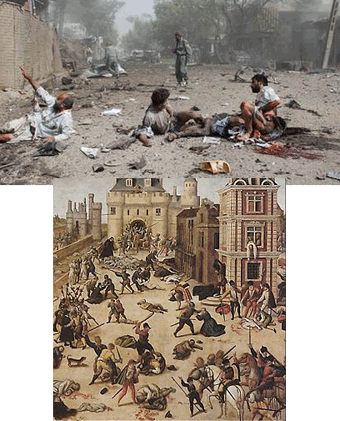
A suicide bomber blew himself up Friday at a public bathhouse in southern Afghanistan that was filled with men washing themselves before the main prayers of the Muslim week. At least 17 were killed and 23 injured, provincial officials said.

The Taliban claimed responsibility for the attack in Spin Boldak, in Kandahar province. The district, a main crossing point to and from Pakistan, is a longtime nexus of drug and weapons smuggling. Continue reading Ablution Pollution

Arabian Nights and Daze


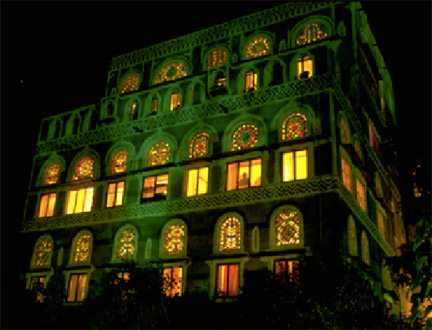
Bayt al-Hilali. Lighted middle floor was Wyatt’s home in Sanaa,Yemen (1970-72); Photo by Peggy Crawford (1988)


Announcing Susan C. Wyatt’s new book: Arabian Nights and Daze: Living in Yemen with the Foreign Service

Is Yemen Really a Hotbed of Terrorism? “No,” says Author.

Arabian Nights and Daze Evokes a Friendlier Yemen than the Media Presents

Americans today have a negative image of Yemen and its people in the aftermath of media focus on radical Islam and terrorist activities in that country. Susan Clough Wyatt’s Arabian Nights and Daze: Living in Yemen with the Foreign Service provides timely insights into this vulnerable country, its history and culture, and the enormous challenges Yemen faces today. Arabian Nights and Daze has been selected as part of the Memoirs and Occasional Papers Series of the Association for Diplomatic Studies and Training (ADST) in Arlington, Virginia.

Journey back to 1970 when Wyatt and her Foreign Service officer husband reopened the U.S. diplomatic mission to the Yemen Arab Republic (YAR) after its closure at the time of the 1967 Arab-Israeli War. Arriving only eight years after progressive revolutionaries ousted a thousand-year-old dynasty of conservative Shiite Muslim imams, they found the mission in a shambles. Under the protection of the Italian embassy, they built it back in stages prior to full resumption of diplomatic relations with the YAR in 1972. Continue reading Arabian Nights and Daze

Spiritual Malaria?


by Nadeem F. Paracha, blog.dawn.com, July 1
 
A recent fatwa from a ‘Saudi Council of Muftis’ has this advice for fellow
Muslims: Do not say [or write] ‘mosque.’ Always say ‘masjid’ because mosque
may mean mosquito. Another myopic case of Saudi malaria perhaps?

Certainly. But that’s not all. The grand fatwa goes on to suggest that
Muslims should not write ‘Mecca’ but Makkah, because Mecca may mean ‘house
of wines.’ I am serious. But then so are the Muftis. They certainly need to
get a life.

But I’m not all that surprised by such fatwas that usually emanate from
Saudi Arabia. While vicious reactionary literature originating in
totalitarian puritanical Muslim states impact and mutate the political
bearings of various religious parties and groups in Pakistan, ‘social
fatwas’ like the one mentioned above also began appearing in the early 1980s
to influence the more apolitical sections of Muslim societies.

Reactionary literature generated by the Saudi propaganda machine started
being distributed in Pakistan from 1979 onwards, mostly in the shape of
pamphlets and books.

Duly translated into Urdu, they glorify and propagate violent action (jihad)
not only against non-Muslims (or infidels) but also against those Muslims
who fail to follow the thorny dictates of a certain puritanical strain of
the faith. Continue reading Spiritual Malaria?

Mohammed Reza Shajarian: Protest Through Poetry


by Steve Inskeep, NPR Morning Edition, September 27, 2010

[NPR this morning has a 7 minute segment on this famous Iranian singer; click on the website for samples of his music.]

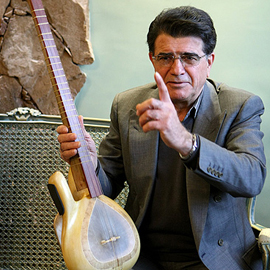
Mohammed Reza Shajarian may be the most famous singer in all of Iran.

He’s also Iran’s most famous protest singer — even though, strictly speaking, his music doesn’t directly protest the government at all.

Just before they end their fast each day during the Muslim holy month of Ramadan, many Iranians or people of Iranian descent around the world listen to a prayer sung by Shajarian.

“It has such power, and the power of it has virtually nothing to do with the words,” says Iranian-American scholar Abbas Milani. When Milani hears Shajarian’s recording of the prayer, it transports him back to his youth in Iran.

“When I still hear it, I get a chill to my bone and think that this is not the voice of a mere mortal — this is the gods speaking to us.”

Iranians heard Shajarian’s voice on the radio for decades — and then, suddenly, the music stopped. Shajarian, protesting a crackdown on voters after last year’s disputed election, asked that the government cease broadcasting his songs. Continue reading Mohammed Reza Shajarian: Protest Through Poetry

Covering Afghanistan


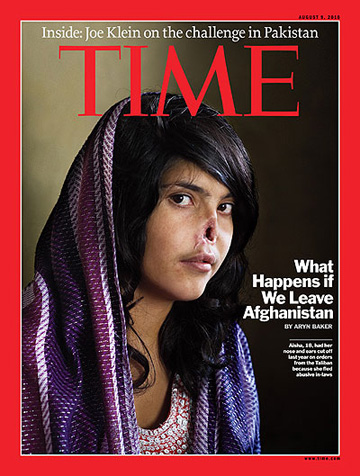
August 9, 2010 cover of Time Magazine

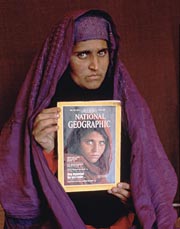
As usual for the end of the week, my Time arrived yesterday. It seems a bit unusual that I should receive the August 9 issue a week early, but then Time is not always accurate. The cover photograph is startling, haunting, disturbing and an unfortunate example of sensationalized news reporting. I cannot help but compare this to the widely traveled National Geographic photograph of an Afghan woman. I have no objection to covering a human tragedy etched in the face of young Aisha, the 18 year old girl whose nose and ears were cut off by self-righteous extremists who practice a brand of Islam that would make the Prophet Muhammad roll over in his grave. But the cover’s prominent announcement of the article inside by Aryn Baker is in fact not the title of the article, nor the main message of the author. “What happens if we leave Afghanistan” is a lot more sensational than “Afghan Women and the Return of the Taliban,” which is why it graces the cover. Tragedies, like sex scandals, sell. The issue for me is how they should be reported responsibly.


Afghan woman holding 1985 National Geographic issue with her picture on the cover

Continue reading Covering Afghanistan

Hate, Times Squared


Photos juxtaposed on May 6 by the New York Post, tabloid journalism at its most blatant

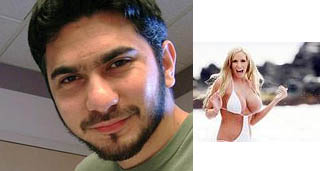
Faisal Shahzad, not your typical terrorist: unless you think being a Pakistani Muslim makes you a typical terrorist. Anyone reading yesterday’s New York Post (Wednesday, May 5) and taking the blustered and bloated tabloid rhetoric seriously could easily make such an assumption. I do not, as a rule, read tabloids, although seeing what many others do read is a useful reality check from time to time. But on the train home from Manhattan yesterday there was a crumpled up newspaper under the train seat and at least 45 minutes to unwind. The cover was, for a change, not a pun. It might be called a revelation, as it read: “REVEALED: WHY HE DID IT. EXCLUSIVE. Revenge for US drone attacks on Taliban terrorists.” Six pages (and more) were devoted to the story, although there was little that I found exclusive in the shoddy news reporting and vengeful commentary by the tabloid’s stalking heads.

Let’s start with the cover and what the tabloid pictures for us. Continue reading Hate, Times Squared

On Colonels, pantyhose and honor killings

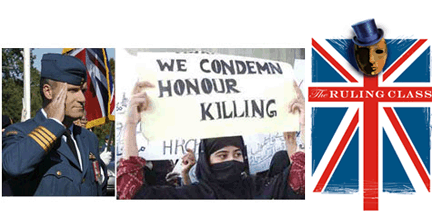
At the start of one of my all-time favorite movies, The Ruling Class, actor Harry Andrews as the 13th earl of Gurney returns to his well-groomed estate to relax after a long day of waxing conservative in the House of Lords. While this film should be required viewing for the current British parliamentary campaign, my interest is in the way this revered judge and former soldier relaxes: by dressing in a ballet skirt and jumping off a stool with a silk noose around his neck. Last Friday the New York Times carried a story about Col. David Russell Williams, a Canadian commander of a major air base in the Afghanistan war. He is described as “once among Canada’s most successful military officers,” the automatic pilot for visiting dignitaries, including Prime Minister Harper. Why “once”? Because the colonel on the battlefront against those honor-killing Taliban appears to be a “serial sexual predator.”

Ottawa police arrested Colonel Williams last February in connection with two murders of women, two sexual assaults and numerous break-ins in the Ottawa area “most of which involved lurid sexual details.” Continue reading On Colonels, pantyhose and honor killings