Category Archives: Islamic Rituals

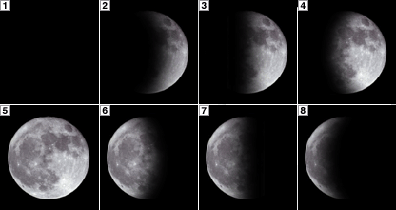
Can the Umm al Qura calendar serve as a global Islamic calendar?

by Khalid Chraibi

Over the past 50 years, the Arab League, the Organization of the Islamic Conference (OIC) and other similar bodies presented their member States with over a half-dozen proposals aiming at the establishment of a common Islamic calendar. Although none of these proposals was adopted, efforts in search of a solution that could be satisfactory to all interested parties continue to this day. For its part, the Fiqh Council of North America (FCNA) was also regularly confronted with the responsibility of telling its Muslim American audience when to start fasting, when to celebrate «eid al-Fitr», «eid al-Adha», etc. After several years of study of the legal issues involved, it reached a decision, which it announced in August 2006, to use henceforth a pre-calculated Islamic calendar, taking into consideration the sightability of the new moon anywhere on Earth. (1)

First, it retains the well-known principle of unicity of horizons (matâli’) which states that it is sufficient to observe the new moon anywhere on Earth, in order to declare the beginning of a new lunar month, applicable in all areas in which the information is received. Second, it uses the International date line (IDL) or Greenwich Mean Time (GMT) as its conventional point of reference to conduct its analysis. Continue reading Can the Umm al Qura calendar serve as a global Islamic calendar?

Sanaa’s Grand Mosque stands for 1400 years

by Mohammed al-Qiri, Yemen Observer, April 8, 2008

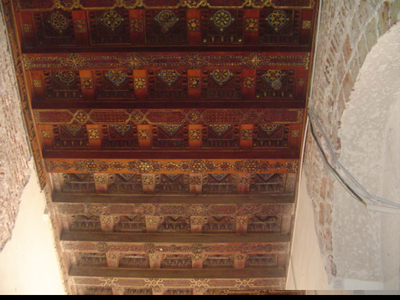
The Grand Mosque of Sana’a is considered to be the oldest in the Islamic world. It was built by order of the Prophet Mohamed (PBUH) in the sixth Hijri year, corresponding to 627 C.E.. It is located in the Bathan garden, between Ghamdan palace and the Malmlamah rock.

Over the course of history, there have been many additions made to the original building. The mosque was extended in the eighth century by the Amawi Khalif al-Walid ibn Abdulmalik (705- 715 C.E.) and at the beginning of the Abasi dynasty in the eighth century C.E., doors were added by Governor Omar ibn Abdulmajeed al-A’dawi, in addition to other overhauls in 745 C.E under his watch. Continue reading Sanaa’s Grand Mosque stands for 1400 years

Ahmadinejad and the Twelfth Imam

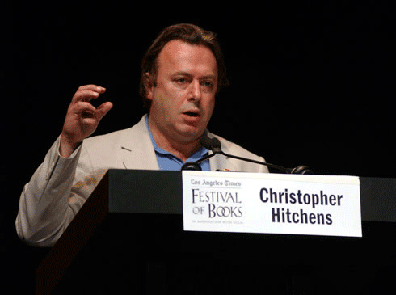
by Christopher Hitchens

[Excerpt from Christopher Hitchens, god is not Great (New York: Hachette, 2007), pp. 278-280.]

On a certain day in the spring of 2006, President Ahmadinejad of Iran, accompanied by his cabinet, made a procession to the site of a well between the capital city of Tehran and the holy city of Qum. This is said to be the cistern where the Twelfth or “occulted” or “hidden” Imam took refuge in the year 873, at the age of five, never to be seen again until his long-awaited and beseeched reappearance will astonish and redeem the world. On arrival, Ahmadinejad took a scroll of paper and thrust it down the aperture, so as to update the occulted one on Iran’s progress in thermonuclear fission and the enrichment of uranium. One might have thought that the imam could keep abreast of these developments wherever he was, but it had in some way to be the well that acted as his dead-letter box. One might ad that President Ahmadinejad had recently returned from the United Nations, where he had given a speech that was much covered on both radio and television as well as viewed by a large “live” audience. On his return to Iran, however, he told his supporters that he had been suffused with a clear green light — green being the preferred color of Islam — all through his remarks, and that the emanations of this divine light had kept everybody in the General Assembly quite silent and still. Private to him as this phenomenon was — it appears to have been felt by him alone — he took it as a further sign of the immanent return of the Twelfth Imam, not to say a further endorsement of his ambition to see the Islamic Republic of Iran, sunk as it was in beggary and repression and stagnation and corruption, as nonetheless a nuclear power. But like Aquinas, he did not trust the Twelfth or “hidden” Imam to be able to scan a document unless it was put, as it were, right in front of him. Continue reading Ahmadinejad and the Twelfth Imam

Dreams Stifled, Egypt’s Young Turn to Islamic Fervor

By MICHAEL SLACKMAN
The New York Times, February 17, 2008

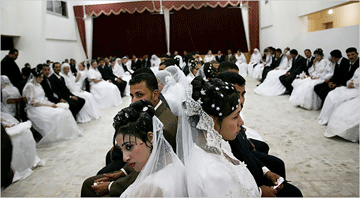
CAIRO — The concrete steps leading from Ahmed Muhammad Sayyid’s first-floor apartment sag in the middle, worn down over time, like Mr. Sayyid himself. Once, Mr. Sayyid had a decent job and a chance to marry. But his fiancée’s family canceled the engagement because after two years, he could not raise enough money to buy an apartment and furniture.

Mr. Sayyid spun into depression and lost nearly 40 pounds. For months, he sat at home and focused on one thing: reading the Koran. Now, at 28, with a diploma in tourism, he is living with his mother and working as a driver for less than $100 a month. With each of life’s disappointments and indignities, Mr. Sayyid has drawn religion closer.

Here in Egypt and across the Middle East, many young people are being forced to put off marriage, the gateway to independence, sexual activity and societal respect. Stymied by the government’s failure to provide adequate schooling and thwarted by an economy without jobs to match their abilities or aspirations, they are stuck in limbo between youth and adulthood. Continue reading Dreams Stifled, Egypt’s Young Turn to Islamic Fervor

Politics of Piety: A Case Study in Cairo


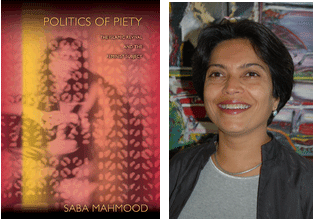
[In 2005 anthropologist Saba Mahmood published “Politics of Piety: The Islamic Revival and the Feminist Subject” (Princeton University Press). This important ethnography of the women’s mosque movement in Cairo not only presents an informative case study but challenges notions of how Muslim women’s involvement in pious movements should be analyzed in a feminist framework. The following excerpt is from the beginning of Mahmood’s book.]

Over the last two decades, a key question has occupied many feminist theorists: how should issues of historical and cultural specificity inform both the analytics and the politics of any feminist project? While this question has led to serious attempts at integrating issues of sexual, racial, class, and national difference within feminist theory, questions regarding religious difference have remained relatively unexplored. The vexing relationship between feminism and religion is perhaps most manifest in discussions of Islam. This is due in part to the historically contentious relationship that Islamic societies have had with what has come to be called “the West,” but also due to the challenges that contemporary Islamist movements pose to secular-liberal politics of which feminism has been an integral (if critical) part. The suspicion with which many feminists tended to view Islamist movements only intensified in the aftermath of the September 11, 2001, attacks launched against the United States and the immense groundswell of anti-Islamic sentiment that has followed since. If supporters of the Islamist movement were disliked before for their social conservatism and their rejection of liberal values (key among them ‘women’s freedom’), their now almost taken-for-granted association with terrorism has served to further reaffirm their status as agents of a dangerous irrationality. Continue reading Politics of Piety: A Case Study in Cairo

Art, Religion and History: The Case of Bahrain


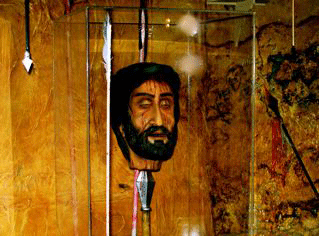
Figure 1. A Replica of the head of Imam Husayn

by El-Sayed el-Aswad
University of Bahrain

Art, in its broad meaning encompassing performance and non-performance forms of expression, plays a significant part in Bahraini imagination and folk culture. The focus here, however, will be on the innovative aspects of Shi‘a vernacular art. Among the Shi‘ti people of Bahrain there has been a shift from traditional or old-fashioned styles of mourning and commemorating the tragic events of ‘Ashura, or the tenth of Muharram (the first month of Islamic calendar in which Imam Husayn, grandson of the prophet Muhammad, was martyred) to a modern way of expression reflected mostly in the art.
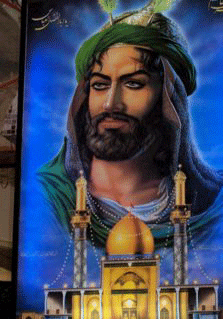

Figure 2. Imaginary of al-‘Abbas, the sibling of Imam Husain

During the first ten days of Muharram, colorful forms of calligraphy, iconography, replicas (tashihat), ritual and visual representations are presented and meticulously enacted in exhibitions and in the streets of Manama, the capital city of Bahrain, as well as in most of the villages with Shi‘a majorities. Continue reading Art, Religion and History: The Case of Bahrain