Category Archives: Orientalist Images

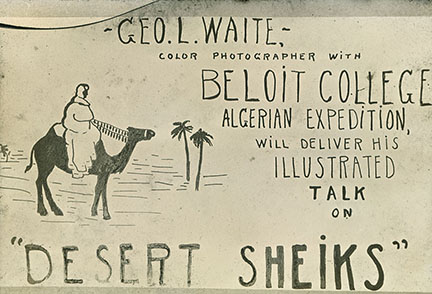
“Desert Sheikhs” at the Smithsonian

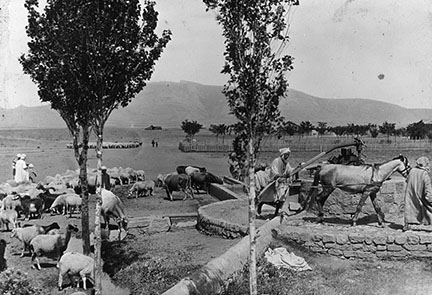
There is an extraordinary collection of 47 Magic Lantern slides from the 1930 Beloit College Logan Museum Expedition to Algeria by George L. Waite, the photographer and cinematographer. This is available in an online collection at the website of the Smithsonian Institution. Click here to access the collection.

Continue reading “Desert Sheikhs” at the Smithsonian

An American Tabari, #4

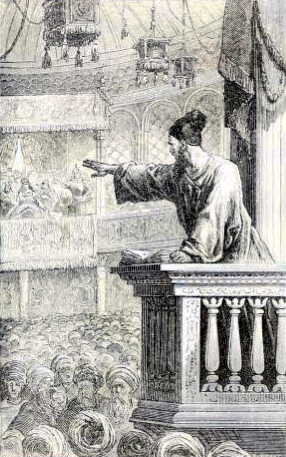
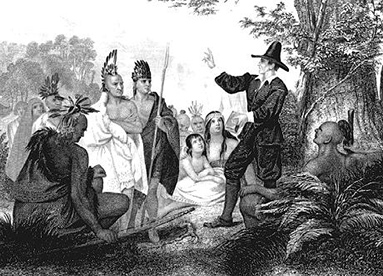
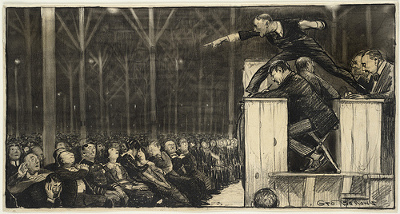
In a previous post I continued a series on the universal history of John Clark Ridpath. The image above is the classic image of a preacher, looking more Gospel than imamic to my eyes. I would question the sincerity of a famed imam who relied on a print version of the Quran rather than his own memory, as the image above suggests. The “preacher” with hands outstretched is a trope that crosses cultures, whether or not it is the cross being pounded on the pulpit (and certainly not on the minbar). Consider John Eliot who set his eyes on converting the “heathen” natives of the new world:

Or the long history of fire-and-brimstone wailing of American Protestants.

An American Tabari, #3

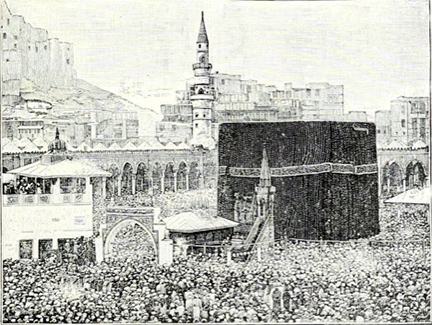
In a previous post I continued a series on the universal history of John Clark Ridpath. As one might expect, a particularly important place is reserved for Mecca itself. The image above is an ornamentation for the start of Ridpath’s discussion of Islam. The image below is a drawing of the hajj season where any sense of the individual is lost, resulting in a blur of heads.

to be continued

An American Tabari, #2

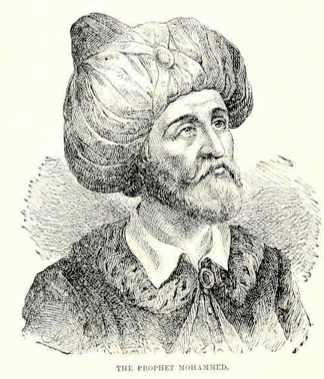
In a previous post I introduced the universal history of John Clark Ridpath. In a section on the origins of Islam Ridpath includes several illustrations. The Orientalist trope of depicting the Prophet Muhammad, as seen in the image above, is interesting because it is a very Ottoman style of dress. The style looks like an Italian version of the Ottoman Sultan Mehmed the conqueror. Just as devout Protestant missionaries and preachers saw the Bedouin of 19th century Palestine as the exact image of the patriarchs, so it was no stretch of the Orientalist imagination (although it was indeed quite a stretch) to present Muhammad in Ottoman style.
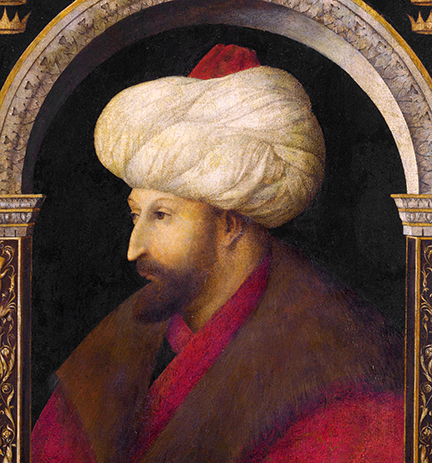

http://en.wikipedia.org/wiki/File:Gentile_Bellini_003.jpg

For those curious about the illustration in the earlier post, this is said to be a scene of the tombs in Cairo.

to be continued