Category Archives: “Arab Spring”

CyberOrient Call for Papers


“The Net Worth of the Arab Spring”

Call for Papers

CyberOrient: Online Journal of the Virtual Middle East
Editor-in-Chief: Daniel Martin Varisco

Guest Editor: Ines Braune

Submission deadline: 31 May 2012

Aim


As the first anniversary of the “Arab Spring” nears, several long-standing dictators have been toppled, protests still continue in other countries and new governments are being formed. Arguably, throughout this last year digital media have played an important, if not defining, role through Twitter, Facebook, blogs and the extensive news coverage in cyberspace. This is a call for papers across disciplines aiming for critical and evidence-based evaluation of the use of social media in the Arab Spring, the coverage of the Arab Spring in cyberspace and beyond, and the remediation and appropriation between social media and traditional media outlets, including satellite TVs and the press. First-person and ethnographic accounts are welcomed, but CyberOrient welcomes contributions from any field.


About CyberOrient


CyberOrient (http://www.cyberorient.net/) is a peer-reviewed journal published by the Middle East Section of the American Anthropological Association in collaboration with the Faculty of Arts of Charles University in Prague. The aim of the journal is to provide research and theoretical considerations on the representation of Islam and the Middle East, the very areas that used to be styled as an “Orient”, in cyberspace, as well as the impact of the internet and new media in Muslim and Middle Eastern contexts. The articles will be published online with free access in early autumn, 2012.

Submission

Articles should be submitted directly to Ines Braune (ines.braune@uni-marburg.de) and Vit Sisler (vsisler@gmail.com).

Best of the Blogs


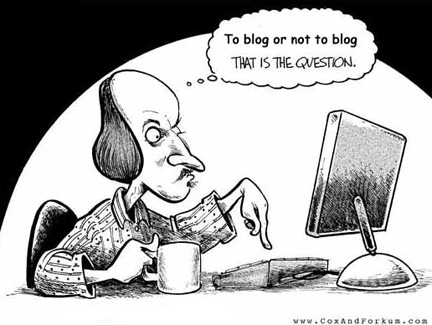
Cartoon source: http://www.trafficgenerationcafe.com/blog-website-faceoff/

Bassam Gergi and Mazen Zoabi unroll their guide to the Arabic blogosphere

Open Democracy, 12/30/11

Jadaliyya aims to shape the debate in the west by providing a window into regional scholarship and knowledge. Where others see data points, they see “living communities and dynamic societies.” The site currently publishes posts in both Arabic and English.

Mamfakinch is run by a group of young Moroccan activists who founded the #Feb20 movement calling for broad political, economic and social change. It aims to highlight information often ignored or distorted by official media sources. The site currently publishes posts in French, Arabic and English.

Nawaat, which means ‘the core’, was created to provide a platform for Tunisian bloggers and cyber-activists. It played a critical role in the Tunisian uprising and recognises that the “conquest of freedom is a battle to be fought every day. It currently publishes posts both in French and Arabic. Continue reading Best of the Blogs

The Islamists are coming, the Islamists are coming


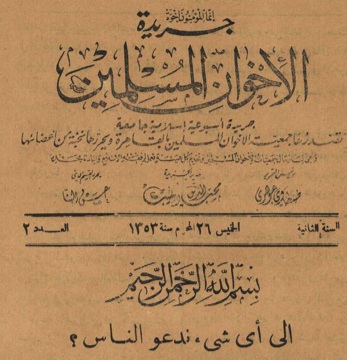
The Arab Spring has morphed into the pundits’ pandering about Islamism. An example, and there are many to choose from in the current political orgy of right-wing rhetoric, is in a New York Times op-ed by John M. Owen IV. It seems that when Muslims elect representatives who are Muslim they must be a new species called “Islamists.” Yes, throughout the Middle East, where the dominant religion happens to be Islam and there happen to be many forms of Islam, there is a strong interest in electing leaders who espouse religious values. In part this is due to decades of dictators who barely gave lip service to Islam and did all in their power to demonize those Muslims who opposed them. But just look at the current GOP field of candidates and tell me that voting on religious values is somehow unique to Muslims. Do read what Owens writes and then my reasons for being critical of this Islamist hunting…

Why Islamism Is Winning
By JOHN M. OWEN IV, The New York Times, January 6, 2012

EGYPT’S final round of parliamentary elections won’t end until next week, but the outcome is becoming clear. The Muslim Brotherhood will most likely win half the lower house of Parliament, and more extreme Islamists will occupy a quarter. Secular parties will be left with just 25 percent of the seats.

Islamism did not cause the Arab Spring. The region’s authoritarian governments had simply failed to deliver on their promises. Though Arab authoritarianism had a good run from the 1950s until the 1980s, economies eventually stagnated, debts mounted and growing, well-educated populations saw the prosperous egalitarian societies they had been promised receding over the horizon, aggrieving virtually everyone, secularists and Islamists alike.

The last few weeks, however, have confirmed that a revolution’s consequences need not follow from its causes. Rather than bringing secular revolutionaries to power, the Arab Spring is producing flowers of a decidedly Islamist hue. More unsettling to many, Islamists are winning fairly: religious parties are placing first in free, open elections in Tunisia, Morocco and Egypt. So why are so many Arabs voting for parties that seem politically regressive to Westerners?

The West’s own history furnishes an answer. From 1820 to 1850, Europe resembled today’s Arab world in two ways. Both regions experienced historic and seemingly contagious rebellions that swept from country to country. And in both cases, frustrated people in many nations with relatively little in common rallied around a single ideology — one not of their own making, but inherited from previous generations of radicals. Continue reading The Islamists are coming, the Islamists are coming

Welcome to America?


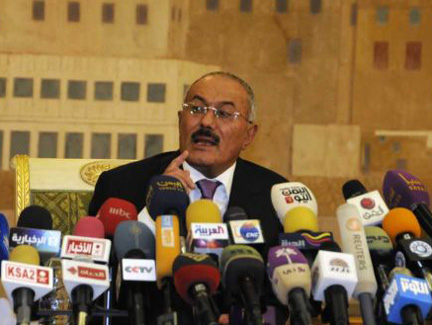
Photo credit: AP | Yemen’s President Ali Abdullah Saleh speaks to reporters during a press conference at the Presidential Palace in Sanaa, Yemen. (Dec. 24, 2011)

Yemen rarely makes the front page of The New York Times, but today it did. The seesaw political succession game underway in Yemen has seen President Ali Abdullah Salih’s head bobbing up and down in the power vacuum like a bobblehead doll in the hands of a Little Leaguer on opening day in Yankee Stadium. According to the article, Salih requested a visa to receive medical attention at New York’s Columbia Presbyterian hospital. Why it is not sufficient to return to Saudi Arabia, where he first underwent surgery and medical attention for major burns and other complications, is not clear. To complicate matters, and Salih has a knack for complicating matters, Salih told the Yemeni public in a recent televised address that he was not seeking medical treatment in the United States but simply wanted to allow the political process to evolve with him on the sidelines.

The Statue of Liberty still holds the beacon of hope aloft. So what does Salih hope to get from this visit. The Obama administration is keen to insist that Salih is welcome only for medical assistance, not for refuge. There is a glaring precedent that urges such caution: when Jimmy Carter allowed the former Shah of Iran entry to the United States for treatment, the pre-nuclear revolutionaries back in Iran went ballistic and stormed the U.S. Embassy. The rest, as they say, is history, but not the kind one likes to repeat. Continue reading Welcome to America?

The Islamic World’s Nude Spring


Aliaa Mahdy

by Joseph Mayton, bikyamasr, December 6, 2011

Egypt’s revolution has stalled. Islamists have taken the lion’s share of the first round of voting. In Tunisia and Morocco, large gains by the Islamists have seen women begin to question their future in conservative societies. Aliaa Mahdy changed the global perspective on how women are viewed in the Arab world, when she posted in November a full-frontal nude photo of herself on her blog.

The posting of her naked body left Egyptians and Arabs angry. Hate and condemnation quickly followed. Ironically, despite all the hatred purported in her direction, millions of people logged onto her blog to see her picture, with even lewd comments being posted.

For Mahdy, it was a symbolic protest against the status of women in Egypt and across the Arab world. She said enough to the centuries of male-domination meted out to women in the country and the region. It was the beginning of the Islamic world’s “Nude Spring” and launched a debate over women’s rights, or rather, “what is appropriate for women.” Continue reading The Islamic World’s Nude Spring

The picture


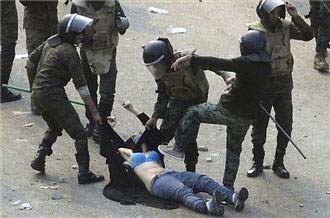
Beating a female protester in Cairo, Reuters

There it is above: the picture that sums up the resistance to political renewal more than any other image possibly could. It has been flashed across the world: a woman’s body exposed to anonymous male aggression. The issue is less the moment of an ongoing event which has riveted attention for almost a year than its symbolic depth. There are other images of security men beating protesters, including women. There are far more brutal shots of bloodied corpses and disfigured bodies. But this is the kind of picture that launches a thousand and one more protesters. Not only within Egypt. It is the kind of image that should shock us all, because it exposes an ugly truth we do not want to admit.

This is the kind of picture where the meaning far outstrips the specifics of the event. We do not know, nor do most people want to know, who she is or what she said or why she was singled out (if she was the only one), because she stands for the fragility of all protests against raw power. The reality is that force is entrenched. The purpose of military and security is to implement the policy of those who define power. Yes, there are revolutions and mutinies, but the need to control always wins out after a political house is “cleaned.” At times the power enforcers will give a little, but there is a point at which the batons are brandished and blood pours from the bodies of those who dare defy power.

What could this woman, dressed in the symbol of supposedly protective modesty — the hijab — have done to receive such treatment? Did they think she concealed an AK-37 beneath her black cover? Did they think any woman on her own posed a danger to men armed with crowd control equipment? Did they stop and think she is somebody’s daughter, probably somebody’s sister, perhaps someone’s wife or mother? No, because that is the ultimate tragedy of controlling protests, whether here on a Cairo street or a policeman spraying Occupy Wall Street young women with pepper spray. The only thing different this time is that the moment has been captured on film. It will never really be over, but replayed over and over again as a reminder that the violence never ends against those who dare protest a monopoly on violence.

While this beating was happening, several Egyptian protesters were killed and far more people were being eliminated in Syria. Such deaths are a daily occurrence in Yemen. Iraq and Afghanistan have not ceased to be killing fields. So why does this particular image have such power? Perhaps because it can resonate on all sides. For the liberal here is the epitome of woman’s ultimate lack of defense against male power. She had not stripped her own clothes off; she came to the square in the modest dress that was supposed to protect her, to set her off as immune to such actions. For the conservative here is the shame of exposing the body of a woman in public, not that of a criminal or a sorceress but a woman who dressed Islamically.

But there is another angle to this image that goes far beyond Egypt. Men virtually everywhere expose women’s bodies for their own perceived needs. On a gender scale the only real difference between this image and a simulated sex attack in a pornographic shot is that the woman is acting for money in the latter. But in both cases the message is that men are the ones who control women. It is a male power play to clothe the woman in any kind of dress and it is an ultimate male right to remove those clothes to suit his own purpose. A woman’s body is for the male to define. The young Egyptian blogger who posed naked, or nearly so, to speak up for freedom over her own body was roundly criticized by liberals and conservatives alike for rocking the voting public’s boat. How dare she defy the norm and expose her body voluntarily. It would only give more votes to the Islamic parties: such was the fear. But the issue is never really about the naked body, which men desire at almost any cost, but the fact that a woman dared defy the demanding male gaze by not letting the male strip her unilaterally or commercially. Look at the image above and look at the image of the blogger. If you see no difference, than you are the baton the security men wield against a defenseless body.

Daniel Martin Varisco

This commentary has been reposted on muftah.org.

Fantasy, action and the possible in 2011


by Samuli SchielkeØŒ “You’ll be late for the revolution!”: Samuli Schielke’s Diary of the Egyptian Revolution, December 11, 2011

[Webshaykh’s note: The following is an excerpt from an essay by Samuli Schielke “about Lenin, Tahrir, Islamists, poetry, choice and destiny in an attempt to provide some sort of theoretical synthesis of a confusing experience. It is the very slightly modified transcript of a lecture I gave at the University of North Carolina in Charlotte on 6 December 2011.” For the full essay. click here.]

The elections are now bringing a landslide victory of Islamic religious parties. I was just reading the results of the first round – we don’t have the final results because the elections take place in three rounds, different provinces voting at different times (the electoral law requires every polling station to be supervised by a judge and there are not enough judges in the country). One third of Egypt’s provinces have voted now. The results show that about sixty per cent of the vote of the party lists go to two Islamist party alliances, one of them the Muslim Brotherhood who are conservative, and one of them the Salafis who are badass fundamentalists. This has completely surprised some people, but anybody who has actually been following the situation in the streets has not been surprised at all. Actually the Muslim Brotherhood got less votes than one would think. With 36% of the vote, they actually did badly. They should have gotten 50%.

In a country that just had a revolutionary uprising against a corrupt system that was not an uprising in religious terms but one in terms of social justice, or freedom, or human dignity, why did people vote for Islamic parties? One of them, the Muslim Brotherhood, supported the revolution (but sided with the Army very soon afterwards), the other, the Salafis, were actually supporting Mubarak. Why did people vote for them? Continue reading Fantasy, action and the possible in 2011

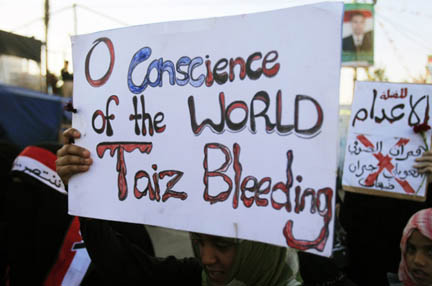
Is Taiz going to be the next Benghazi of Yemen?


by By Tom Finn, Time, Tuesday, Dec. 13, 2011

Read more: http://www.time.com/time/world/article/0,8599,2102183,00.html#ixzz1gXKFNc14
During the day, Taiz, a mountainous municipality nestled in the basin of Yemen’s rugged central highlands, has the feel of any other Yemeni city. Scrawny teenagers with wheelbarrows filled with oranges weave in and out of the traffic dodging debabs — local six-seater microbuses — and motorbikes as they splutter up and down the city’s steep, dusty alleyways. But once the sun begins to set and the mountains surrounding the bowl of the city darken into jagged silhouettes, the wail of the muezzins soon competes with the ominous thud of explosions.

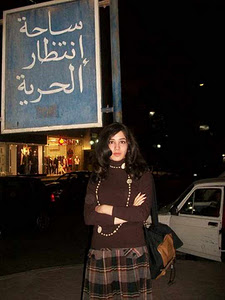
Taiz is famed for its doctors, lawyers and relative cosmopolitanism, but it was its youth who in February jump-started the movement in Yemen to oust the wily, decades-long ruler, Ali Abdullah Saleh, from power. Inspired by their counterparts in Tunis and Cairo, a group of men and women — most of them students — erected a circle of tents on a dusty boulevard in downtown Taiz and named it Freedom Square. Since then they have spent months braving a barrage of bullets, batons and tear-gas canisters from the security forces, marching through the city’s grubby streets and calling for change. (See photos of Yemen on the brink.)

But in recent weeks the conflict in Taiz has taken on a more deadly twist. Continue reading Is Taiz going to be the next Benghazi of Yemen?