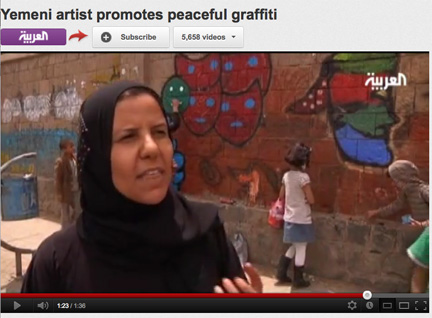
The aftermath of the protests in Sanaa, the capital of Yemen, left many walls filled with dueling graffiti. One Yemeni artist has taken to the streets, bringing neighborhoods together, to take back the walls through art. See the video here.
The aftermath of the protests in Sanaa, the capital of Yemen, left many walls filled with dueling graffiti. One Yemeni artist has taken to the streets, bringing neighborhoods together, to take back the walls through art. See the video here.
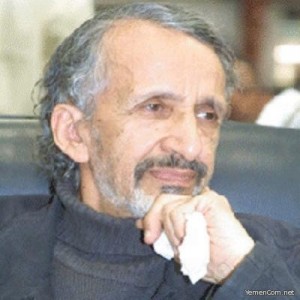
المتوكل: Øادثة الموتور سياسية والمستعجلين على الهيكلة لديهم برنامج يريدوا يبرموه
السبت, مارس 31, 2012 ALHawyah
قال الدكتور Ù…Øمد عبد الملك المتوكل أنه لا يستطيع القول أن الØادثة التي تعرض لها ÙÙŠ نوÙمبر من العام الماضي Øادثة بريئة “لكنه موتور سياسي ناتج عن عدد من القضايا التي كنت أطرØها على المشترك وأولها: قضية عسكرة الثورةâ€.
وأضا٠ÙÙŠ Øوا-ره مع صØÙŠÙØ© الهوية نشرته ÙÙŠ عددها الصادر الاربعاء الماضي -وهو يسرد ملابسات الØادثة قائلاً: طرØت على المشترك قضية عسكرة الثورة، Øيث قلت لهم أن الأخوان المسلمين هم الذين جاءوا بالعسكر إلى السلطة Ùرد علي عبد الوهاب الآنسي بقوله: أنت تتهم الإصلاØØŸ قلت له لماذا لا يوجد إسلاميون غيركم؟ الاتØاد إسلامي والشيخ إسلامي ولكن أنا اقصد الإسلاميين ÙÙŠ العالم العربي كله. Ùقال Ù…Øمد Ù‚Øطان مداخلاً علي Ù…Øسن مستعد أن يترك السلطة Ùرديت عليه: القضية ليست قضية شخص، وإنما قضية أسسâ€. Øسب قوله.
وأضا٠المتوكل: “القضية الثانية، دعوتي إلى ضرورة إيجاد قوى متعددة من أجل توازن القوى وقد بدأنا نبØØ« ميزانية توازن قوى Øيث اتÙقنا مع الشامي وأبو Ù„Øوم والØوثيين وبدأنا نتÙÙ‚ مع الØراك ÙÙŠ الجنوب ومع الشباب وذلك لإيجاد توازن قوى نشط يؤمن بالتØال٠ويؤمن بالآخرâ€.
وأرد٠قائلاً: “وهذه القضايا كان عبد الكريم الارياني قد أتصل بي وقال أنهم الآن يعملون مؤسسة لتنمية الوعي، هذه المؤسسة Ùيها من الأØزاب ومن المستقلين والمؤتمر، يريدوا أن يوجدوا توازن قوى، وقد Øضرت معهم الاجتماع ÙÙŠ ØµØ¨Ø§Ø Ø°Ù„Ùƒ اليومâ€.
ويضي٠المتوكل: “بعد انتهاء الاجتماع طلبوا مني Øضور اجتماع آخر ÙÙŠ المساء قلت لهم لا أعر٠مقركم، قالوا: سنبعث لك سيارة تأخذك، ÙˆÙعلاً أتت السيارة، ولكن ÙÙŠ وقت متأخر من الليل، وذهبت معهم، وصلنا إلى شارع الشرطة وكان هناك زØمة، Ùقالوا لي لا نستطيع الدخول من هنا، وسندخل من شارع آخر، Ùقلت لا مانع، وعندها دخلنا شارع آخر ومشينا، ولم أشعر بعد ذلك بما Øصل لي إلا بعد أن تم نقلي إلى الأردن وخرجت من العناية المركزة ورأيت أمامي أولادي ولا أعر٠السببâ€. Øسب قبوله.
أما القضية الثالثة Ùيقول المتوكل: “طلبت تشكيل لجنة لعملية إعادة التÙكير ÙÙŠ هيكلة القوات المسلØØ© وهذا ما أزعج الطرÙينâ€.
Continue reading Muhammad Abd al-Malik al-Mutawakkil on the Situation in Yemen
I was interviewed yesterday on the “Worldview” Program of WBEZ, Chicago. To listen to the broadcast, click here.
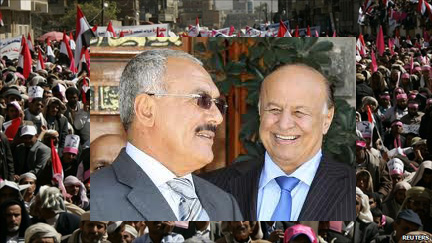
Yemen’s new president, Abdu Rabbu Mansour Hadi, has been in power nearly a month. He’s facing trouble in the southern province of Abyan. According to the United Nations High Commissioner for Refugees (UNHCR), the fighting has displaced more than 150,000 people since militants seized several cities in the province last May. Worldview will discuss the humanitarian crisis with Daniel Varisco, professor of anthropology at Hofstra University.
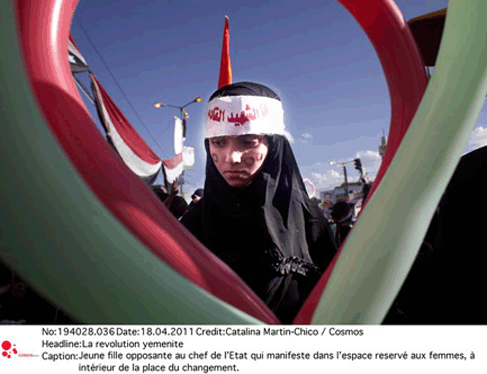
The website arabwomenspring has posted a summary of Yemeni women’s participation in the recent political protests and historical background on their role in governance. Below is an outline of the contents of the online report:
1 Women’s participation in demonstrations
1.1 Time-line of key events
2 Women’s participation in political life: opportunities and obstacles
2.1 Representation in government
2.2 Representation in parliament
2.3 Representation in local councils
2.4 Representation in the judiciary
3 A discriminatory legal framework
3.1 CEDAW
3.2 The Constitution
3.3 Other discriminatory laws
4 Further reading
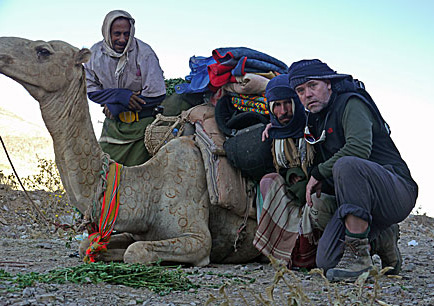
by Iona Craig, The National, January 9, 2012
A Swedish adventurer crossing Yemen by camel hopes his journey will encourage tourists to see beyond the political turmoil and violence that has engulfed the country for nearly a year.
Mikael Strandberg set out on December 7 on a 380-kilometre trek across the treacherous highlands, the first leg of his Yemen venture, to disprove the purveyors of pessimism.
“I don’t know what they [the tourists] are waiting for … it is such a wonderful country with great potential,” he said, after arriving in Sanaa after a two-week march through the toughest terrain in the Arabian Peninsula.
Along with two Yemeni companions, Mr Strandberg is in the initial phase of a journey that will cross the country from the western coastal plains of Hodeida to the edge of the world’s largest sand desert, the Rub’ Al Khali, or Empty Quarter, and beyond to Oman.
The explorer, 48, who fell in love with both the country and his wife Pamela, an American, during a visit to
Yemen three years ago, holds fond memories of Sanaa and the Yemeni people.
“We decided to go and try to make a difference and give a different perspective from the one portrayed by the media,” said Mr Strandberg. Continue reading A Swede and a camel in Yemen

So many scenes of tanks and blood-soaked Syrian bodies, although there seem to be few good Samaritans willing to stop and heal the wounds. But there is also art, the spirit of which bullets can never penetrate …
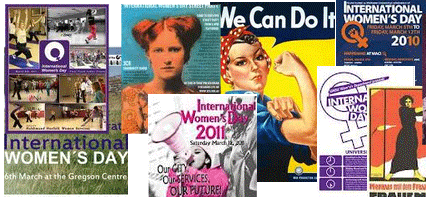
Today, March 8, will be celebrated around the world as “International Women’s Day.” The question that arises each year at this time is what exactly is being celebrated. There are the historic victories, like the 19th amendment to the United States constitution in 1920, giving women the right to vote, but these are increasingly distant each year. There are the milestones over the years of the first woman to fly solo around the world, the first woman to go into space and many other unacknowledged firsts for women. But these are really about women catching up to roles or activities once reserved exclusively or mainly for men. What can be celebrated on this day about what it means to be a woman in 2012 without comparison to how she fares relative to men?
Recent political events in the so-called “Arab Spring” hold promise for people power, some form of democracy and the end of the line for masculine idol dictators. Gone is Qaddafi, but also his harem of female bodyguards seemingly dragged off the stage of a Fellini film. Gone are the wealthy wives of the dictators. Cries of freedom can be heard from Tunisia to Bahrain. But there is much that is not celebratory. Continue reading International Women’s Day
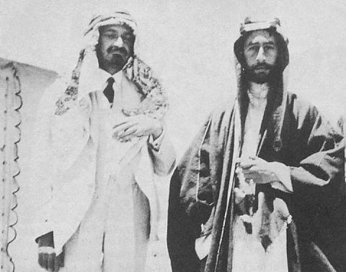
In 1918 the future king of Iraq, Faysal, met the Zionist leader Chaim Weizmann in Syria
by Anouar Majid
Â
As Arabs continue to agitate for freedom in their nations, no leading Arab or Muslim intellectual has been able to articulate a well thought-out program for the future of his or her country, let alone for the amorphous entities known as the Arab and Muslims worlds. Plenty of euphoria is being generated by getting rid of despots, but the expectations generated by the uprisings in Tunisia, Egypt, and Libya, as well as structural reforms in other places, have been limited to the language of morality, whose champions, as is amply evident by now, are Muslims wearing various garbs of moderation to reassure secularists in their midst and assuage the rest of the world’s apprehensions.
Â
Many Muslim citizens seem to trust pious politicians to establish a culture of accountability and transparency, fight corruption, institute democratic reforms, guarantee impartial justice, rebuild their nations’ abysmal infrastructure, reduce unemployment, and lead their countries to a new age of prosperity. In their view, the miracle of development would happen magically, through no more than the strict adherence to Islamic ethics. No manifestos or declarations are needed to chart a clear path; faith, and faith alone, would be enough to cleanse Arab societies of decades of decadence. Constitutions are being written or rewritten, to be sure, but such documents don’t convey the power of vision embodied in other forms of narrative, like the American Declaration of Independence (1776) or, better still, Theodor Herzl’s The Jewish State (1896) and his not-so-utopian novel Old New Land (1902).
Â
Theodor Herzl may strike Arabs and Muslims as an odd choice to invoke in these heady days of freedom and hope. He is, after all the leading figure of modern Zionism and the architect of the State of Israel. He is also blamed for uprooting Palestinians from their native land and condemning them to a tragic fate. Continue reading Looking for an Arab Herzl