Category Archives: “Arab Spring”

A New War on Women?


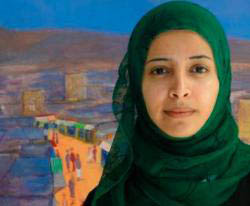
Bushra Al-Maqtari

by Sama’a Al-Hamdani, Yemen-iati, August 3

“The Arab Awakening protest movement encouraged religious tolerance among its participants, while in some instances, the resulting political crisis provided a context that stoked existing religious tensions” – Yemen’s Religious Freedom Report

Is it possible that the Arab Awakening opened doors for a new war on women? is there a new form of sexism that is declared in the name of religion?
Women all over the Middle East have been demanding political equality and while we await their democratic freedoms to expand, newspapers are reporting rapes from Libya, sexual assaults in Egypt and deaths in Syria. Sexism is not the least bit a phenomenon in the Middle East; however, the utilization of religion as a tool of war against women is becoming a trend. Religion, which was once implemented with care and knowledge, is now used in most political conflicts.

In Yemen, the political war between the Houthis and the government has become about religious ideology. Underneath the religious facade, it is mostly about power to rule. This war even invited unwanted political involvement from Iran and Saudi, threatening the security of the nation with a proxy war; all in the name of religious authenticity. This July, the United States Department of State released the International Religious Freedom Report for Yemen and declared that religious freedom in Yemen is not ideal yet not too problematic. The report focused on religious pluralism and sectarian violence, but it failed to recognize Yemeni women as victims of religious partiality.

Should Yemeni women be fearful? Perhaps, if they are to choose to have a voice and challenge Yemeni culture. Case in point, Bushra Al-Maqtari, a 31 year-old divorcee from Taizz. Bushra, a journalist, wrote an article about the revolution. In this article, she expressed her thoughts about the bloody battle of Khidar (Dec. 2011) between the demonstrators and pro-Saleh forces. She shared her feelings by saying that she questioned whether God was witnessing everything. While some may agree and many may disagree, religious extremists in the country declared Bushra an infidel who questioned the existence of God. In response, Bushra clarified that she is believing Muslim and that she did not question the existence of God but rather his presence in all situations. Regardless, what Bushra wrote may be a reason for many people to dislike her, but what happened after that made this about all women. Continue reading A New War on Women?
Romney up against the wall


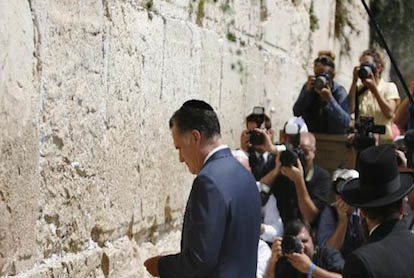
The gaffes of Republican nominee Mitt Romney have put him up against the wall several times, including the Wall Street Journal op-ed pages. But his latest “stump” in Israel, with the obligatory picture of Romney at the Wailing Wall, has even brought out a critique from the New York Times editorial page. Romney is visiting Israel and veering hard to the right, even outdoing the neocons that fueled our invasions of Afghanistan and Iraq. Here is what the editorial says, followed by my own comments.

Mr. Romney Stumps in Israel

Mitt Romney made a point of insisting that he would adhere to an unwritten rule and often violated rule about candidates not criticizing each other or contradicting American foreign policy on foreign soil. About the only effort he made to keep that promise during his stop in Israel was to avoid mentioning President Obama by name.

Beyond that, with some of the biggest investors in Republican politics in tow, Mr. Romney made no effort to disguise the target and intent of rhetoric that was certainly inflammatory but largely free of any sense of how we would carry out policies he was championing.

The message — on Iran, Jerusalem, the Palestinians — was all anti-Obama: Mr. Romney would be a much better friend to Israel than Mr. Obama ever could be. He would be much tougher on Iran. He would recognize Jerusalem as the capital. For good measure, he insulted the Palestinians by declaring that cultural differences — not decades under Israeli occupation — are the reason Israelis are more successful economically. It’s hard to say how this could affect policy if he were president, but it is not encouraging.

The real audience for Mr. Romney’s tough talk was American Jews and evangelical Christians, some of whom accompanied him on his trip. He is courting votes and making an aggressive pitch to donors, including Sheldon Adelson, the billionaire casino magnate with the hard-line pro-Israel views who is spending more money than any other American — $100 million — to defeat Mr. Obama. Continue reading Romney up against the wall

Uncle Ramadan is back


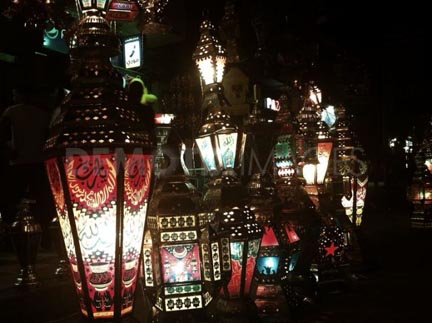
Traditional Ramadan Lanterns displayed on Egyptian streets

by Karim Adel, Open Democracy, 23 July 2012

It’s safe to say Uncle Ramadan is not going to sleep while he’s with us this year…

Uncle Ramadan is back and to Egyptians he’s back after what seems like a long while…

Although it’s an annual event this is the first time in two years that we celebrate without any turmoil and under a civil president… so it’s just safe to say Uncle Ramadan is not going to sleep while he’s with us this year…

Tunis Traditional Ramadan Lanterns displayed on Egyptian streets

You can see him walking down the old ancient alleys in the Al Hussein area in Islamic Cairo making sure all the colourful lights are hung well from building to building, he’s making sure all the giant colourful [12] lanterns [13] are hanging on every balcony…

He’s passing from home to home to make sure everyone, poor or rich gets a chance to eat after sun set…

He makes sure all those who have money have gathered some to give out to the poor and that every area and street has at least one charity group meal, set up for the poor and homeless every day of the 30 days of fasting… Continue reading Uncle Ramadan is back

Pew on Muslim Extremists

The Pew Foundation has recently released a report entitled Most Muslims Want Democracy, Personal Freedoms, and Islam in Political Life on July 10, 2012. Click here to read the overview and gain access to a free pdf of the full report.


Here is what they say about Muslims views of extremists…

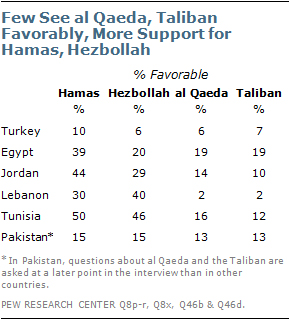
“Extremist groups are largely rejected in predominantly Muslim nations, although significant numbers do express support for radical groups in several countries. For instance, while there is no country in which a majority holds a favorable opinion of the Palestinian organization Hamas, it receives considerable support in Tunisia, Jordan and Egypt.

The militant Lebanese Shia group Hezbollah receives its highest overall ratings in Tunisia, where nearly half express a positive opinion. Sizable minorities in both Jordan and Egypt also have a favorable view, but Hezbollah’s image has been declining in both countries in recent years. In its home country, views about Hezbollah are sharply divided along sectarian lines: 94% of Shia, 33% of Christians, and 5% of Sunnis give the group favorable marks.

Across all six nations, less than 20% have a positive opinion about al Qaeda or the Taliban. In Turkey and Lebanon, support for these groups is in the single digits. However, fully 19% of Egyptians rate these extremist organizations favorably.”

Confessionalization fundamentalism


Bracketing Realities in Lebanon; photograph by Estella Carpi

Confessionalization fundamentalism: commodifying religious identities in the Middle East

by Estella Carpi, Open Democracy, 16 July 2012

Middle Eastern revolutionaries and spectators alike, deprived in the media of any representation of their own agency and denied the chance of producing their own new life chances, end up commodifying the identities they are exposed to within their social pattern.

As Maya Mikdashi has argued in an interview released to Istituto di Studi Politici Internazionali (ISPI), published on Jadaliyya on June 21, the uprising in Syria itself is becoming more sectarian now, packaged in a way such that ‘sect’ seems to be the political marker that matters the most.

This development could be taken as a starting point to point to a more widespread arbitrary confessionalization of Middle Eastern conflicts, and of the Syrian revolution in particular. “Crisis”, “sunnization of the revolt”, “new balance between Sunnis and Shiites” and “civil war” are key terms used by the media in reporting the current events.

Voices from think-tank and news analysts actually unfamiliar with the Arab world have largely contributed to portraying a patchwork image of the Middle East composed of ethnic and religious groups that do not fight each other only thanks to the power of dictators that discipline and guide these irrational individualities. Continue reading Confessionalization fundamentalism

What (who) drives Muslim women


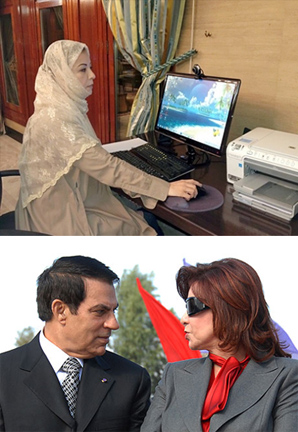
top, Leila Trabelsi in Saudi Arabia; bottom, Leila Trabelsi with Ben Ali in Tunis, pre-Jasmine Revolution

The West has long had a fascination with Muslim women, from the Oriental harem beauties of Ottoman seraglios to immigrants who wear niqab in Europe. As some critics have noted, perhaps those who laud or victimize the role of women in Islam (as though there could be “the” role), should look at the patriarchy in their own societies. The ability to go out in public with less of the body covered may be a sign of freedom in mobility, but it is not automatically symbolic of equality in economic or political terms. Ethnographic study for almost a century has illustrated the kinds of social contexts in which women and men are closer to being egalitarian, but there is no one factor (including religion) that is causal. The books and commentaries on women in Islam continue to proliferate and will into the foreseeable future. But what about the situation today within Islamic countries?

By today, I mean the totally unscientific sense of an arbitrary internet experience. In checking out several websites this morning to see what I might comment upon, several items caught my attention. First, a Yemeni website shows a photograph of Leila Trabelsi, the wife of the exiled Tunisian president Ben Ali; both are now living in Saudi Arabia (top picture, above). The picture is pregnant with interpretive possibilities. The former elegant first lady is now regaled in hijab while mouse-clicking her way through cyberspace. In that vast digital archive, she can easily come across previous pictures of herself, like the one shown below her new Saudi makeover look. So is one of these pictures of Leila more Islamic than the other? Does the veil indicate intent; does living in Saudi Arabia signify a closer relationship to Allah? Perhaps if we knew what websites she was surfing, we would have more clues. Continue reading What (who) drives Muslim women

Yemen’s Transition


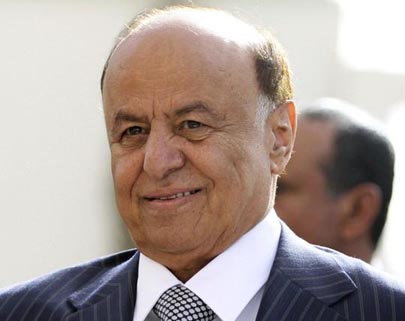
Yemeni interim president Al-Hadi

Yemen’s transition: a model to be followed?

by Helen Lackner, Open Democracy, June 19, 2012

What is actually happening in Yemen? It is either presented as a ‘solution’ which could be a model for Syria, or as a ‘phoney’ change that only conceals continuation of the previous regime

In the current environment where the success of the ‘Arab revolutions’ to bring about genuine democracy to their countries is more than doubtful, there is value in examining in some detail the situation in Yemen. Where Egypt seems to be poised between a military or a fundamentalist regime, Libya is at risk of being divided between a multiplicity of various armed factions, Bahrain continues on its bloody confrontation between a minority regime and the demands of the majority of its people, early hopes for Tunisia are dwindling in the face of more aggressive fundamentalists and Syria is suffering civil war with a death toll of hundreds each weak, what is actually happening in Yemen? It is either presented as a ‘solution’ which could be a model for Syria, or as a merely cosmetic change which conceals a continuation of the previous regime.

After many months of procrastination, Ali Abdullah Saleh was forced to sign the so-called Gulf Cooperation Council Transitional agreement on 23 November 2011. While he attempted to continue ruling from behind the scenes, his power has been very dramatically reduced over the months. First, his former Vice President, Abdul Rabbo Mansour Hadi was elected president through an overwhelming popular endorsement on 25 February 2012 when more people came out to vote for him than had participated in the previously ‘contested’ presidential elections of 1999 and 2006. While the outcome was in no doubt as he was the only candidate, the fact that over 6 million Yemenis bothered to come out and queue to vote showed their desire for change and to get rid of the old regime – even if many of them were voting more against AAS than for ARMH – gave him a popular legitimacy which helps him develop a genuine power base which he previously lacked. Continue reading Yemen’s Transition

The Road to Damascus


What a modern day Saul might hope to see

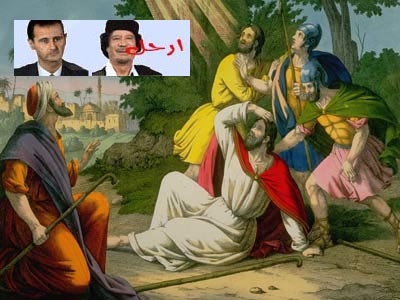
About 2000 years ago a zealot named Saul witnessed a blinding light on the road to Damascus; it was both a name changing and life changing experience. The great epistle writer and first missionary went on to create early Christianity, at least in the canonical sense. There are more blinding, life-and-death lights now ablaze on the road to Damascus as well as in Damascus. This time no one would mistake them for signs of the divine. While the world watched as the Egyptian people elected a leader with religious convictions, the last entrenched dictator (sparing the kings and emirs who still live as though the 1001 Nights never ended) to the north is spilling the blood of his own people. Asad, the dentist turned family potentate, is more like a modern-day Nero than a latter-day hero. His siege mentality, propped up by Russian economic and political interests, is not viable in the long run, but how long can Syrians survive the short run?

The issue is not if Asad can survive, but how long the drama will continue. Obviously he continues to rule because he and his minority have the guns and few qualms about using them. In February of 1982 his father was pitiless in ordering a slaughter in the city of Hama in which perhaps as many as 20,000 were killed. Although in many ways the gaunt and lackluster Bashir is not the charismatic clone of his father, his modus vivendi for taking the life out of his enemies is the same. There may not yet have been a blinding flash of light strong enough to overthrow Asad, but there is plenty of handwriting on the wall. Shooting down a Turkish plane, when relations with Turkey are as low as they can be without conflict , is a no-brainer dumb move. As a member of NATO, Turkey could call on its security allies to pull another Libya. If Asad thinks that such a provocation would stop Turkish support for the defectors from his regime, he is either desperate or deluded. Continue reading The Road to Damascus