Category Archives: “Arab Spring”

The Formation of Syria’s National Coalition


Syrian President Assad; photography by Benoit Tessier/ REUTERS

The Formation of Syria’s National Coalition: An Assessment and Analysis

By Amr al-Azm

Syria Comment, November 13, 2012

Following talks with a number of people who attended the Doha meeting of November 8-11, this is my assessment of the newly formed “National Coalition for Revolutionary Forces and the Syrian Opposition”. The coming together of the various Syrian opposition factions to finally strike a deal based on a 12 point agreement that would unify them under the umbrella of a newly created coalition body is remarkable considering the obstacles that had to be overcome. It faced intense opposition by some groups, particularly the SNC, which viewed this as a blatant effort to sideline them. Its members have fought for a leading role in the new group.

The original Riad Seif plan called for a council of 51 seats, a joint supreme military council, a judiciary commission and the formation of a provisional government selected from technocrats.

The new National Coalition that emerged in Doha on Monday ended up comprising of 65 seats. The SNC was earmarked 22 seats, the local administration councils were allocated 14 seats (one for each of the provinces in Syria), national figures were allocated initially 8 seats, eventually rising to 10 seats, with the balance (19 seats) to be distributed amongst the various remaining opposition groups and entities. The new coalition eventually managed late on Monday evening to eventually select Moaz Al-Khatib (a cleric and former imam of the Ummayad Mosque in Damascus) and two deputies (with a third still to be named by the Kurds) who are Riad Seif (both prominent dissidents and activists). A third position, which is until now poorly, understood is that of Secretary General, to be occupied by Mustapha Sabagh (head of the Syrian Business men Group). It is rumoured (by Al-Jazira and others) that the position would carry sweeping powers to rival even those of the head of the coalition Moaz Al-Khatib and seen as a principle demand by the Qataris. Continue reading The Formation of Syria’s National Coalition
Muslim Salafists and Moderates: What’s the Difference?


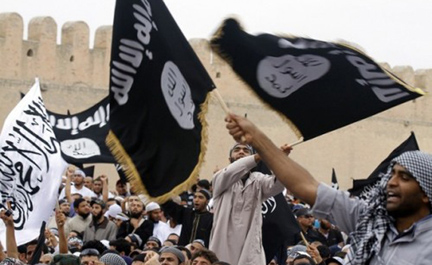
Tunisian Salafists; Photo by Reuters

By Anouar Majid

Many people in the Muslim world are scrambling to get out from centuries (not just decades) of tyranny and build a good future for themselves and their descendants. They want to catch up to the West, build strong economies, and invent things that would make their nations proud, but they keep slipping further behind nations that were once their peers. This regression only intensifies their desire to get respect. With nothing to show for their pride, they go back to the distant nebulous past to sing the glories of long-dead warriors and savants. An imagined glorious history is a safer bet than the dysfunctions of the present or the bleak promises of the future.

It is this attachment to the past that produces the kind of extremism many of us find abhorrent. The new offenders these days are the Salafists, a loose confederation of Muslim literalists who believe that the pristine faith of the seventh century is the best remedy to what ails Muslim-majority nations today. Sporting robes and beards, they have declared war on churches, women with skirts, bars, insufficiently pious Muslims, and anything that smacks of the false West. Even Islamist parties, including Hamas, are not immune to the Salafist righteous indignation. Continue reading Muslim Salafists and Moderates: What’s the Difference?

Johnsen on Yemen in New York

Book Night With Gregory Johnsen

12 November 2012 – 6:00pm – 7:30pm

40 West 45th Street, Club Quarters, New York, Free admission

by Sonya K. Fry, Overseas Press Club of America

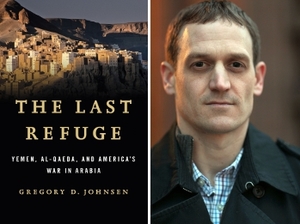
The Last Refuge: Yemen, Al-Qaeda, and America’s War in Arabia [W.W. Norton & Company, November, 2012] is an eye-opening look at the successes and failures in fighting a new type of war in the turbulent country of Yemen, written by Gregory D. Johnsen, who is an OPC Foundation Scholar, a Fulbright fellow in Yemen, part of a 2009 USAID conflict assessment team and is now a doctoral candidate in Near Eastern studies at Princeton University.

Johnsen takes readers into Yemeni mosques where clerics in the 1980’s recruited young men to jihad to fight the Russian invaders in Afghanistan. These men eventually formed the basis for the Al-Qaeda movement. The story also leads to the presidential palace in Yemen where the country’s military dictator, Ali Abdullah Salih vascillated between helping the U.S. get rid of Al-Qaeda in the Arabian Peninsula and hindering the process. Salih himself called this delicate balancing act of staying in power a “snake dance.” For years this dance included concealing Islamists from the prying eyes of U.S. intelligence and yet later he allowed the U.S. to conduct attacks that killed dozens of Al-Qaeda operatives including Abu Ali al-Harithi, who was known as the “godfather” by U.S. intelligence. The dramatic story sounds like a Hollywood movie: Haritihi turned on his cell phone as he left a secret meeting which signaled a predator drone to track him. The first missile from the drone exploded next to Harithi’s speeding car. He threw the phone out of the window and screamed at everyone to get out, but there was nowhere to go since they were in the middle of the desert. The drone fired its second missile and the car exploded in flames. Continue reading Johnsen on Yemen in New York

Harvard Arab Weekend


It is our honor, on behalf of the Harvard Arab Alumni Association, the various MENA clubs across campus, and the Arab student body, to welcome you all to the 6th Harvard Arab Weekend, taking place at Harvard University from the 8th through the 11th of November, 2012.

As the largest pan-Arab conference in North America, the Harvard Arab Weekend has prided itself on showcasing a mosaic of perspectives and insights on the most pressing issues in the Arab world. Last year, the Harvard Arab Weekend was commended by the White House as “The Premier Arab World Conference” in North America. This year, we strive to uphold our venerable tradition of engaging discourses and informative debates.

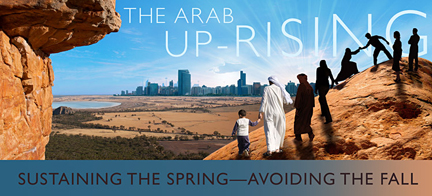
At this critical moment of modern Arab history, and in the midst of the many challenges created by the unprecedented transformations in the Arab world, Arabs, from the Gulf to the Ocean, are posing critical questions about their past, present, and future. While the entire Arab landscape is undergoing a process of re-creation, Arabs look ahead at the future, wondering whether they will be able to sustain what they have achieved after more than a century of struggle. This year’s edition of the Harvard Arab Weekend specifically aspires to tackle these challenges and discuss how Arabs can sustain the “Spring” and avoid reverting back to authoritarianism or falling into chaos. Continue reading Harvard Arab Weekend

Yemen: can southern separatists break up Yemen?


Photo in southern Yemen by Adam Reynolds

by Helen Lackner, Open Democracy, October 23, 2012

Yemeni unity in 1990 was greeted with enthusiasm by Yemenis at large, whether from the former Yemen Arab Republic (YAR) or People’s Democratic Republic of Yemen (PDRY). Although there was considerable discussion and disagreement in the leadership about the form it took, there is no doubt that for ordinary Yemenis the possibility of travelling anywhere in the country was welcome.

While many women in the YAR had looked forward to the spread of the PDRY’s Family Law to the whole country, many men and women everywhere hoped to see the same for qat consumption laws, and southerners were looking forward to economic liberalisation, all were swiftly disappointed when the economy collapsed after the sanctions taken against Yemen by neighbour states following Iraq’s invasion of Kuwait. In addition, after the initial flourishing freedom of expression through a multiplicity of new parties and newspapers in the first years of enthusiasm, the political situation rapidly deteriorated as tension developed between the two former ruling groups. Starting with some clearly targeted assassinations of Southern leaders, this eventually brought about the 5 months Civil War of 1994 which was decisively won by Sana’a’s forces. Continue reading Yemen: can southern separatists break up Yemen?

Yemen Conference at Harvard


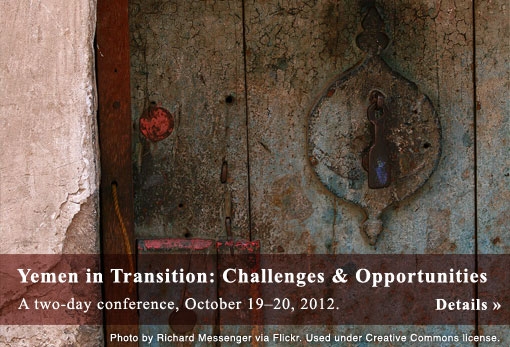
This past Friday and Saturday a conference was held on “Yemen in Transition.” While I was originally scheduled to give a presentation, I was not able to attend. But here is an overview of the conference, with complete details on the conference website.

Date: October 19, 2012 (All day) – October 20, 2012 (All day)
Speaker: various
Yemen in Transition: Challenges and Opportunities
Organized by Steven C. Caton, Harvard University, and the Yemen Working Group, this conference brings together Yemeni American professionals and academics along with some of their counterparts from Yemen, and academics from the U.S., Europe, and Yemen to discuss the future of Yemen and what might be done to help the country as it transitions into its new historical phase. It also brings together students from Harvard and the Boston area who are from Yemen. The main topics to be discussed are: women and youth, economic development, politics and political reform, and the water crisis. As an academic conference, the focus will be on theory and analysis, though concrete proposals and recommendations will also be presented.

The panels and the keynote address are open to the public. These presentations will be videotaped and made available on the website of the Harvard Center for Middle Eastern Studies but they will not be published as part of a conference proceedings. The use of recording devices by anyone other than the organizers is strictly prohibited.

A new Salafi politics


by Will McCants, Foreign Policy, The Middle East Channel, October 12, 2012

Salafis, or Sunni puritans, have been much in the news since they sparked riots at U.S. embassies throughout the Arab world protesting film clips lampooning the Prophet Muhammad. A television personality on a Saudi Arabian-funded Salafi satellite channel in Egypt first fanned the flames, and Salafis ranging from the militant Mohamed al-Zawahiri (the brother of al Qaeda’s chief, Ayman al-Zawahiri) to the mainstream Salafi political party al-Nour fueled the blaze when they blamed the U.S. government and called for protests against U.S. embassies. Salafis in Egypt, Tunisia, Libya, and elsewhere took up the torch, resulting in attacks on U.S. and other Western diplomatic installations across the Middle East.

Others were involved, of course, and the protests were small compared to the protests over the Muhammad cartoons several years ago. Nevertheless, the Salafi-driven protests are one more sign the ultra-religious right is asserting itself as the guardian of the moral order in Sunni-majority countries revolting against the ancien régime. Their noisy performance on the public stage poses a major challenge to emerging democratic systems, fueling polarization inside and fears abroad. But the new political realm also poses challenges to the Salafis who are on unfamiliar ground politically and ideologically.

To understand the political behavior of Salafis today, keep four things in mind: their religious beliefs do not predict their political behavior; they are a minority in almost every Middle Eastern country; the countries where they are a majority are incredibly wealthy; and their appeal and power arises from their commitment to an ultraconservative creed that is out of step with the mainstream. Continue reading A new Salafi politics

Challenging the Norm


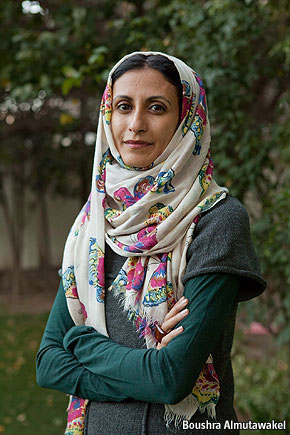
Q&A: Boushra Almutawakel
Challenging the Norm

The Economist, Aug 16th 2012, by S.B.

BOUSHRA ALMUTAWAKEL, a Yemeni photographer, aims to provoke discussions about social norms and question the ways people and cultures judge one another. Her stylised portraits, mostly of Middle Eastern women, challenge the view held by many in the West that the veil is a symbol of oppression. Issues of identity are central to her work. Though she is skeptical of veils that completely obscure the individual, she draws similarities with the way some women hide behind heavy make-up: in both cases, a woman is concealed behind a social mask of sorts, often for her own comfort. Ms Almutawakel (pictured below) is openly critical of certain social expectations of women in Yemen, yet she wears a long black abaya in public because she “wouldn’t feel comfortable otherwise”. This ambivalence pervades her work.

Having studied in America, Ms Almutawakel has returned to live and work in Sanaa in Yemen. Her photographs—controversial among Yemenis—seem designed mainly for a Western audience. But some can now be seen in a show of regional artwork at the National Museum of Yemen in Sanaa.

Ms Almutawakel recently met with The Economist to discuss her photography, her views on women and the role artists play in revolutionary Yemen.

Tell us about the art scene in Yemen.

When I started in the 1990s I was supposedly the first female photographer. There were only a few artists throughout Yemen and we formed a network to hold exhibitions. Now there are many more because digital cameras have made photography more accessible and schools and universities teach design. But the scene is still limited and goes up and down with the economic and political situation. We need support to have our work exhibited locally and internationally. Continue reading Challenging the Norm