Category Archives: “Arab Spring”

Playing Dice with God in the Middle East: The Putin Way

By Samson A. Bezabeh,

The World War II war time correspondent Emie Pyle once said that “there is no atheist in the fox hole”. What he meant does not only indicate the brutality of war but the honesty that can come out in war. In pronouncing these words, Pyle was pronouncing the truth about mankind, a deceptive being with layers of ideas. The whole thinking behind Pyle’s statement is that man need to be cornered to shade the various facades that he has adopted. As a Christian, the core for Pyle was the presences of God.

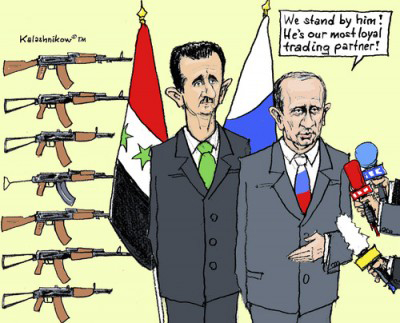
I am not here interested in Pyle or for that matter his view of God but on Putin and his recent comment on the ongoing Syrian affair in New York Times. Russia has been deeply enmeshed in the Syrian affair as a result of a number of strategic interests that the Assad government has been able to give to Russia. Yet Putin goes on to lecture about issues of morality to the American government without mentioning these issues. His focus in that essay was about the animosity as well as cooperation that his country had and is still having with the USA. His other focus was on the American exceptionalism that was pronounced by President Barack Obama. This point he apparently obtained after deeply studying Barack Obama’s recent speech.
Putin’s moralizing article was even more moralizing in its conclusion. Putin invoked the power of the people as he claimed that his article is addressed to the people of America. In his conclusion he even invoked a much higher power: God. He tells us:

There are big countries and small countries, rich and poor, those with long democratic traditions and those still finding their way to democracy. Their policies differ, too. We are all different, but when we ask for the Lord’s blessings, we must not forget that God created us equal (emphasis added).

Although hearing this from an x communist and a former KGB spy is stunning, it is even much more shocking when one realize the dishonesty that is embedded in Putin’s statement. Continue reading Playing Dice with God in the Middle East: The Putin Way
How to Kill a Terrorist


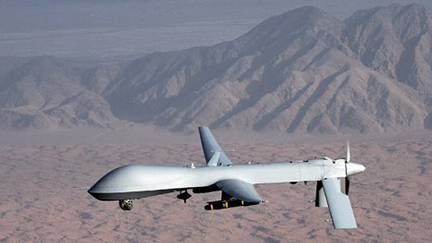
Predator drone

by Abdullah Hamidaddin, al-‘Arabiyya, September 11, 2013

On May 23, 2013 in a wonderful speech, that is yet to be translated into action, President Obama declared an end to the Global War on Terror (GWOT) which the U.S. has been waging since the early days after 9/11. Yet, killing terrorists is still on his agenda and that of other leaders around the world, albeit in a more “moderate” fashion. So here are some preliminary thoughts which I believe should guide this policy of killing.

The golden rule for killing a terrorist, actually the two golden rules, are simple and direct. The first golden rule is: do not become a terrorist in the process. The second rule is: do not create two or more terrorists for every terrorist you kill.

Very simple!

Yet the record of the past twelve years tells us that those two rules have been broken again and again and again. Some of those fighting terrorism have become as bad, and sometimes worse, than the terrorists they are fighting. Consequently, a new generation of terrorism has been born out of the very war that was supposed to fight and end terrorism. Moreover radicalization in our region has reached new and unprecedented limits; which is in itself a threat to civil peace. So what I will do here is register some of the ways in which those two rules have been broken, as things to be avoided in future killings.

Before I start with the first rule, I need to define what I mean by a “terrorist.” Continue reading How to Kill a Terrorist

Unbrotherly Brotherhood, Undemocratic Military

The debate over whether or not to send a cruise missile or two into Syria and spank Bashar al-Assad for adding chemical weapons to his bloody arsenal of putting down the revolt in Syria has overshadowed the continuing battle in Egypt for control of the political future. In both situations there is an alarming paradox for most Western observers: there seem to be no good guys wearing white hats, like in an early John Wayne movie. The al-Assad clan has run a security-based dictatorship that, like Saddam Hussein, tortured and killed opponents. But the major opposition, at least at this point in the ongoing civil war, includes a number of extremists who would be as bad a choice to take over. As the American experience in both Iraq and Afghanistan well demonstrates, the friendly (to us) leaders we would like to install (and did with impunity in the old days) do not work out so well these days.

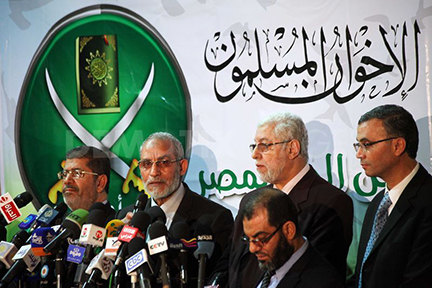
Egypt may not be today’s top story coming out of the Middle East, but it is hardly a stable situation. An article just out in the New Yorker by Joshua Hersh illustrates the clear objective of the Muslim Brotherhood to de-secularize Egypt. Those who came to power around Morsy were not very brotherly brothers and created a backlash by attempting to muscle out those who were not of their ideology. Continue reading Unbrotherly Brotherhood, Undemocratic Military

War is still hell


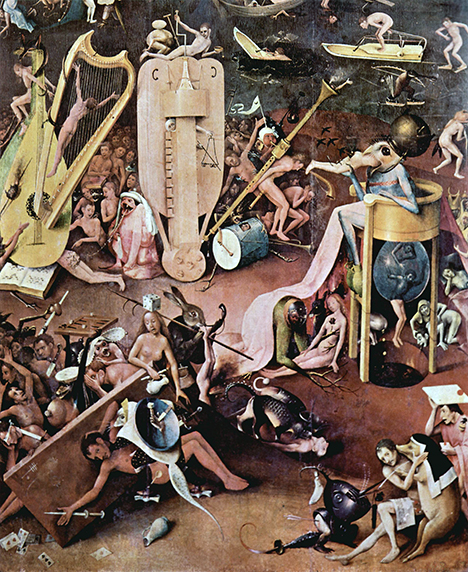
The Garden of Earthly Delights by Hieronymus Bosch, ca 1500

War is hell and it was long before General Sherman figured that out. It helps to remember exactly what “hell” means. In 1741 the Protestant firebrand Jonathan Edwards gave a rather clear picture:

The God that holds you over the pit of hell, much as one holds a spider, or some loathsome insect over the fire, abhors you, and is dreadfully provoked: his wrath towards you burns like fire; he looks upon you as worthy of nothing else, but to be cast into the fire; he is of purer eyes than to bear to have you in his sight; you are ten thousand times more abominable in his eyes, than the most hateful venomous serpent is in ours. You have offended him infinitely more than ever a stubborn rebel did his prince…

Over five centuries ago, the painter Hieronymus Bosch gave an artistic rendering, as noted above. Had he known about poison gas, I suspect we would have seen a few canisters in his registers. In the hell that is war, a Dantean perspective would place the various poison gasses near the bottom level. It now seems that the United States is certain that Syria’s Assad has used poison gas, crossing the rhetorical line drawn by President Obama awhile ago. Foreign Policy is reporting new old evidence that our government is not so much concerned about the use of such poison gas as it is in who are the intended victims. We apparently knew in advance that Saddam would use such gas when we gave him logistical support to fight off the Iranians, whose country he had ruthlessly invaded. And, of course, we did nothing when he gassed the Kurds in Halabja.

The truth is that war has always been hell, since the first historical descriptions. In reality it is never the kind of supposedly heroic “give ‘m hell” bravado of John Wayne or Rambo. Gore trumps the vanity of glory. The problem is that hell is eternally present and not in some far-off ethereal realm. A further problem is that hell has no suitable escape hatch. Thus thousands have died in Syria and many more will be killed on all sides, no matter what the United States does next. The same goes for Iraq, Afghanistan, Pakistan, Palestine and now, it seems, Egypt. Even those who think that by killing someone else because they are … (fill in the sectarian blank) they will go to an imagined heaven only deserve to end up in the hell they create for their victims.

Those of us far away from the fighting, only within Youtube range, may forget how close to hell we really are. The stench of dead bodies and the devastating odorless poison that snuffs out lives lightning quick are not part of the air we currently breathe, but we should not forget that hell is not a place but an attitude, an attitude that kills. It is also an attitude for which there is no real immunity in avoiding its reality. If only we could say “to hell with war,” but then that would be a tautology.

Death at the mosque


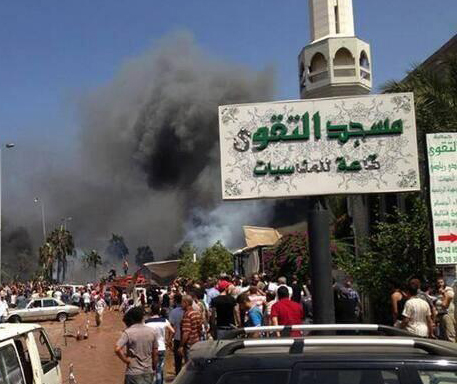
Blast at al-Taqwa Mosque in Tripoli, Lebanon

The mosque in Islam is known as a place of prayer. Since the very inception of Islam it has also been a place of death, indeed murder. It is reported that Ali, the cousin and son-in-law of Muhammad, was killed as he was praying in the Great Mosque of Kufa in Iraq by a fellow Muslim. Today in Tripoli, Lebanon, explosions at two mosques killed at least 27 people and injured hundreds. One of the blasts occurred near the al-Taqwa Mosque, where a Salafi preacher was praying, in the Abu Ali Square as those attending were leaving following Friday afternoon prayers. Another blast hit the al-Salam Mosque in the center of Tripoli. The reason? Yet another repeat of the intra-Islamophobia of one group of Muslims politically opposed to another group of Muslims.

When Ali was hit with a poisonous sword blade, he urged his sons and followers not to seek revenge on the Kharijites, the group to which the man who attacked him belonged, but to the man himself. But Ali was a better man than his followers. It seems that the attack on the Sunni mosque was tit-for-tat for the blast earlier this month in southern Beirut in the stronghold of Hezbullah. And the cycle continues, not only here, but in Iraq where it is almost a daily occurrence this summer.

There is a twisted logic here, the notion that someone who is clearly of the same religion is also someone that can be mercilessly slaughtered at prayer. Is there no one who will pray for peace and who will set aside political partisanship to work for peace? Continue reading Death at the mosque

Beyond al-Qaeda, the real Yemen


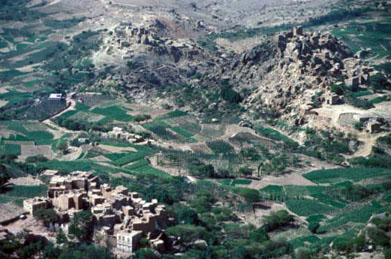
The fertile valley of al-Ahjur

by Abubakr Al-Shamahi, Common Ground News,August 20, 2013

Sana’a, Yemen – This month’s unidentified threat that led to the closure of the United States embassy and several US drone strikes around Yemen has once again shone an international spotlight on the country.

Simply put, as a Yemeni, I fear that all Yemen appears to be to the outside world is a front in the fight with al-Qaeda. But Yemen is more than terrorism and bombs, and many Yemenis are eager to ensure that this does not become the dominant narrative around the world.

Atiaf al-Wazir, a prominent Yemeni activist, voices the frustration of many Yemenis. In a piece for Your Middle East, she talks of a “country with a long history that was once hailed as Arabia Felix, land of generosity, wisdom, coffee, the first sky scrapers, the land with many queens and great architecture,” now overshadowed by “the hysteria of the decade: terrorism.”

If international observers look closer, they will find a country that has the potential to be far removed from a hotbed of fundamentalism. They will find a country undergoing an interesting political transition, one that is hugely important for the region. Continue reading Beyond al-Qaeda, the real Yemen

Going for Broke (Read “Provoke”)

Given the events of last week in Egypt, it is hard not to reflect on these events while they are fresh. Opinions on the military crackdown, which has resulted in hundreds of innocent (obviously people protesting but not carrying weapons, including women) victims, are deeply divided. There seems to be no middle ground in the media or on the street, as far as one can see from outside the conflict area. One reason for this impasse is the level of violence attached to the level of vitriolic rhetoric from both sides. The removal of Morsi was bound to stir up the wrath of those who fervently supported the Muslim Brotherhood as all hopes for gaining power through the ballot box were shattered. The call for protests was doomed to failure as long as the military and security forces were intent on maintaining control of Egypt’s economy and protecting their base of power. In part this is due to the fact that the military never lost power and was clearly not prepared to do so, even with the changing of the guard in the officer shuffle at the top. But it is also the case that the Muslim Brotherhood had many enemies from the start, especially among those who were more secular-minded.

In a New York Times commentary Rick Gladstone quotes several scholars who argue that the aim of the military in forcefully removing the protesters with live ammunition was to provoke the expected violence by members of the Brotherhood. During the past month Egyptians have been bombarded with a propaganda message that the Brotherhood has become a bunch of bearded terrorists who must be resisted. So the strategy by Sisi and the military/security complex appears to have been to provoke violence from the protesters, knowing full well that there would be a violent reaction. The stores of a few weapons that the military claims was found among the protesters, even if planted there by the military, reinforces this scenario. The gut reaction of some supporters to blame the Copts and burn down more than 30 churches again feeds into the message that the Muslim Brotherhood is too radical. Continue reading Going for Broke (Read “Provoke”)

The Tragedy that is Egypt today

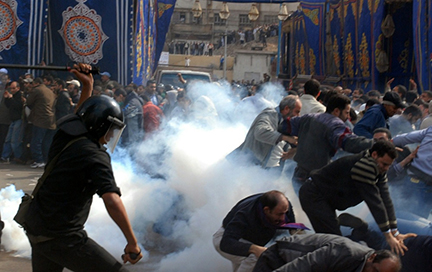
Egypt is once again under military curfew. Mubarak is gone, but the military and security system that stabilized the Mubarak regime is undeniably in control, no matter what the rhetoric about restoring democracy. The brief flirtation with a seemingly democratic election has been an abject failure, no matter who you think is to blame. There are no winners in the recent protests and crackdown that left well over 500 people dead and several thousand wounded. At this point all Egyptians are on the losing side as violence escalates. The situation today is a tragedy and is bound to get more tragic in the days ahead. Egyptians are pitted against each other in sectarian clashes, Muslim against fellow Muslim and some Muslims targeting the Copts. As many as 20 Coptic churches may already have been torched. God forbid if Egypt still had a viable Jewish population.

Blame is being hurled against all sides with breakneck speed in blogs, commentaries and twitter. But blaming is part of the problem, since it further inflames the frustration that leads to violence. Coptic churches are being burned because the Copts are said to side with the military as though it is only about politics. But the ugly intolerance that many Salafis and Muslim Brothers have preached to their own transcends politics. The military is indeed ruthless and manipulating the media with propaganda, demonizing the Muslim Brotherhood. Enough Brothers are acting out their violence to lend some credence to the claims in the eyes of many Egyptians. There is also the atrocity of pushing for martyrdom, as leaders of the Brotherhood encourage those who are protesting Morsi’s ouster to engage the military in what can only be a losing and bloody battle. Both sides are acting like spoiled children; no one is promoting a peaceful mediation, if one is still possible. Continue reading The Tragedy that is Egypt today