Category Archives: “Arab Spring”

Arabian Humanities Online


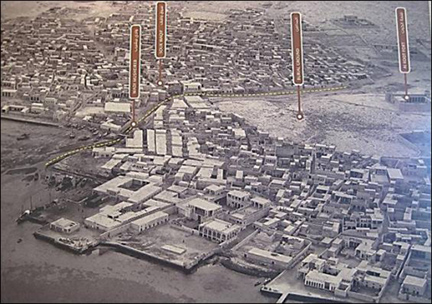
Urban structure of Doha until the 1960s; Source: Scharfenort 2012 (Exhibition in Msheireb Enrichment Center)

The second issue of the new journal Arabian Humanities, with selections in both English and French, is now available online here.

The table of contents is reproduced below:

Juliette Honvault
Éditorial
Villes et dynamiques urbaines en péninsule Arabique
Cities and Urban Dynamics in the Arabian Peninsula

Claire Beaugrand, Amélie Le Renard et Roman Stadnicki
Au-delà de la Skyline : des villes en transformation dans la péninsule Arabique [Texte intégral]
Beyond the Skyline: Cities in Transformation in the Arabian Peninsula [Texte intégral | traduction]

Nelida Fuccaro
Preface: Urban Studies in the Arabian Peninsula: 6 Thoughts on the Field [Texte intégral]
Préface : Les études urbaines en péninsule Arabique
1. Croissances, politiques et projets
Growth paths, politics and projects

Brigitte Dumortier
Ras al‑Khaïmah, l’essor récent d’une ville moyenne du Golfe [Texte intégral]
Ras al‑Khaimah : the recent dynamics of a middle size city of the Arab‑Persian Gulf

Steffen Wippel
Développement et fragmentation d’une ville moyenne en cours de mondialisation : le cas de Salalah (Oman) [Texte intégral]
Development and Fragmentation of a Globalizing Secondary City: The Case of Salalah (Oman)

Sebastian Maisel
The Transformation of ‘Unayza: Where is the “Paris of Najd” today? [Texte intégral]
La transformation de ‘Unayza : où en est le « Paris du Najd » ?
Philippe Cadène
Koweït City : planification urbaine et stratégie régionale [Texte intégral]
Kuwait City: Urban Planning and Regional Strategy Continue reading Arabian Humanities Online

Sensational Sisi

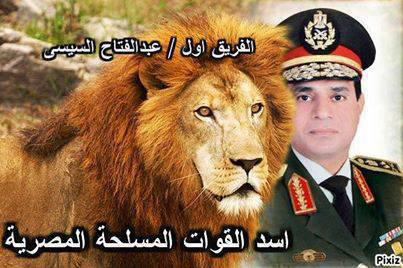
The new not-a-coup leader of Egypt, General Abdel Fattah Sisi, has created a sensation. Not all of the response is serious, however. A dancer named Sophia attempts a belly dance while holding a picture of the general and blowing kisses to the camera.

And as for the new direction of security in the post-Muslim-Brotherhood state, you need look no further than a woman’s underwear. Now that the Muslim Brotherhood has been outlawed, chic underwear is in again.

Catoonists have also had a field day with the lionizing of the general. Continue reading Sensational Sisi

The near future of Iraq is dark


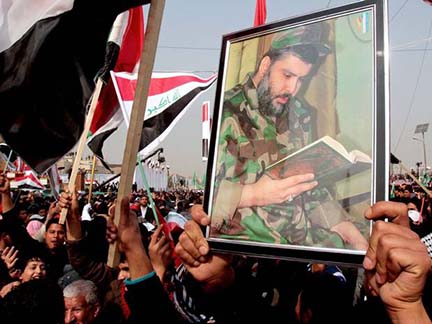
Supporters of Muqtada al-Sadr celebrate the departure of US troops from Sadr City last year

‘The near future of Iraq is dark’: Warning from Muqtada al-Sadr – the Shia cleric whose word is law to millions of his countrymen

by Patrick Cockburn, The Independent, November 29, 2013

The future of Iraq as a united and independent country is endangered by sectarian Shia-Sunni hostility says Muqtada al-Sadr, the Shia religious leader whose Mehdi Army militia fought the US and British armies and who remains a powerful figure in Iraqi politics. He warns of the danger that “the Iraqi people will disintegrate, its government will disintegrate, and it will be easy for external powers to control the country”.

In an interview with The Independent in the holy city of Najaf, 100 miles south-west of Baghdad – the first interview Mr Sadr has given face-to-face with a Western journalist for almost 10 years – he expressed pessimism about the immediate prospects for Iraq, saying: “The near future is dark.”

Mr Sadr said he is most worried about sectarianism affecting Iraqis at street level, believing that “if it spreads among the people it will be difficult to fight”. He says he believes that standing against sectarianism has made him lose support among his followers.

Mr Sadr’s moderate stance is key at a moment when sectarian strife has been increasing in Iraq – some 200 Shia were killed in the past week alone. For 40 years, Mr Sadr and religious leaders from his family have set the political trend within the Shia community in Iraq. Their long-term resistance to Saddam Hussein and, later, their opposition to the US-led occupation had a crucial impact.

Mr Sadr has remained a leading influence in Iraq after an extraordinary career in which he has often come close to being killed. Several times, it appeared that the political movement he leads, the Sadrist Movement, would be crushed.

He was 25 in 1999 when his father, Mohammed Sadiq al-Sadr, a revered Shia leader, and Mr Sadr’s two brothers were assassinated by Saddam Hussein’s gunmen in Najaf. He just survived sharing a similar fate, remaining under house arrest in Najaf until 2003 when Saddam was overthrown by the US invasion. He and his followers became the most powerful force in many Shia parts of Iraq as enemies of the old regime, but also opposing the occupation. In 2004, his Mehdi Army fought two savage battles against American troops in Najaf, and in Basra it engaged in a prolonged guerrilla war against the British Army which saw the Mehdi Army take control of the city. Continue reading The near future of Iraq is dark

Women and Peacebuilding in Yemen

Women and Peacebuilding in Yemen: challenges and opportunities

by Najwa Adra, NOREF, 12 November 2013

This expert analysis explores hurdles facing and opportunities available to Yemeni women in light of UN Security Council Resolution 1325’s guidelines. Yemen is rich in social capital with norms that prioritise the protection of women, but internal and external stresses pose serious threats to women’s security.

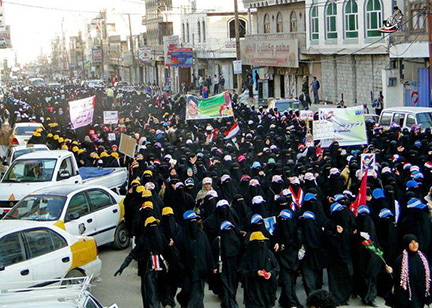
Despite these hurdles, Yemeni women continue to participate in nation building. In 2011 women led the demonstrations that ousted the previous regime. At 27%, women’s representation and leadership in the current National Dialogue Conference is relatively inclusive. Their calls for 30% women’s participation in all levels of government have passed despite the opposition of religious extremists and the Yemeni Socialist Party. To provide the best guarantee of women’s security in Yemen, international agencies must, firstly, pressure UN member states to desist from escalating conflicts in Yemen, and secondly, prioritise development over geopolitical security concerns. Literate women with access to health care and marketable skills can use their participatory traditions to build a new Yemeni nation.

Downlad the pdf of this report here: http://www.peacebuilding.no/Regions/Middle-East-and-North-Africa/The-Gulf/Publications/Women-and-peacebuilding-in-Yemen-challenges-and-opportunities

Najwa Adra , PhD, is a cultural anthropologist with long-term research and consulting experience in Yemen. She has worked with FAO, UNICEF, USAID, the World Bank and DfID. In 2000-03 she piloted the highly successful Literacy through Poetry/Heritage, an adult literacy project in which learners’ own oral traditions formed the texts from which they learned to read and write. Her academic publications and development reports cover tribal identity and customary law, women in agriculture, social exclusion and adult literacy.

The “Science” of Hatred


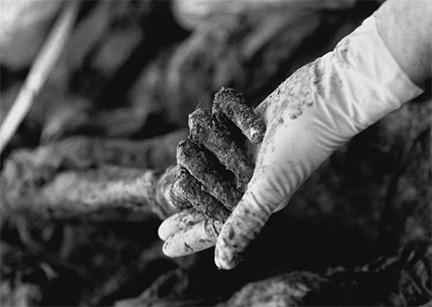
A mass grave near Zvornik from which more than 500 corpses were exhumed, 2002; photograph by Tarek Samarah

In a recent open access article, The Science of Hatred, in The Chronicle of Higher Education, Tom Bartlet discusses a psychologist attempting to understand the Serbian denial of the massacres of Muslims in Bosnia in the 1990s. The subtitle is: “What makes humans capable of horrific violence? Why do we deny atrocities in the face of overwhelming evidence? A small group of psychologists say they are moving toward answers. Is anyone listening?” The article is more a profile of Sabina Cehajic-Clancy, a Bosnian social psychologist who studies intergroup conflict, than a probing of the title. The focus is more on “how” Serbs could deny such a well documented atrocity rather than the motivations for the mass killing. There really is no “science” in the article, a part from a nod to some role for our evolutionary trajectory. But if you would like to read a human-interest story about an individual working on a very personal matter to better understand the denial of atrocities, it is worth reading.

The idea that there can be a “science” of hatred sounds promising, but it tends to fall apart less over the debate about what science is than what we mean by the emotionally charged notion of “hatred.” Several religions teach the God is love, but then also note that there are lots of things that God hates. Love and hate go together, not so much as polar opposites but as part of a continuum of how we perceive the world around us as comforting and dangerous at the same time. There is one kind of hate or love that is directed to an individual because of the familiarity of interaction. Falling into love, to quote the romantic rubric, suggests that we can fall into hate as well. But these are metaphors that swirl around fuzzy concepts. Continue reading The “Science” of Hatred

Picturing Syria

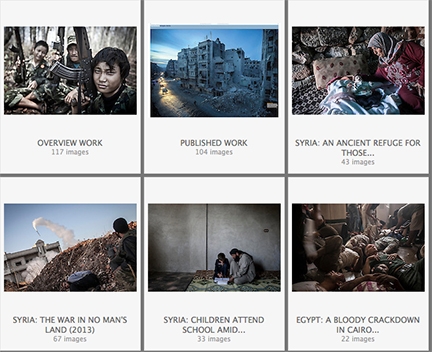
The photographer Narcisso Contreras has an extraordinary gallery of photographs taken in Syria and Egypt on his website.

His biography, as taken from his website, is as follows:

Narciso Contreras is a photographer born in Mexico City, fond of exploring each encounter to precisely capture its most poignant moments. His work focuses in feature stories, reportage and documentary based on religious communities, human nature and conflicts, the later being his main focus for the past years. Contreras has studied Philosophy and Photography, conducting research for many years and dedicating himself to photography professionally for three. Contreras is currently covering the ongoing civil war in Syria. His work has been published in newspapers and magazines all over the world, among others in TIME, the Guardian, the Times, the New York Times, der Spiegel, National Geographic, the Telegraph, the Washington Post, Newsweek, Wall Street Journal, L’ Espresso among others.

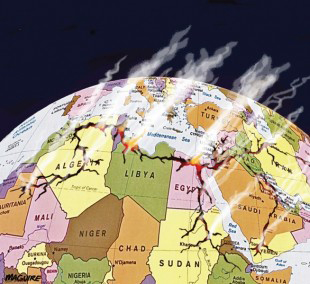
Chilling Prospects for the Arab Spring

by Daniel Martin Varisco, Middle East Muddle, Anthropology News, November, 2013

As President Franklin Delano Roosevelt prophesied, December 7th, 1941 is a day that lives in infamy, even some seven decades after the event that triggered United States entry into the Second World War. Another date of more recent infamy is December 17, 2010, when a harassed Tunisian vegetable hawker named Mohamed Bouazizi set himself on fire in front of the municipal building in the picturesque town of Sidi Bouzid. Although badly burned, he survived until January 4, just ten days before Ben Ali, the Tunisian dictator for some 23 years, boarded a plane for exile in Saudi Arabia. The first kind of infamy was the beginning of a devastating war, the second became the stimulus for what was hoped to be a sweeping political revolution across the Middle East. Three years later it seems to be politics as usual, a chilly seasonal change from the jasmine scent of the Arab Spring that blew across Tunisia, Egypt, Libya and Yemen and now swirls through the political maelstrom enveloping a surviving dictator in Syria, ongoing instability in Iraq and Afghanistan and a new regime outlook in Iran.

Seasoned pundits know that in many parts of the world spring’s prospects yield to the heat of summer, the cooling autumn and eventually the chilly reality of winter in a never-ending cycle. The Arab Spring is not one season fits all, but the overall effects have been more chilling than thrilling this year. In Tunisia the Islamic party leading the country is in a state of national paralysis following the July killing of opposition MP Mohamed Brahmi. In Egypt the elected president, Muhammad Morsi, remains in military custody and his major party of support, the Muslim Brotherhood, has been banned. The military, under General Sisi, has reinstated martial law in a move that most Egyptians, it seems, support. In both Tunisia and Egypt, the transition to power by Islamic groups who promised not to dismantle the civil state structure has angered a wide range of groups, especially secularists and more moderate Muslims. Continue reading Chilling Prospects for the Arab Spring