Category Archives: Conferences and Talks

Ramadan: Slow not fast justice


Mirror, mirror on the terrorist list wall,
Whose the most likely terrorist of them all?

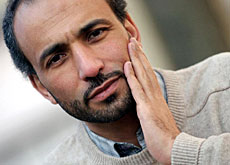
In the post 9/11 world it is not easy to have a Muslim name. Just because your name is Khan, does not mean you are a terrorist. Just because your university (Harvard, for example) has a fellowship paid for by the Bin Laden family does not mean it is an academic haven for suicide bombers. But if you have a last name of Ramadan, you are not going to be put in the fast lane for an entry visa. Literally. In 2004 the distinguished Islamic scholar Tariq Ramadan was appointed to a tenured professorship at the University of Notre Dame. One would think having a major contemporary voice for Islam, especially Muslims living in secular societies, at an acclaimed Catholic university would help break down or at least counter the hatred that fueled the Twin Towers bombers. Such thinking was not on the agenda of the Bush administration, which was more attuned to the slimy interrogation technique of water boarding than interfaith dialogue. Continue reading Ramadan: Slow not fast justice

Bryan Turner at Hofstra

On Tuesday, Feb. 9 and Wednesday, Feb. 10, internationally known sociologist Bryan Turner will be delivering two guest lectures at Hofstra, and also will be available for smaller meetings with interested students and faculty. Dr. Turner, currently a visiting professor at Wellesley College, was a sociology professor at National University in Singapore and the University of Cambridge. He will become a ‘presidential professor’ at CUNY in September. He has edited or written more than 60 books on a wide range of topics, and his research interests include globalization and religion, concentrating on issues such as religious conflict and the modern state, religious authority and electronic information, religious consumerism and youth cultures, human rights and religion, and religious cosmologies. Turner’s visit is sponsored by the Departments of Anthropology, Religion, and Sociology, Honors College, and the Middle Eastern and Central Asian Studies Program.

Tuesday, Feb. 9, 2:20-3:45 (Breslin 100)
Bodies as Culture/Bodies as Practice. In the last decade and across a wide range of disciplines, the human body has become a key issue in research. However, the dominant approach denies the materiality of the body, treating it as culture or text. The body is always a sign of something else. The result is that we lose any understanding of practice and embodiment. In my own work and in this talk, I look at a number of examples – dance, old age and disease – where practical embodiment cannot be avoided. This denial of materiality and practice has wider ramifications for sociology and anthropology in terms of the equally problematic status of ‘Culture’.

Wednesday, Feb. 10, 11:15-12:45 (Breslin 100)

PROGRAM CANCELLED DUE TO SNOW
Globalization and Cosmopolitanism : the religious and the secular’? Religion was systematically ignored by the major social science thinkers of the 20th century who embraced the idea of inevitable secularization (Althusser, Elias, Dahrendorf, Harvey, Boltanski, Giddens). At the beginning of this century, the academic scene has changed radically with major figures (Berger, Habermas, Vattimo, Rorty) either discovering or rediscovering religion. One curious absence, however, in the current fashion for work on globalization in the social sciences is yet another absence of religion. This is curious since one could argue that the evangelical religions were global all along – only Roland Robertson has perused this idea with some determination. The absence is even more curious when we come to the current study of global cosmopolitanism in which once more the major figures (Appiah, Beck, Giddens, Sassen) do not see the connection. In this paper I examine Alain Badiou’s contention that Saint Paul is our contemporary (Gal.3:28). Following my own work on Vulnerability and Human Rights (2006) I consider, with an intersection of theology and sociology, the idea of cosmopolitan virtue and hospitality. I finish with the provocative question: can Muslims be cosmopolitans?

In addition, Dr. Turner will be available from 4:15 p.m. -5:15 p.m. on Feb. 9 in the Anthropology Department office, Davison, Room 200; and from 9 a.m.-10 a.m. on Feb. 10 in Davison, Room 206.

For more information, contact Dr. Daniel Varisco at daniel.m.varisco@hofstra.edu
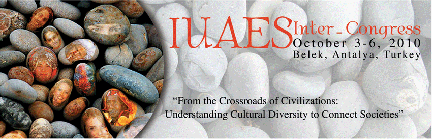
IUAES Conference in Turkey

The 2010 IUAES Inter-Congress Antalya, Turkey

The Ahi Evran University Department of Anthropology is proud to announce to you the 2010 IUAES (International Union of Anthropological and Ethnological Sciences) Inter-Congress to be held October 3-6 2010 in Antalya, Turkey.

Since our approval to host the congress, preparations and arrangements have been conducted in collaboration with various anthropology departments, professors, and graduate students across Turkey. Our collaborative efforts promise to bring a diverse, exciting, and informative Inter-Congress.

Turkey’s location at a point where three continents of the old world are closest to each other and where Asia and Europe meet has served as a crossroads that is one of the few areas that has been continuously inhabited since the dawn of mankind. The archeological richness is a telling measure of the human history of cultural interaction, conflict, and integration that shape the region. Since the founding of the Turkish Republic in 1925 anthropology as a discipline has assumed an important role in understanding and theorizing cultural exchanges between ethnically, linguistically, and religiously diverse Anatolian peoples and their neighbors; we are honored to strengthen this legacy with IUAES. Continue reading IUAES Conference in Turkey

Toronto Talks

If you are reading this post today, Wednesday, I may very well be in the air on my way to Toronto, where I will be giving two lectures. Anyone who is interested is invited to attend.

Thursday, January 14th, 2010

Interdisciplinary Perspectives on Science
presents:

Daniel Martin Varisco (Hofstra University)

Star Gazing through Religious Phrasing: The Origins of a Lunar Zodiac in Early Islamic Astronomy

At Ryerson University in ENG LG14, George Vari Engineering and Computing Centre, 245 Church St. from 6:00pm to 8:00pm.

One of the most important astronomical time-keeping calendars from the Arabian Peninsula is the so-called anwâ’, which early Muslim astronomers equated with the tradition of 28 lunar stations (manâzil al-qamar). Through a study of this calendar in pre-Islamic Arabic poetry and Arabic lexical texts and by comparison to ethnographic accounts of existing Arabian star calendars, I argue that the system described in the evolving Islamic science of astronomy is one that did not arise in the Arabian Peninsula but was the result of cleansing the magical elements out of the earlier star lore and modeling this on the lunar zodiac of Sassanid Iran and India.


Refreshments will be served after the discussion.

The second talk will take place at the University of Toronto on Friday, January 15:

Anthropology Colloquium Series

Daniel Martin Varisco (Hofstra University)

The Culture Concept without a Textual Attitude: Reading against Orientalism and between the lines of Culture and Imperialism

Friday, January 15th, 2010. 2-4pm. Room 246.

Department of Anthropology, University of Toronto, AP 246, 19 Russell St.

My paper for the University of Toronto is available online as a pdf.

The Influence of Edward W. Said

[Webshaykh’s note: I recently came across a book review I had written several years ago, but which was never published by the journal which solicited it. As the issue is still relevant, even after publishing my critical assessment of Said’s Orientalism two years ago, I present the review as written in 2001.]

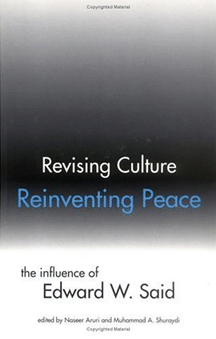
Revising Culture, Reinventing Peace: The Influence of Edward W. Said. Edited by Naseer Aruri and Muhammad A. Shuraydi. New York: Olive Branch Press, 2001. Xvi, 190 pages. ISBN 1-56656-357-7

Review by Daniel Martin Varisco

“Indeed, anywhere that intellectuals with a progressive or internationalist outlook gather on this planet, there is an awareness and appreciation of the indispensable contributions that Said has made to the life of free and independent inquiry, and beyond this, to a whole style and method of thought that takes ideas and cultures seriously as crucially linked to structures of oppression and processes of emancipation.”

If this accolade from Richard Falk’s glowing introduction to a volume of papers under the influence of Edward Said sounds good to you, this is a book you will probably enjoy. If you are looking for something new, that has not already been said or that has even a modicum of critical distance, you may want to skip this recent addition to what has become a virtual cottage industry of Saidiana. Continue reading The Influence of Edward W. Said

More than just (a) war


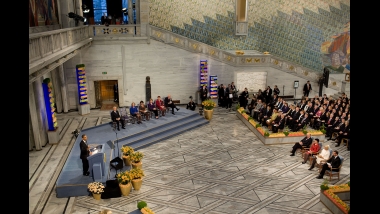
President Obama speaking to the Nobel Prize Committee

As the season has arrived in which “Peace on Earth” fills the airwaves and resonates from church choirs, the recent choice of President Obama for the Nobel Peace Prize becomes ironic as well as iconic. The icon is obvious, as no president since John F. Kennedy has elicited such fanfare at his entry into office. As the chairman of the Nobel committee, Thorbjorn Jagland, introduced President Obama, it was clear that in part the real choice was the man who pledged to reverse the isolationist and publicly entrenched private sectoring of George W. Bush. Had our previous president not been the bearer of two made-for-Hollywood wars in the guise of a nebulous “War on Terror,” Obama would have had to wait his turn. The irony is manifold. American dissatisfaction with the costly war in Iraq led to a political surge for the Democrats for a change; the man who pledged to end the war mongering is still saddled with the two wars he did not start. On the home front, the financial tsunami he inherited now tarnishes virtually every attempt to pull the economy out of its cross-the-boards harm from the combustable engine of Wall Street to the reckless drivers on Main Street.

The liberals and centrists who voted to give hope a chance have all too soon decided not to give it much of a chance. Those who actually prefer to call themselves liberals no doubt hoped that Obama was just politicking when he touted centrist positions to secure some of those Red State votes. But the man from Illinois, who kicked off his run with the symbolic capital of an earlier president-to-be from Illinois, is decidedly centrist, the mad ravings of vanity pouting Glenn Beck and publicity whoring Sarah Palin notwithstanding. If you want to probe the postmodern meaning of irony, just listen to what President Obama said about war in being honored as a man of peace: Continue reading More than just (a) war

Talal Asad on Anthropological Inquiry

[Note: In preparing for my role to respond to presentations on the work of Talal Asad and the Anthropology of Islam at AAR recently, I reread portions of the edited volume Powers of the Secular Modern (edited by David Scott and Charles Hirschkind, Stanford University Press, 2006, pp. 206-207). In doing so I found a valuable excerpt at the start of Asad’s specific responses to the essays int he volume. Given the interest at the AAR meeting in anthropological and ethnographic approaches to Islam, I think Asad’s general comments below on the role of anthropology are relevant and worth perusing.]

The only point I want to stress at the outset is that for me anthropology is a continuous exploration of received ideas about the way given modes of life hang together. More precisely: What is included or excluded in the concepts that help to organize our collective lives? How? Why? With what probable consequences for behavior and experience? Such an inquiry requires that one be ready to break out of the coercive constraints of Sociological Truth — the axiom that the social is the ground of being. The results, however provisional, can be uncomfortable, and they may sometimes point to politically incorrect conclusions. What we eventually do with them is another matter, because we are not abstract intellectuals. All of us live in particular forms of life that constantly demand decisions and that in general presuppose a variety of commitments. And we all have particular memories, fears, and hopes. Continue reading Talal Asad on Anthropological Inquiry

Darwin, Egyptian Style

MEMO FROM ALEXANDRIA
Harnessing Darwin to Push an Ancient Intellectual Center to Evolve

By MICHAEL SLACKMAN, The New York Times, November 26, 2009

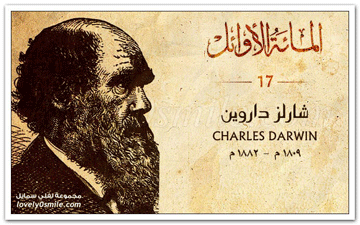
ALEXANDRIA, Egypt — It is not that Charles Darwin and the theory of evolution are unknown here. But even among those who profess to know something about the subject, the common understanding is that Darwin said man came from monkeys.

Darwin, of course, did not say man came from monkeys. He said the two share a common ancestor. But to discuss Darwin anywhere is not just to explore the origin of man. It is inevitably to engage in a debate between religion and science. That is why, 150 years after Darwin published “On the Origin of Species,” the British Council, the cultural arm of the British government, decided to hold an international conference on Darwin in this conservative, Sunni Muslim nation.

It was a first.

“A lot of people say his theories are wrong, or go against religion,” said Martin Davidson, chief executive of the British Council. “His ideas provoke, but if we are going to understand each other, we have to discuss things that divide us.” Continue reading Darwin, Egyptian Style