Category Archives: Conferences and Talks

Does Islam Stand against Science?


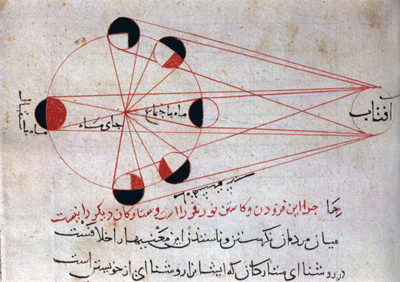
A lunar eclipse explained by al-Biruni

By Steve Paulson, The Chronicle Review, June 19, 2011

We may think the charged relationship between science and religion is mainly a problem for Christian fundamentalists, but modern science is also under fire in the Muslim world. Islamic creationist movements are gaining momentum, and growing numbers of Muslims now look to the Quran itself for revelations about science.

Science in Muslim societies already lags far behind the scientific achievements of the West, but what adds a fair amount of contemporary angst is that Islamic civilization was once the unrivaled center of science and philosophy. What’s more, Islam’s “golden age” flourished while Europe was mired in the Dark Ages.

This history raises a troubling question: What caused the decline of science in the Muslim world?

Now, a small but emerging group of scholars is taking a new look at the relationship between Islam and science. Many have personal roots in Muslim or Arab cultures. While some are observant Muslims and others are nonbelievers, they share a commitment to speak out—in books, blogs, and public lectures—in defense of science. If they have a common message, it’s the conviction that there’s no inherent conflict between Islam and science.

For the rest of this article, click here.
Northrop Frye and the Qur’an


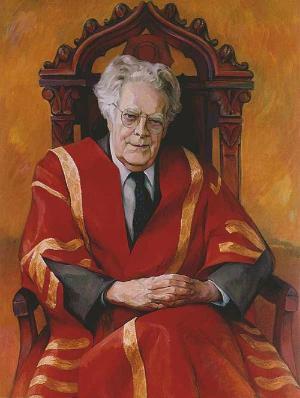
Northrop Frye

by Todd Lawson, University of Toronto, Dept. of Near and Middle Eastern Civilizations

In the course of my ongoing research project, studying the Qur’an as a special instance of apocalyptic discourse, I have found that the writings of Northrop Frye hold important clues and suggestions for both the apocalyptic élan of the Qur’an and the related problem of the Qur’an’s status as a specific form of epic. The two seem to go together and I am exploring these cross-pollinating and mutually energizing literary dynamics in the book that will result. In the meantime, I have found that Frye deserves to be mined more deeply for what is obviously his irresistible interest in the Qur’an.

Over the last two years, I have conducted a grad seminar at the University of Toronto entitled “The Quran and the Apocalyptic Imagination.” A large part of the discussion in this course has focussed on Frye and what he might have to say about the Quran. I have also conducted an undergraduate seminar “How Does the Qur’an Mean” in which two texts have been assigned: the Qur’an and Frye’s Double Vision. It has been a revelation. In part, this has been an attempt to have a conversation that I never had the nerve to initiate while the great man was alive and working away happily, virtually across the street. In any case, the results have been extremely encouraging. I am now delving deep into the Frye archive and studying his marginalia and other related documents.

Frye’s explicit references to Islam and the Qur’an, though few, have long been in print. I am calling for a workshop to see if we can manage a coherent discussion around this general theme. Continue reading Northrop Frye and the Qur’an

The World Was His Canvas: The Legacy of M.F. Husain


The World Was His Canvas: The Legacy of M.F. Husain
Remembering “the Picasso of India”

By Bruce B. Lawrence, Religion Dispatches, June 9, 2011

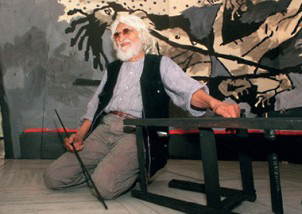
Maqbul Fida Husain, known as M.F. Husain, was India’s most famous, and its most infamous, contemporary painter. Often labeled the Picasso of India, his life and work spanned the 20th century and inched into the 21st. He produced over 30,000 paintings, some of which have sold at auction for over $1.5 million.

I organized a conference to celebrate his 95th birthday in Doha last September. It was titled (as Husain himself had requested) “The World is My Canvas.” Husain came back from London, where he also has a home and studio, but as an active participant, not a mere observer. He talked, he doodled, he joked, he even posed for a group photo.

M.F. Husain remained a dynamic, ceaseless explorer of art, life, and beauty until a couple of weeks before his death in London on Thursday June 9. In 2003, to celebrate his 88th birthday, he produced 88 oils across four Indian cities. “After open-heart surgery they said: ‘take it easy, and only paint miniatures,’” he scoffed, referring to an operation he had in 1988.

Yet controversy embroiled him from the mid-’90s because he loved, and painted from, India. Politically-minded Hindu partisans objected to his portrayal of women. He painted not just women but Hindu goddesses, and he painted them as they have been painted for centuries: unclad. But secular Indian courts allowed advocates for the Hindu right to bring a case against Husain. He was accused of causing harm to the sensibilities of others. He faced not one case but multiple cases, along with vandalism of his art and threats against both himself and those close to him. Soon after his victorious 88th birthday, he moved from India to the Gulf; first to Dubai, and then after 2007 to Doha, the capital of Qatar. Continue reading The World Was His Canvas: The Legacy of M.F. Husain

Muslim Women and the Challenge of Authority


Call for Papers: Muslim Women and the Challenge of Authority

A conference to be held at Boston University, March 31, 2012 

“The gender jihad is a struggle to establish gender justice in Muslim thought and praxis. At the simplest level, gender justice is gender mainstreaming – the inclusion of women in all aspects of Muslim practice, performance, policy construction, and in both political and religious leadership” Amina Wadud, Inside the Gender Jihad

Scholarship on female religious authority in Islam dates back at least to the 1970s and has gone through  several important phases. For two decades, most scholarship focused on demonstrating Muslim women’s poor social status and sought to locate the source of women’s oppression within religious doctrine. By the 1990s scholarship had turned to locate an egalitarian impulse within Islam that had been thwarted by the pressures of its patriarchal contexts. Over the next decade, female authored studies of the Qur’an claimed  an unimpeachable basis for female rights by holding up the Qur’anic ideal of equality as a standard by  which to judge social realities. More recently, scholars have sought to complicate the view of Muslim women’s unrelenting oppression. They have worked instead to recover evidence of past and present  female resistance and agency, demonstrating that Muslim women are carving out spheres of interpretive autonomy and successfully negotiating their public and private lives within the constraints of broader social structures.  This conference builds on the foundation of the foregoing work and aims to bring together considerations of religious, social, and interpretive authority across geographical and temporal boundaries. Continue reading Muslim Women and the Challenge of Authority

Illuminated Verses: The Poetries of the Islamic World


Illuminated Verses explores some of the rich and varied poetic traditions of the Islamic world. For a schedule of panels, click here (and scroll to bottom to download pdf of program).

Here is the program for Saturday, May 17, 2011:

Detailed Schedule

•9:00-9:15am
Welcome by Poets House Executive Director Lee Briccetti and City Lore Executive Director Steve Zeitlin

•9:20-9:55am
Illuminated Verses: the Poetries of the Islamic World
An opening panel setting up large questions and contexts with Reza Aslan and Michael Sells.

•10: 00-11:00am
Origins and Orality: the Poetry of the Arabian Peninsula
An examination of the poetries of the Arabian Peninsula from the Golden Age to contemporary oral tribal poetry. With anthropologists Najwa Adra and Steve Caton and literary scholar Suzanne Stetkevych. Continue reading Illuminated Verses: The Poetries of the Islamic World

Viewing the Shanamah in Manhattan


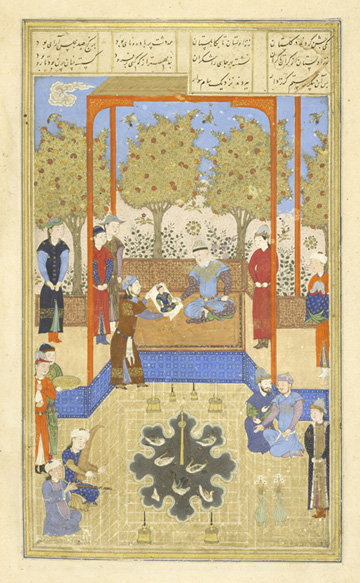
Portrait of the infant Rustam shown to Sam (folio 30b)

On Thursday night I had the privilege of attending a reading of portions of the Shanamah by Iraj Anvar.
The reading was held as part of the superb series called “Illuminated Verses: Poetries of the Islamic World,” which is a series of readings and events that began in March with a lecture by Bruce Lawrence on the Quran and continues through May 7. This is an extraordinary opportunity to hear and learn more about the variety of poetic production in Islamic cultures worldwide.

While the reading of the Shanamah is over, you can still see the exhibit of the mid 15th century Muhammad Juki’s manuscript of the Shanamah at the Asia Society through May 1.

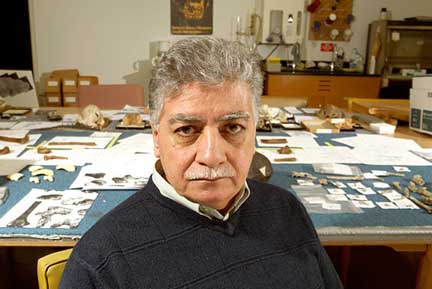
The Legacy of Donny George Youkhanna


A memorial conference entitled “Cultural Heritage Now – The Legacy of Donny George Youkhanna” will be held Wednesday, April 27, 2011 from 4:30 – 6:30 at the Rutgers Student Center in New Brunswick , New Jersey. Details below.

Cultural Heritage Now:

Iraq and Beyond
The Legacy of Donny George Youkhanna

Wednesday, April 27, 2011
4:30-6:30

Rutgers Student Center
Rutgers, The State University of New Jersey
126 College Ave
New Brunswick, NJ 08901

The event is open to the public, but pre-registration is required. Those wishing to contribute remarks must indicate this at the time of registration.

Presentations by:

John Russell
“Preserving Iraq’s Past”

John Malcolm Russell teaches the art and archaeology of the ancient Middle East and Egypt at the Massachusetts College of Art and Design in Boston, Massachusetts. He is the author of numerous articles and four books on ancient Assyria, one of which, The Final Sack of Nineveh (Yale), investigates the destruction of Sennacherib’s palace in Iraq by looters in the 1990’ s. Professor Russell has conducted archaeological excavations at Nineveh, Iraq, and Tell Ahmar, Syria. In 2003-2004 he served with the Coalition Provisional Authority as an advisor to the Iraqi Ministry of Culture in Baghdad, Iraq, where he focused on renovating the Iraq Museum and protecting archaeological sites. Continue reading The Legacy of Donny George Youkhanna

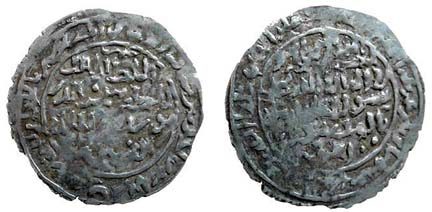
Central Asian, Early Iranian and Islamic Numismatic Conference


The Third MECA Seminar on early Iranian and Central Asian Numismatics will be held at Hofstra University in Hempstead, NY, this Sunday, April 10, 10:00 am to 5:00 pm in 106 Breslin Hall. This seminar has been organized by Prof. Aleksandr Naymark and is open to faculty and students of Hofstra University and to the public, free of charge. For more information, check out the conference website.

Program

Session I: Early Islamic Coinage
10:30 am to 12:00 pm

• Konstantin Kravtsov (State Hermitage Museum)
An Obscure Period in the History of Tabaristan (760s AD): Analysis of Written and Numismatic Sources

• Stuart Sears (Wheaton College)
Crisis on an Asian Frontier: The Countermarking of Umayyad Dirahms in Khurasan in the Early Eighth Century CE

• Luke Treadwell (Oxford Univeristy)
Aleksandr Naymark (Hofstra University)
The Very Last Sogdian Coin

Lunch break
12:00 pm to 1:00 pm

Session II: Classical Age of Islamic Coinage
1:00 pm to 2:15 pm

• Michael Bates (American Numismatic Society)
The Second Muhammadiyya, the Mine of Bajunays

• Arianna d’Ottone (La Sapienza University of Rome)
From Russia to Rome: the Stanzani Collection of Islamic Coins

• Aleksandr Naymark (Hofstra University)
Byzantine Anonymous Folles from Qarakhanid lands in the Ferghana and Chu Valleys

Coffee Break
2:15 pm to 2:30 pm

Session III: On the Borders: India and Yemen
2:30 pm to 3:30 pm

• Waleed Ziad (Yale University)
Islamic Coins from a Hindu Temple: Reevaluating Ghaznawid Policy towards Hinduism
through new Numismatic Evidence from the Kashmir Smast in Gandhara

• Daniel Martin Varisco (Hofstra University)
Rasulid Coinage in the Daftar of al-Malik al-Muzaffar: A Preliminary Textual Study

Coffee Break
3:30 pm to 3:45 pm

Session IV: Mongols
3:45 am to 5:00 pm

• Stefan Heidemann (Metropolitan Museum of Art B Bard College Graduate Center)
The Coin Finds from the Heart of the Mongol Empire: Qaraqorum Results of the Bonn University Excavation

• Necla Akkaya (Selcuk Universty)
Coins of the Ilkhanid ruler Abu Sa`id Bahadur Khan

• Olga Kirillova (Orel, Russia), Aleksandr Naymark (Hofstra University)
A Copy of the Seal of the Bulgarian Tsar Ivan II Asen from Samarqand

General Discussion
5:00 pm – 6:00 pm

Dinner in Brooklyn – 6:45 pm

Café Uzbekistan
2170 86th St. Brooklyn, NY 11214 (in the first block east of the crossing with Bay Parkway; parking on the sides streets)
Tel.: (718) 373-9393