
As the picture above shows, even Yemen’s donkeys are interested in stopping the violence.

If you take the time to check the “Spam” folder in your email accounts, you will undoubtedly find quite a few solicitations for getting money out of a foreign account. Usually it is the widow of a former dictator in Nigeria, a lawyer for a deposed general or even winning the lottery in Barcelona. Recently I noticed a purported message from a U.S. army officer in Afghanistan who wants to get money out of there. But for the first time I received a message from a “Yemeni”, fictitious as it obviously is and certainly not from an email account (chukwudouglasekp2@yahoo.com.hk) in Yemen. Here is the message:
Hello Dear
My name is Mr.Al-Hawshabi Karim , A Yemen national I have been diagnosed with Oesophageal cancer .It has defiled al forms of medical treatment, and right now I have only about a few months to live, according to medical experts. I have not particularly lived my life so well, as I never really cared for anyone(not even myself) but my business.
Though I am very rich, I was never generous, I was always hostile to people and only focused on my business as that was the only thing I cared for. But now I regret all this as I now know that there is more to life than just wanting to have or make all the money in he world. Continue reading Spam, Spam and more Spam (but from Yemen?)
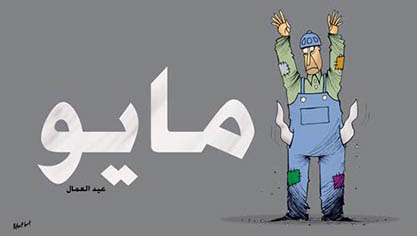
Enjoy May Day?

Christians around the world celebrate Easter with thoughts of the empty tomb and resurrection of Christ. But there is more. Weather permitting, children are let loose in their Sunday best to hunt for Easter eggs, adding a secular, healthy, dietary blessing to the baskets of chocolate bunnies and jelly beans waiting at home. Even the White House lawn is set for the annual Easter Egg Roll (minus the Christian Rock) on Monday. It is as though many Christians are not content to leave the tomb empty. Apparently egged on by the spring fever of long forgotten fertility rites, the main message of Christianity gets sidetracked to a debate of anything but intellectual designing: which comes first, the Easter egg or the Easter bunny?
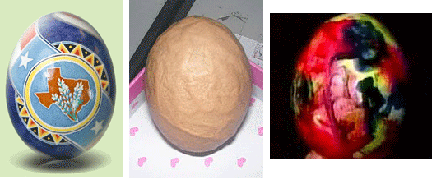
Eggs are not the exclusive mystical domain of Christendom (although the ludicrous lengths taken to parade a sacred holiday into outrageous bonnets and Texas-shaped eggs suggest we have entered the dispensation of Christendumb). Secular folk and agnostics eat their eggs for breakfast with bacon, toast and diner coffee. But all God’s children like eggs, including Muslims with internet savy and a taste for the miraculous. Take a gander (but do not confuse his spouse’s eggs with those shown here) at the three eggs shown below. What do you see different in the middle egg than the ones on either side (hint: the left is from the 2007 White House State of the Union Eggroll and the right is from 2006 Easter Sunday):
 Continue reading Tabsir Redux: This is not an Easter Egg
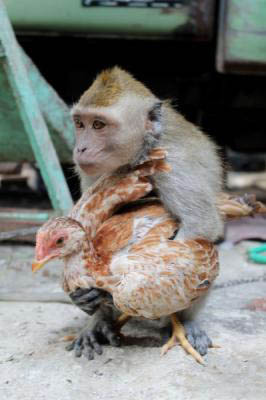
من غرائب الطبيعة .. قرد يقع ÙÙŠ Øب دجاج
الإثنين, 27-يناير-2014
Øضرموت نيوز – اليمن متابعات
وقع قرد ÙÙŠ غرام دجاجة من النظرة الأولى، Øين شاهدها ÙÙŠ سوق Ù…Øلية بجزيرة جاوا الإندونسية، بينما كان برÙقة مالكه.
وقالت صØÙŠÙØ© «ديلي ميرور»، إن مشهد القرد والدجاجة معا صار مألوÙا ÙÙŠ سوق منطقة بانيوانغي، الواقعة ÙÙŠ الطر٠الشرقي من جزيرة جاوا.
وأضاÙت الصØÙŠÙØ© التي نشرت صورا للثنائي السعيد، أن القرد يملكه رجل يدعى، Øكيم، ويقيده بالسلاسل Øتى لا يتمكن من التØرك لمساÙØ© بعيدة، ما Øرمه من الاستمتاع بقضاء أوقات طويلة مع Øبيبته الدجاجة.
ويأتي خبر العلاقة الغرامية بين القرد والدجاجة، بعد أن ذكرت تقارير صØاÙية أواخر العام الماضي، أن كلبا من Ùصيلة الراعي الألماني، وقع ÙÙŠ غرام وزة تمكنت من ترويضه بسبب طبعه الشرس، والذي كان يتطلب قيام شخصين بإطعامه، واØد لإلهائه والآخر لرمي وعاء الطعام ÙÙŠ Øظيرته.
وكان الكلب (ريكس)ØŒ البالغ من العمر 11 عاما، يعيش ÙÙŠ دار لرعاية الØيوانات الشاردة، ÙˆÙŠÙ†Ø¨Ø ÙˆÙŠØªØ°Ù…Ø± من كل شيء يمر من أمامه، ويطارد الأرانب البرية لأكلها، لكنه سرعان ما هدأ Øين شاهد وزة تدعى «جيرالدين» ووقع ÙÙŠ غرامها من النظرة الأولى، وصارا يتنزهان معا وينامان ÙÙŠ سرير واØد كل ليلة.<
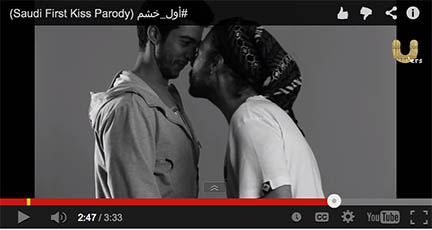
The viral Youtube sensation of “First Kiss” has inspired a number of satirical responses. Here is a Saudi one.
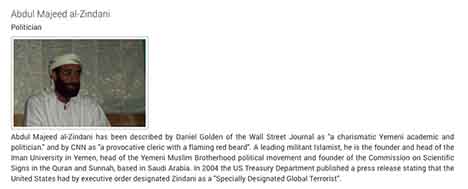
By accident I came across a website called “countrylicious: World country facts” which has a section on Famous People in Yemen. It is telling that the first entry is for Mukesh Ambani, an Indian business magnate who is India’s richest man with personal wealth of $21.5 billion. He does not seem to have anything to do with Yemen, but he is followed by Tawakkol Karman and then Ali Abdullah Salih, who weighs in just above Abu Hureirah, the companion of the Prophet, who was indeed born in Yemen (the entry here is taken verbatim from Wikipedia). But then when you scroll down to Abd al-Majeed al-Zindani, a rather strange thing happens. The picture shown is actually of Anwar al-Awlaqi or else Zindani has had major plastic surgery. Here is where copying from Wikipedia can get you in trouble. The Wikipedia site for al-Zindani also has the picture of al-Awlaqi and no one checked to see the switch. So much for the facts on this site…
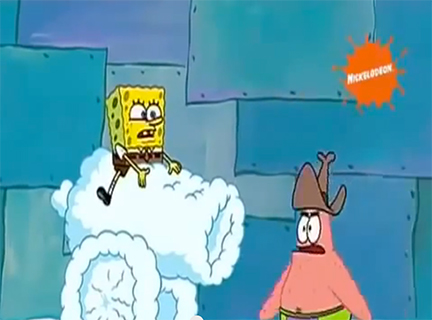
The future belongs to the young, no matter how much older generations try to shape that future. Educations plays a key role, as does the whole family context, but in the past century it is the expansion of media that has establishing a seemingly hegemonic control over the curiosity of the young. Disney launched the careers of Mickey Mouse and Donald Duck, not to mention the lily white Snow White or comfortably brown Bambi. In my day there was Woody Woodpecker, but my son’s generation was mesmerized by the Ninja Turtles. I have not kept up with cartoon evolution, but I had heard something about a cheesy character named Sponge Bob. It seems that there are many episodes of Sponge Bob available in Arabic on Youtube. The image above is from an adventure in a hibernating-bear-in-an-igloo winterland.
I have seen Arabic translations of Western and Japanese cartoon shows before, and anthropologist Mark Peterson has written a fascinating ethnography (Connected in Cairo: Growing Up Cosmopolitan in the Modern Middle East, Indiana University Press 2011) about the Pokemon phenomenon and other comic characters in Cairo. It is important to remember that the urban generation that has taken to the streets in the Arab Spring and lives and dies through the social media has also been brought up in a steady diet of cartoons, both comic books and videos. While academics have been arguing over the impact of erudite Orientalism, there is a far more potent source influencing the thought of the young: I call this “cartoonality,” the shaping of opinion through fictional non-human or ultra-human cartoon characters. Continue reading Sponge Bob in Winterland