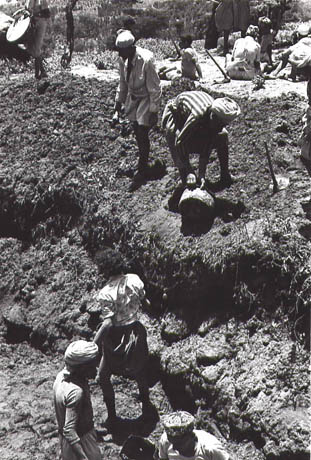
Community cleaning of cistern in al-Ahjur, 1979; photograph by Daniel Varisco
TRIBAL MEDIATION IN YEMEN AND ITS IMPLICATIONS TO DEVELOPMENT
by NAJWA ADRA, AAS WORKING PAPERS IN SOCIAL ANTHROPOLOGY
2010, Volume 19: 1–17.
Introduction
An international phenomenon that has captured the interest of scholars and international development organizations is a continued tendency to resolve conflict through indigenous methods rather than in state courts (Chirayath et al.; Corrin Care 2000; Syria-News.com; UNDP). In Yemen, as in countries as diverse as Kenya and the Solomon Islands, traditional justice is often perceived as familiar, transparent, and participatory. Its focus is reconciliation rather than punishment (Dempsey and Coburn 2010; Dimitrijevic 2006). Specifically in Yemen there is considerable flexibility and adaptability in indigenous tribal procedures and decisions, more so than one usually finds in state justice systems, and decisions are restitutive rather than coercive. Furthermore, indigenous dispute mediation, where fi nes are shared by the entire community, is less costly than the formal legal system. On the other hand, there are concerns that traditional justice may perpetuate social hierarchies by favoring the powerful or discriminating against women (Corrin Care 2000; Kameri-Mbote 2005; Kollapen 2005; Tripp n.d.). In Yemen, as elsewhere, “local strongmen†may co-opt traditional mechanisms by using force in ways that would not have been permitted historically (Dempsey and Coburn 2010). Political scientists worry that resort to traditional justice may undermine state sovereignty.
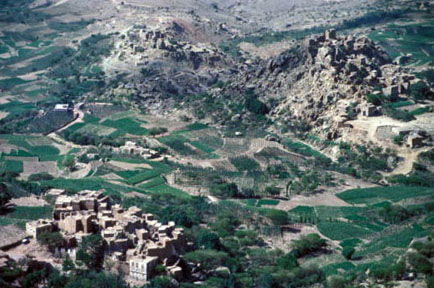
In this article, I explore these issues as they apply to self-identified tribal communities in Yemen’s Central Highlands through case studies of mediation that I collected during extensive fieldwork between 1978 and 2005 in al-Ahjur. Continue reading Tribal Mediation in Yemen