Category Archives: Gender and Sexuality

Broken Taboos in Post-Election Iran

by Ziba Mir-Hosseini, Middle East Report Online, December 17, 2009

The on-camera martyrdom of Neda Agha-Soltan, the 26-year old philosophy student shot dead during the protests after the fraudulent presidential election in Iran in June, caught the imagination of the world. But the post-election crackdown has two other victims whose fates better capture the radical shift in the country’s political culture. One victim was the protester Taraneh Mousavi, detained, reportedly raped and murdered in prison, and her body burned and discarded. The other is Majid Tavakoli, the student leader arrested on December 8, after a fiery speech denouncing dictatorship during the demonstrations on National Student Day.

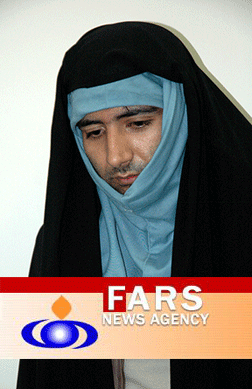
Following his arrest, pro-government news agencies claimed Tavakoli had been caught trying to escape dressed as a woman and published a series of photographs showing him wearing a headscarf and chador — a common version of the “modest” garb (hejab) mandated for women by the Islamic Republic. Attempts at flight in such gender-bending disguises are a classic trope in Iranian political history. The best-known instance was when the first president of the Islamic Republic, Abol-Hasan Bani-Sadr, after his deposition in 1981, allegedly fled the country in women’s dress — the Fars News Agency put a photo of him in a scarf next to that of Tavakoli. But in pre-revolutionary Iran clerics, too, such as Ayatollah Bayat, are said to have evaded the Shah’s authorities by concealing themselves beneath chadors, which pro-government media outlets now choose to ignore. Continue reading Broken Taboos in Post-Election Iran

Like a Virgin, but not for the very first time

Virginity, at least when it comes to the female of the species, is one of the most critical ethical melting points of societies in which females are burdened with a symbolic honor that denies their own control over their own bodies. The Virgin Mary in Christian theology remains a virgin, since the heavenly father of Jesus had no earthly form with which to impregnate her. Much is made in the media today about honor killings in Mediterranean societies, and in areas where more conservative forms of Islam merge with patriarchal ideology, like Pakistan and Afghanistan. Since the self righteous males who guard their sisters hymens but frequently dally with the hymens of other men’s sisters or daughters are not likely to go feminist and vote pro-choice, women must either remain strict virgins (and hope that they are not one of those women who are born with perforated hymens quite naturally) or find some chicken blood. But now the Japanese and Chinese have a more sanitary solution: a kit that allows a woman to insert an artificial hymen in only five minutes.

Where do you find such a product? It is widely sold in the Middle East, but those in America have only to click on Gigimo.com to find a Japanese kit available for $29.90 (or “suggest a price”). Continue reading Like a Virgin, but not for the very first time

Reduced to a four-letter word


Tamanna Rahman: Even at home in Manchester, Tamanna is now wary of attacks

Tamanna Rahman spent two months living on a Bristol housing estate for the BBC’s Panorama programme Undercover: Hate on the Doorstep.

Here she explains her reasons for agreeing to take part in the programme and describes how it felt to be a daily target of racist abuse, both physical and verbal. Her report contains details of racial abuse.

by Tamanna Rahman, BBC Panorama, October 19, 2009

In 2000, as a 16-year-old at my culturally and racially diverse Manchester secondary school, I was asked by a local television news team examining the hopes and aspirations of the first class of the new millennium if I felt that racism in Britain was a thing of the past.

Fresh-faced, naïve and optimistic, I answered yes; racism is dead.

Fast-forward to the summer of 2009 and my answer is very different.

What changed? As part of a Panorama programme, I spent two months working undercover on a Bristol housing estate.

Over the course of our investigation I would have glass, a can, a bottle and stones thrown at me. Continue reading Reduced to a four-letter word

Acid Pain


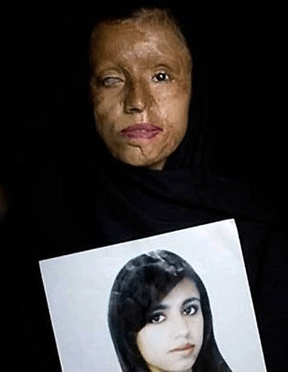
Twenty six year old Saira Liaqat poses for the camera, while holding a picture of her former self before her betrothed doused her face with acid.


Scarred by acid in Bangladesh

By Nicolas Haque in Dhaka, Bangladesh, Al-Jazeera, July 11, 2009

Rahima Begum, a young woman in the village of Kaligonj in the northwest of Bangladesh, turned down the romantic advances of a neighbour and paid dearly for it.

In the dead of night, while she was asleep, her neighbour poured acid over her face, leaving her disfigured for life.

“I may be still alive but he took my life away, I have become the shame of my family and of my village. I have no where to go,” she says.

According to official figures, there are only around 200 acid-related crimes reported every year in Bangladesh. Continue reading Acid Pain

MECA Study Day at Hofstra

Hofstra University Announces Middle Eastern and Central Asian Study Day
A Series of Presentations Focused on Faculty Research

Who: Hofstra faculty who have conducted research on Middle Eastern and Central Asian (MECA) studies
What: MECA Study Day
When: September 16, 2009
Where: 310 C.V. Starr Hall and 117 Berliner Hall, South Campus
Why: To highlight and learn about the research Hofstra faculty have done on MECA studies

Hofstra faculty from a variety of departments such as fine art, art history, anthropology, history, comparative literature, economics, political science and religious studies will give presentations on their research in MECA studies. Topics from their research will include archeology, women’s issues, history and the contemporary Middle Eastern and Central Asian world. These talks are free and open to the public.

MECA Schedule

Western and Central Asia in the Middle Ages
9:30 – 11:15 a.m., C.V. Starr Hall, 310
Moderator: Dr. Stefanie Nanes, Department of Political Science

• Greeting by Dr. Bernard Firestone, Dean of Hofstra College of Liberal Arts and Sciences
• Opening remarks by Dr. Daniel Martin Varisco, Department of Anthropology

• Dr. Aleksandr Naymark, Department of Fine Arts/Art History
Amazing Sogdians: Masters and Creatures of the Silk Road

• Dr. Anna Feuerbach, Department of Anthropology
The Damascus Steel Sword

• Dr. Daniel Martin Varisco, Department of Anthropology
The Sultan’s Green Thumb: Yemeni Agriculture in the 14th Century Continue reading MECA Study Day at Hofstra

Rape and Shariah Law

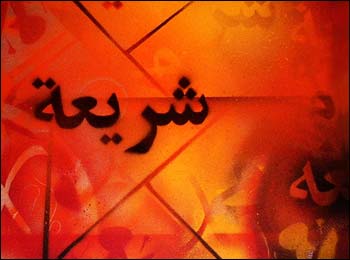
HOW SHARIA LAW PUNISHES RAPED WOMEN

by Hasan Mahmud, Mudugnet.com, November 20, 2008.

On October 30, 2008, the United Nations condemned the stoning to death of Aisha Duhulow, a 13-year-old girl who had been gang-raped and then sentenced to death by a Sharia court for fornication (Zina). She was screaming and begging for mercy, but when some family members attempted to intervene, shots were fired by the Islamic militia and a baby was killed.

Local Sharia courts in Bangladesh regularly punish raped minor girls and women by flogging and beating them with shoes.[1] Similar cases of punishing raped women are Mina v. the State, Bibi v. the State and Bahadur v. the State.[2] Sharia courts in Pakistan have punished thousands of raped women by long term imprisonment.[3]

You might think that such horrific barbarity cannot be the real Sharia law; that it is a misapplication of the law by ignorant clergy. Sadly, neither is true. Continue reading Rape and Shariah Law

Islam gets a Saudi facelift

Under the Veil, Nip and Tuck Makes New Saudi Faces

Asharq Alawsat, March 8, 2009

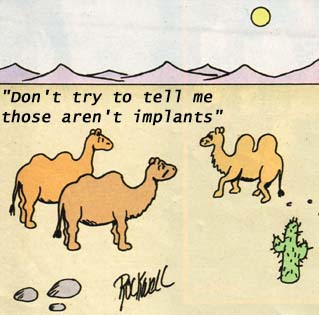
RIYADH, Saudi Arabia, (AP) — Does Islam frown on nose jobs? Chemical peels? How about breast implants?

One of the clerics with the answers is Sheik Mohammed al-Nujaimi, and Saudi women flock to him for guidance about going under the knife. The results may not see much light of day in a kingdom where women cover up from head to toe, yet cosmetic surgery is booming.

Religion covers every facet of life in Saudi Arabia, including plastic surgery. Al-Nujaimi draws his guidelines from the consensus that was reached three years ago when clergymen and plastic surgeons met in Riyadh to determine whether cosmetic procedures violate the Islamic tenet against tampering God’s creation. Continue reading Islam gets a Saudi facelift

Love Trumps Religion in Yemen


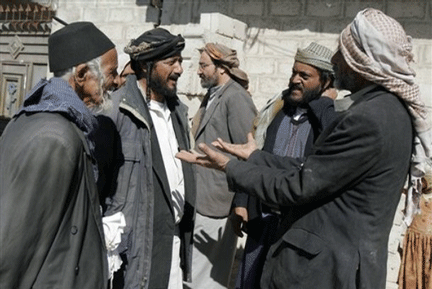
Yemeni Jews and Muslims talk at the village of Kharef, 50 miles, 80 kilometers, north of the capital Sanaa, Yemen, Monday, Dec. 15, 2008. Photograph by Mohammad al-Qadhi, AP

Complete Story of Jewish Liya’s Islam, Divorce and Marriage

Yemen Post, July 26, 2009

Over the recent period, the issues of Jewish minority have been hitting the titles in media outlets and their news is widely covered at local and international levels.

These news stories range from “Ninawa” embracing Islam and getting married to “Hani Saran”, forced migration of “Al Salem Jews” from Sa’ada and granting them apartments in the Sana’a Tourism City after being threatened by Houthis, killing incident of Masha Ya’aish at the hands of a former military pilot to the two-time marriage of “Liya” bint Sa’eed in a week and later her elopement with her Muslim husband to the nearby Arhab tribe and later on to the Al-Souk Al-Jadid in Amran’s Kharef area. Continue reading Love Trumps Religion in Yemen