Category Archives: Gender and Sexuality

May you never be uncovered


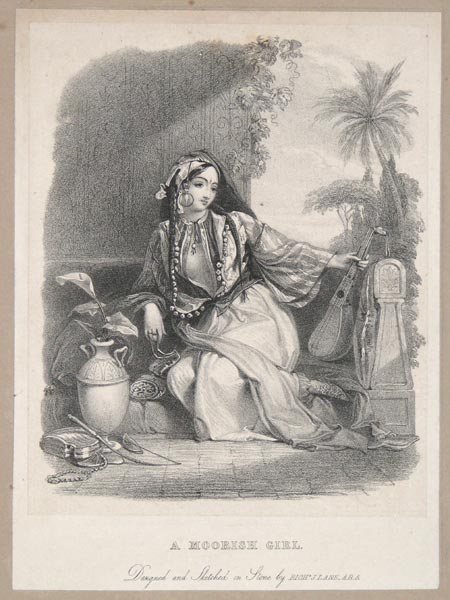
Photograph in a brothel in Pakistan by Kate Orne

Prostitution in Pakistan? Yes it exists, despite the most dire consequences if discovered. Photographer Kate Orne has been documenting the underworld of Pakistani prostitution since 2005 and has formed a website to bring attention to the plight of these women. Prints can be purchased at the website with benefits going to two schools for children and a clinic. Check out the presentation and gallery at http://www.mayyouneverbeuncovered.org/

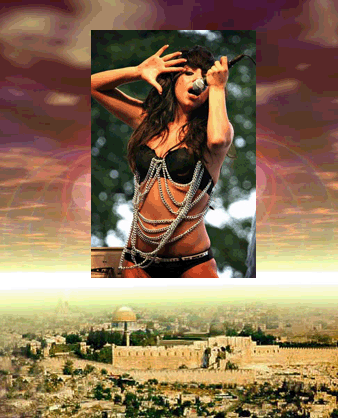
Blame it on Lady Gaga

Why is the “Muslim world” angry with America, asks columnist Bret Stephens in the Wall Street Journal? Well here are your two choices:

Pop quiz—What does more to galvanize radical anti-American sentiment in the Muslim world: (a) Israeli settlements on the West Bank; or (b) a Lady Gaga music video?

If your answer is (b) it means you probably have a grasp of the historical roots of modern jihadism. If, however, you answered (a), then congratulations: You are perfectly in synch with the new Beltway conventional wisdom, now jointly defined by Pat Buchanan and his strange bedfellows within the Obama administration.

Of course, how could it be Israeli policy. It must be the loose women and jazz singers that really upset Muslims, because that is what Sayyid Qutb said way back in 1951 after visiting Colorado (if only they had shut down those speak-easys in Boulder, who knows!). Yes, here is what Qutb, the “intellectual godfather of al Qaeda,” said:

“The American girl,” he noted, “knows seductiveness lies in the round breasts, the full buttocks, and in the shapely thighs, sleek legs and she shows all this and does not hide it.” Nor did he approve of Jazz—”this music the savage bushmen created to satisfy their primitive desires”—or of American films, or clothes, or haircuts, or food. It was all, in his eyes, equally wretched.

Qutb, notes the columnist, was also anti-Semitic, and blamed the Jews for being at war against Islam. And, to seal the argument for Stephens, here is the real beef (or cheesecake or kosher wine) because: Continue reading Blame it on Lady Gaga

Veiled Voices

Veiled Voices

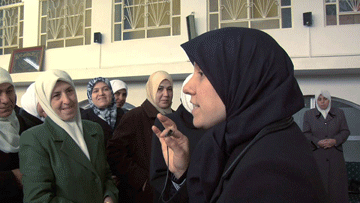
Women across the Arab world are redefining their role as leaders in Islam. Veiled Voices investigates the world of Muslim women religious leaders through the eyes of three women in Lebanon, Syria and Egypt. Filmed over the course of two years, Veiled Voices reveals a world rarely documented, exploring both the public and private worlds of these women. The stories featured in the film give insight into how Muslim women are now increasingly willing to challenge the status quo from within their religion, promoting Islam as a powerful force for positive transformation in the world. Each triumphs over difficult challenges as they carve out a space to lead—both in Islam and in their communities.

For air dates, click here.

Diversity and Perversity


Dr. Jamil Khader, Stetson University

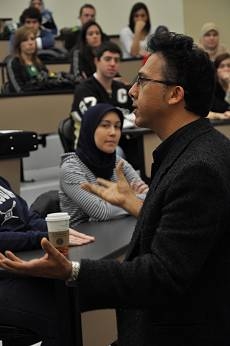
A little more than a week ago a story was reported about an experiment at Stetson University by Professor Jamil Khader. The idea was for 15 coeds to wear veils and see the reactions of their fellow students. But that is only part of the story. First read the story, then check out the comments by the readers. The comments are somewhat chilling, demonstrating once again the extraordinary extent of Islamophobia out there.

Stetson students don veil for diversity experiment
By MARK HARPER, Dayton Beach News Journal Online, February 11, 2010
Education writer

DELAND — For five days, Andreana Mangie wore a pink veil on and around campus.

At the student union, people stared at her. Another student in line near her told another, “Muslims aren’t worth anything.” She was denied entrance to a party.

“This needs to be thought about,” she told a group of about 150 students Wednesday. “This is a big deal.”

Mangie was one of about 15 Stetson University women to participate in the experiment dubbed “Veil for a Day” by Jamil Khader, a professor of English and gender studies. The women discussed their experiences as part of the DeLand school’s Town Meeting on Diversity.

The university canceled classes Wednesday so students could, for one day, go outside their comfort zone and learn about others. Other sessions touched on residence hall life, environmental justice and “How We Live Homophobia.” Continue reading Diversity and Perversity

Smashing the Silence Around FGM


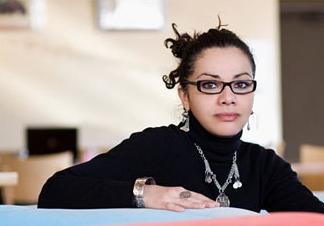
Mona Eltahawy

by Mona Eltahawy, The Huffington Post, February 9, 2010

Imagine if 3 million boys had their penises cut off every year.

Imagine that despite accounts of the unfathomable pain boys endure to ensure chastity and passage into manhood, religious leaders for decades taught their communities that God had decreed such mutilation.

A world tongue-tied by cultural relativism says nothing.

Sounds absurd, doesn’t it?

It’s a painful reality for at least 3 million girls who each year have parts or all of their clitorises cut off in a procedure known as female genital mutilation (FGM). The clitoris has double the nerve endings of a penis so my analogy to chopping off little boys’ organs isn’t too far off.

This past weekend marked International Day of Zero Tolerance of FGM, so allow me to shake you out of oblivion by reminding you that 6,000 girls a day are subjected to one of four types of FGM. Continue reading Smashing the Silence Around FGM

Understanding Islamic Feminism: Interview with Ziba Mir-Hosseini

Understanding Islamic Feminism: Interview with Ziba Mir-Hosseini

Yoginder Sikand, Madrasa Reforms in India, February 7, 2010

Born in Iran and now based in London, Ziba Mir Hosseini, an anthropologist by training, is one of the most well-known scholars of Islamic Feminism. She is the author of numerous books on the subject, including Marriage on Trial: A Study of Family Law in Iran and Morrocco (l.B.Tauris, 1993) and Islam and Gender, the Religious Debate in Contemporary Islam (Princeton, 1999). She is presently associated with the Centre for Islamic and Middle Eastern Law at the School of Oriental and African Studies, London.

In this interview with Yoginder Sikand she talks about the origins and prospects of Islamic feminism as an emancipatory project for Muslim women and as a new, contextually-relevant way of understanding Islam.

Q: In recent years, a number of Muslim women’s groups have emerged across the world, struggling for gender equality and justice using Islamic arguments. Most of them are led by women who come from elitist or, at least middle class, backgrounds. Many of them seem to lack a strong popular base. How do you account for this?

A: I think the majority of the women who are writing and publishing about what is popularly called ‘Islamic feminism’ are definitely from the elite or the middle class. But then, globally speaking, feminism has always had to do with the middle class, at least in terms of its key articulators and leaders. I believe that Islamic feminism is, in a sense, the unwanted child of ‘political Islam’. It was ‘political Islam’ that actually politicized the whole issue of gender and Muslim women’s rights. The slogan ‘back to the shariah’ so forcefully pressed by advocates of ‘political Islam’ in practice meant seeking to return to the classical texts on fiqh or Muslim jurisprudence and doing away with various laws advantageous to women that had no sanction in the Islamists’ literalist understanding of Islam. Translated into practice, law and public policy, this meant going back to pre-modern interpretations of shariah, with all their restrictive laws about and for women. It was this that led, as a reaction, to the emergence of Islamic feminism, critiquing the Islamists for conflating Islam and the shariah with undistilled patriarchy and for claiming that patriarchal rule was divinely mandated. These Muslim women were confronted with horrific laws that Islamists sought to impose in the name of Islam, and so began asking where in all of this was the justice and equality that their own understanding of the Quran led them to believe was central to Islam. These gender activists, using Islamic arguments to critique and challenge the Islamists, brought classical fiqh and tafsir texts to public scrutiny and made them a subject of public debate and discussion, articulating alternative, gender-friendly understandings, indeed visions, of Islam. That marked the broadening, in terms of class, of the fledgling Islamic feminist movement. Continue reading Understanding Islamic Feminism: Interview with Ziba Mir-Hosseini

Bryan Turner at Hofstra

On Tuesday, Feb. 9 and Wednesday, Feb. 10, internationally known sociologist Bryan Turner will be delivering two guest lectures at Hofstra, and also will be available for smaller meetings with interested students and faculty. Dr. Turner, currently a visiting professor at Wellesley College, was a sociology professor at National University in Singapore and the University of Cambridge. He will become a ‘presidential professor’ at CUNY in September. He has edited or written more than 60 books on a wide range of topics, and his research interests include globalization and religion, concentrating on issues such as religious conflict and the modern state, religious authority and electronic information, religious consumerism and youth cultures, human rights and religion, and religious cosmologies. Turner’s visit is sponsored by the Departments of Anthropology, Religion, and Sociology, Honors College, and the Middle Eastern and Central Asian Studies Program.

Tuesday, Feb. 9, 2:20-3:45 (Breslin 100)
Bodies as Culture/Bodies as Practice. In the last decade and across a wide range of disciplines, the human body has become a key issue in research. However, the dominant approach denies the materiality of the body, treating it as culture or text. The body is always a sign of something else. The result is that we lose any understanding of practice and embodiment. In my own work and in this talk, I look at a number of examples – dance, old age and disease – where practical embodiment cannot be avoided. This denial of materiality and practice has wider ramifications for sociology and anthropology in terms of the equally problematic status of ‘Culture’.

Wednesday, Feb. 10, 11:15-12:45 (Breslin 100)

PROGRAM CANCELLED DUE TO SNOW
Globalization and Cosmopolitanism : the religious and the secular’? Religion was systematically ignored by the major social science thinkers of the 20th century who embraced the idea of inevitable secularization (Althusser, Elias, Dahrendorf, Harvey, Boltanski, Giddens). At the beginning of this century, the academic scene has changed radically with major figures (Berger, Habermas, Vattimo, Rorty) either discovering or rediscovering religion. One curious absence, however, in the current fashion for work on globalization in the social sciences is yet another absence of religion. This is curious since one could argue that the evangelical religions were global all along – only Roland Robertson has perused this idea with some determination. The absence is even more curious when we come to the current study of global cosmopolitanism in which once more the major figures (Appiah, Beck, Giddens, Sassen) do not see the connection. In this paper I examine Alain Badiou’s contention that Saint Paul is our contemporary (Gal.3:28). Following my own work on Vulnerability and Human Rights (2006) I consider, with an intersection of theology and sociology, the idea of cosmopolitan virtue and hospitality. I finish with the provocative question: can Muslims be cosmopolitans?

In addition, Dr. Turner will be available from 4:15 p.m. -5:15 p.m. on Feb. 9 in the Anthropology Department office, Davison, Room 200; and from 9 a.m.-10 a.m. on Feb. 10 in Davison, Room 206.

For more information, contact Dr. Daniel Varisco at daniel.m.varisco@hofstra.edu
A Moorish Girl and an Irish Poet


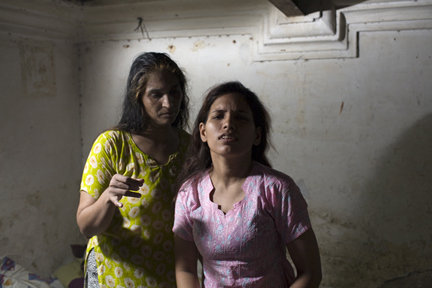
A Moorish Girl, ca. 1828

The image here is entitled “A Moorish Girl” and was designed by Richard James Lane. This lithograph was published in London by Engelmann, Graf, Coindet, & Co., ca. 1828. This would have exemplified the romanticized image conjured in Thomas Moore’s immensely popular Lalla Rookh, written in 1817. Often dismissed as a kind of quasi-pornographic Orientalist doggerel, the poem is a delightful read as a flight of fancy. The entire poem is online in an attractive format. Here is a sample excerpt:

Alas, poor ZELICA! it needed all
The fantasy which held thy mind in thrall
To see in that gay Haram’s glowing maids
A sainted colony for Eden’s shades;
Or dream that he, –of whose unholy flame
Thou wert too soon the victim, –shining came
From Paradise to people its pure sphere
With souls like thine which he hath ruined here!
No– had not reason’s light totally set,
And left thee dark thou hadst an amulet
In the loved image graven on thy heart
Which would have saved thee from the tempter’s art,
And kept alive in all its bloom of breath
That purity whose fading is love’s death!–
But lost, inflamed, –a restless zeal took place
Of the mild virgin’s still and feminine grace;
First of the Prophets favorites, proudly first
In zeal and charms, too well the Impostor nurst
Her soul’s delirium in whose active flame,
Thus lighting up a young, luxuriant frame,
He saw more potent sorceries to bind
To his dark yoke the spirits of mankind,
More subtle chains than hell itself e’er twined.
No art was spared, no witchery; –all the skill
His demons taught him was employed to fill
Her mind with gloom and ecstasy by turns–
That gloom, thro’ which Frenzy but fiercer burns,
That ecstasy which from the depth of sadness
Glares like the maniac’s moon whose light is madness!