If you type “burqa cartoon” into Google, you will find a wide variety of cartoons making fun of the burqa and the controversy over it. Here are just a few samples…
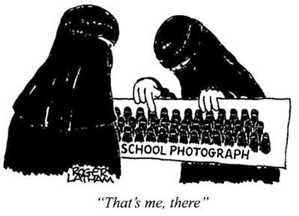
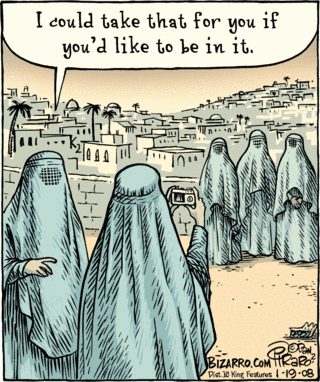
If you type “burqa cartoon” into Google, you will find a wide variety of cartoons making fun of the burqa and the controversy over it. Here are just a few samples…
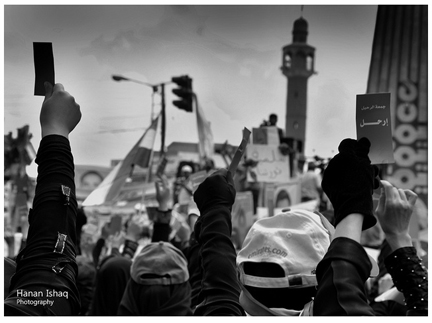
The current protests in Yemen have not gone unnoticed. Among the Yemeni photographers chronicling the current unrest is Hanan Ishaq, a young Yemeni artist whose work is featured on Flickr.
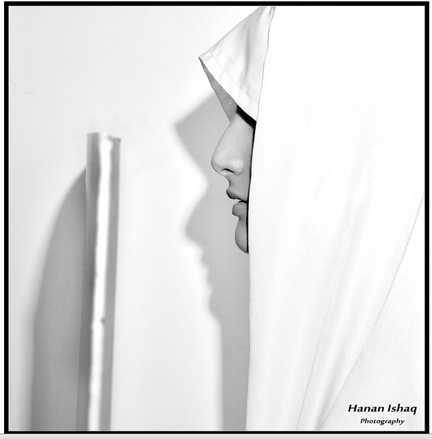
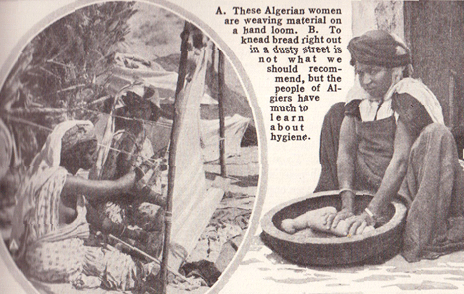
[With this post I start a new series dedicated to photographs in an “Orientalist” mode. In addition to Reading Orientalism (which is also the title of my last book), the creation of an imagined Orient is very much a pictorial voyeuristic voyage. In this series I focus on Western images of the Middle East and North Africa, both those that perpetuate stereotypes and those that chip away at the bias. Readers of the blog are welcome to send in images they have found and want to share.]
I start with images from a 1933 edition of Richards Cyclopedia, with 24 volumes published in New York by J. A. Richards, Inc and edited by Ernest Hunter Wright and Mary Heritage Wright. This is an unusual encyclopedia, arranged by topics in a more or less arbitrary order but replete with images. One of the articles is called “The Green Girdle of the Sahara” (vol 18, pp. 4631-4636). The subtitle is: “What Men Live Now along the Northern Strip of Africa, Where the Egyptians Started the Clock of History and Where Grim Carthage Used to Frown across the Sea at Rome?”
The article starts out by describing the Barbary coast and then adds this comment:
Although the Barbary Coast is not an Eastern, or oriental, country, lying as it does due south from Europe, it seems to visitors from Europe and America like a corner of the Orient. It has a religion out of the East, Mohammedanism (mô-hâm’êd-ân-îz’m). Among the farming peoples who make their living from its soil are many restless Jews and fierce Arabs, whose Eastern ways have been taken up by the native peoples. Thus the Berber of this small fertile strip treats his women folk as an oriental might treat them, and he has an oriental’s indifference to dirt. Yet the Berbers are cousins of the northern races, many of them having blue eyes and fair hair.
To be an Oriental outside the literal Orient, to have an indifference to dirt and to be a Mohammedan: such is the fate for the Berber in 1930’s stereotyping. The image above illustrates the sentiment of an Algerian woman who has “much to learn about hygiene.” Given the Islamic duty of ablutions before prayer and the long history of anti-bathing practice in Europe, this is a very narrow put-down indeed.
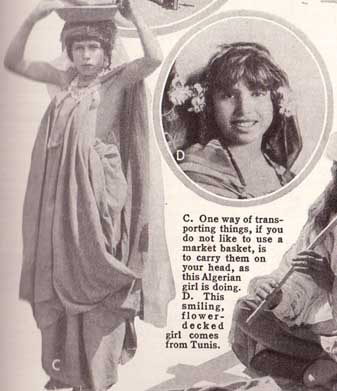
The picture immediately above shows both the hardship of being female (carrying market items on one’s head) and the beauty of the maid with flowers in her hair. Exotica über alles.
to be continued
Daniel Martin Varisco
Call for Papers: Muslim Women and the Challenge of Authority
A conference to be held at Boston University, March 31, 2012Â
“The gender jihad is a struggle to establish gender justice in Muslim thought and praxis. At the simplest level, gender justice is gender mainstreaming – the inclusion of women in all aspects of Muslim practice, performance, policy construction, and in both political and religious leadership†Amina Wadud, Inside the Gender Jihad
Scholarship on female religious authority in Islam dates back at least to the 1970s and has gone through several important phases. For two decades, most scholarship focused on demonstrating Muslim women’s poor social status and sought to locate the source of women’s oppression within religious doctrine. By the 1990s scholarship had turned to locate an egalitarian impulse within Islam that had been thwarted by the pressures of its patriarchal contexts. Over the next decade, female authored studies of the Qur’an claimed an unimpeachable basis for female rights by holding up the Qur’anic ideal of equality as a standard by which to judge social realities. More recently, scholars have sought to complicate the view of Muslim women’s unrelenting oppression. They have worked instead to recover evidence of past and present female resistance and agency, demonstrating that Muslim women are carving out spheres of interpretive autonomy and successfully negotiating their public and private lives within the constraints of broader social structures.  This conference builds on the foundation of the foregoing work and aims to bring together considerations of religious, social, and interpretive authority across geographical and temporal boundaries. Continue reading Muslim Women and the Challenge of Authority

Here is a fascinating video with the audio disabled for a purpose. Check it out here. It is produced at the British Film Institute.
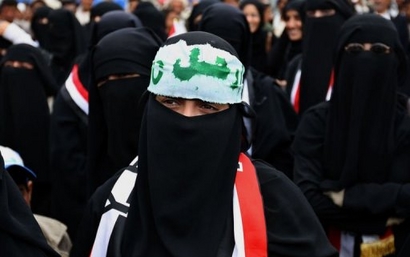
The rhetorical standoff in Yemen continues with only a limited amount of violence even while hundreds of thousands of people have been protesting, mostly against the decades-old regime of President Ali Abdullah Salih. Yesterday the New York Times commented that the protests in Yemen remain remarkably peaceful, with isolated cases of individual violence (mainly by those who support Salih) but no major clashes with the army or between tribal groups. President Salih holds a weekly rally of his supporters (some of whom have clearly been paid to come to the rally, as reporters note) as a counterpart to the far greater numbers protesting all over the country against his continued rule. He is holding on to power with a very thin string; indeed it is hardly even ‘power” any more given that much of the country is basically ignoring him and he is diplomatically isolated.
The only thing more incongruous than dictators (a military man installed in a coup after an assassination of the previous leader and who has remained in power for over three decades is at least an honorary dictator) talking about democracy is when dictators start talking about religion. Unlike Yemen’s Zaydi imams, whose millennium long rule was abolished in 1962, none of the military leaders of Yemen are noted as Quranic scholars; some could barely read and write when they came into office. Continue reading If Salih read the Qur’an
[This commentary was origially published in Religion Dispatches, April 12, 2011.]
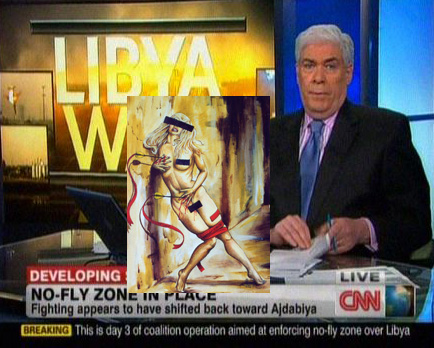
When it comes to grabbing attention bad news is the best news. Whether selling war or natural disaster or a fugitive serial killer, the competitive edge goes to the media outlet that can scoop the most violence, brutality or sheer inhumanity in an event.
The most recent news cycle of political protests started out on a hopeful note. As the spirit of frustrated youthful protest spread at tweet speed to dictatorial regimes and elitist monarchies, journalists flocked to North Africa and the modern day Holy Land. Live coverage has shifted from country to country, depending in large part on where the most violence is erupting. Yet, as much as the story may be promoted as one of hope and liberation, the hook is all about devastation. Continue reading Pornographic War Gazing: Why We Don’t Look Away
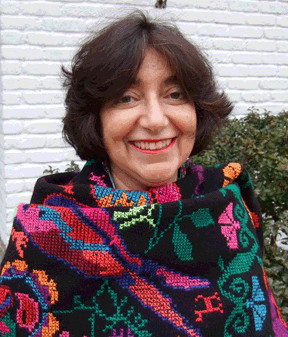
Dr. Najwa Adra, an anthropologist who has worked in Yemen since 1978, will be presenting a talk on “Song, Poetry and Gender in Yemen’s Central Highlands” today (April 7) at Marymount Manhattan College. The talk is from 7:30-9:30 pm in the Regina Peruggi Room of Marymount at 221 East 71st St. (between 2nd and 3rd avenues) in New York. This is a free event but seating is limited, so please RSVP to MilliBurns@gmail.com.