Category Archives: Gender and Sexuality

YEMEN: Behind militia lines in Jaar


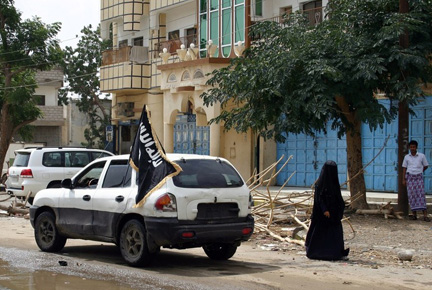
A Yemeni woman walks past a vehicle adorned with an Islamic flag in the town of Jaar, in the southern Abyan province, on January 25, 2012.

JAAR, 27 March 2012 (IRIN) – At first glance the city of Jaar, in Abyan Governorate near the Gulf of Aden, resembles many Yemeni towns struggling to rebuild after a year of nationwide protests shackled the central government’s ability to provide basic services.

Donkey carts line litter-strewn streets, and feral cats and dogs tiptoe past bullet-pocked storefronts and vacant buildings. Gaunt, bearded men drink tea and chew khat while shouting to each other across the street. In many respects, however, the remote settlement is different.

Controlled by a militant group called Ansar Al Sharia (Partisans of Islamic Law), the city is patrolled by armed militants in army trucks pillaged from the Yemeni military weeks earlier. The group’s black-and-white flag – a symbol of stability, according to Ansar al Sharia – flies at each entrance to the city, flapping behind Kalashnikov-toting soldiers riding motorcycles.

In a rare visit to Jaar on 5 March – the day after Ansar Al Sharia soldiers stormed a Yemeni military base outside Zinjibar killing more than 150 Yemeni soldiers and capturing 73 more – IRIN met civilians living under the expanding jihadist government.

Yemeni authorities believe the group is linked to Al Qaeda. Some local residents of Jaar said life under Ansar al Sharia was stable. One passer-by, when asked by a jihadist official what he thought of the “new [militant] government”, said it was “peaceful” and “nice”. Continue reading YEMEN: Behind militia lines in Jaar
Women in Yemen’s Arab Spring


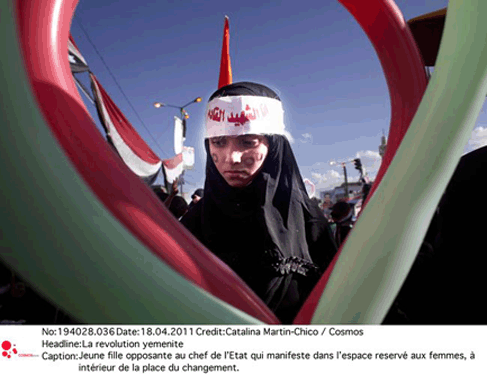
The website arabwomenspring has posted a summary of Yemeni women’s participation in the recent political protests and historical background on their role in governance. Below is an outline of the contents of the online report:

1 Women’s participation in demonstrations
1.1 Time-line of key events
2 Women’s participation in political life: opportunities and obstacles
2.1 Representation in government
2.2 Representation in parliament
2.3 Representation in local councils
2.4 Representation in the judiciary
3 A discriminatory legal framework
3.1 CEDAW
3.2 The Constitution
3.3 Other discriminatory laws
4 Further reading

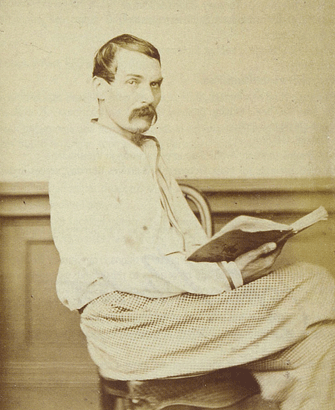
Happy Birthday Sir Richard Francis Burton


Burton in Aden

Today is March 19. Exactly 191 years ago, at 9:30 in the evening in the British town of Torquay in Devon the future Sir Richard Francis Burton was born. Like his 2oth century acting namesake, Burton was a character for the ages. He reveled in adventure and eroticism, for which he was much reviled in public and no doubt admired in private. If any one word can be used to described the persona that Burton pursued it would be “swashbuckling” in life as in spirit. My point today is neither to praise this flamboyant quasi-Victorian Caesar nor bury him (his grave is indeed a monumental site to behold). May his dry bones rest in the kind of peace he never seems to have found in life.

Burton’s biographers are numerous, as befits someone who is remembered as larger than life. His prolific corpus is now almost entirely online in various formats, but the place to start is burtoniana.org. There is much to question and quibble about in Burton’s exploits. Was his surreptitious entry into Mecca, disguised as a pilgrim, a travesty of Islamic values? Did his fascination with erotica in an age of gentlemananged taboos overstep ethical bounds? Was he the bad kind of “Orientalist,” a discourse cum intercourse voyeur that warrants calling him “Dirty Dick”, as Edward Said does in Orientalism (p. 190)? Was he, perhaps, a bit mad in that ubiquitous England manner?

Whatever you might think of the man, it is probably because of what you have read about him rather than what he actually wrote. Regardless of what he is saying, it must be noted that he had an extraordinary capacity for learning languages. Below is a list of the languages and dialects he is said to have mastered to some extent:

English, French, Italian, Latin, Greek, Jataki dialect (he wrote a grammar), Hindustani, Marathi, Urdu, Arabic, Persian, Pushtu, Sanskrit, Portuguese, Spanish, German, Icelandic, Swahili, Amharic, Fan, Egba, Ashanti, Hebrew, Aramaic, Many other West African & Indian dialects

I suspect he would get into Harvard, no matter what his SAT score.

Miniskirting the Issue


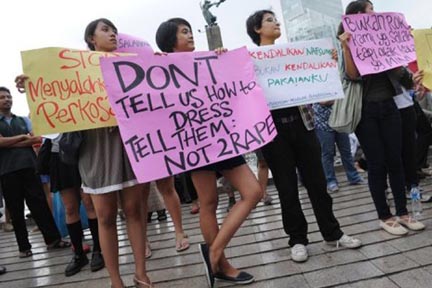
Indonesian women’s rights groups said they were outraged by the comments and called for a stop to the demonization of rape victims

Why is it that men blame women for their own failures? Whenever I hear a variant of the phrase, “Well, he couldn’t help himself,” I can’t but think that this excuse is in need of a lot of help. In Indonesia there is a bill being considered in parliament that would ban female lawmakers from wearing provocative clothing, such as miniskirts. Given that the number of Indonesian lawmakers wearing miniskirts must be a whopping minority, why is this needed? Here is the rationale:

“We know there have been a lot of rape cases and other immoral acts recently, and this is because women aren’t wearing appropriate clothes,” house of representatives speaker Marzuki Alie said.

“Women wearing inappropriate clothes arouse men, so it needs to be stopped. You know what men are like — provocative clothing will make them do things.”

So men rape women because women wear miniskirts. I have not seen the statistics, but I suspect the majority of women in Indonesia do not fall for the idea that all they have to do is dress conservatively and there will be no danger of a man raping them. This notion that the male rapist cannot really be blamed because “provocative clothing will make them do things” is not limited to any national or religious group. What is rather bizarre in this case is that the ban would only be to protect male lawmakers and not for the public at large. So either there is an epidemic of male lawmakers raping female lawmakers in Indonesia or these males are so easily aroused that the ban need only be to stop those provocative female lawmakers. I guess once outside the parliament building, male lawmakers can contain themselves. Continue reading Miniskirting the Issue

Saving Face


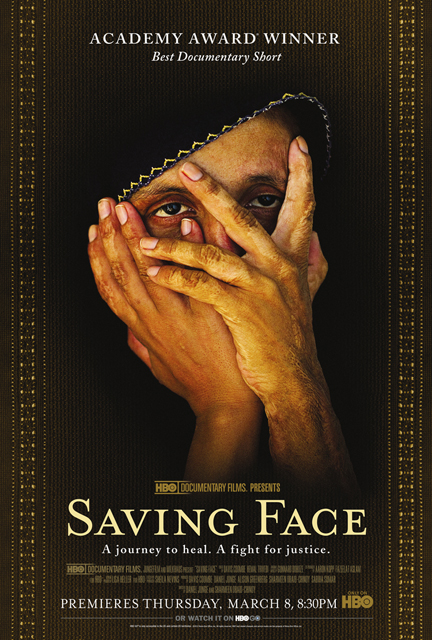
HBO is rebroadcasting the documentary “Saving Face” today (8:45 am) about the attacks in Pakistan on women. It will also be available in their on-demand service.

Every year in Pakistan, many people – the majority of them women – are known to be victimized by brutal acid attacks, while numerous other cases go unreported. With little or no access to reconstructive surgery, survivors are physically and emotionally scarred, and many reported assailants, typically a husband or someone else close to the victim, are let go with minimal punishment from the state.

This year’s Oscar winner for Best Documentary Short, SAVING FACE chronicles the arduous attempts of acid-attack survivors Zakia and Rukhsana to bring their assailants to justice, and follows the charitable work of Dr. Mohammad Jawad, a plastic surgeon who strives to help them go beyond this horrific act and move on with their lives. Directed by Oscar and Emmy nominee Daniel Junge and Emmy-winning Pakistani director Sharmeen Obaid-Chinoy, SAVING FACE debuts THURSDAY, MARCH 8 (8:30-9:15 p.m. ET/PT), exclusively on HBO.

International Women’s Day


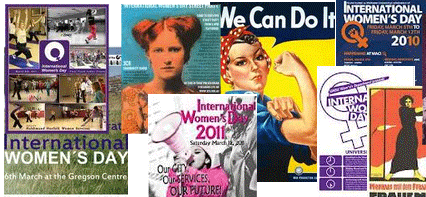
Today, March 8, will be celebrated around the world as “International Women’s Day.” The question that arises each year at this time is what exactly is being celebrated. There are the historic victories, like the 19th amendment to the United States constitution in 1920, giving women the right to vote, but these are increasingly distant each year. There are the milestones over the years of the first woman to fly solo around the world, the first woman to go into space and many other unacknowledged firsts for women. But these are really about women catching up to roles or activities once reserved exclusively or mainly for men. What can be celebrated on this day about what it means to be a woman in 2012 without comparison to how she fares relative to men?

Recent political events in the so-called “Arab Spring” hold promise for people power, some form of democracy and the end of the line for masculine idol dictators. Gone is Qaddafi, but also his harem of female bodyguards seemingly dragged off the stage of a Fellini film. Gone are the wealthy wives of the dictators. Cries of freedom can be heard from Tunisia to Bahrain. But there is much that is not celebratory. Continue reading International Women’s Day

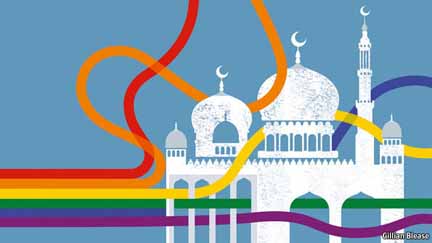
Islam and homosexuality: Straight but narrow


from The Economist, Feb 4th 2012

ONE leaflet showed a wooden doll hanging from a noose and suggested burning or stoning homosexuals. “God Abhors You” read another. A third warned gays: “Turn or Burn”. Three Muslim men who handed out the leaflets in the English city of Derby were convicted of hate crimes on January 20th. One of them, Kabir Ahmed, said his Muslim duty was “to give the message”.

That message—at least in the eyes of religious purists— is uncompromising condemnation. Of the seven countries that impose the death penalty for homosexuality, all are Muslim. Even when gays do not face execution, persecution is endemic. In 2010 a Saudi man was sentenced to 500 lashes and five years in jail for having sex with another man. In February last year, police in Bahrain arrested scores of men, mostly other Gulf nationals, at a “gay party”. Iranian gay men are typically tried on other trumped-up charges. But in September last year three were executed specifically for homosexuality. (Lesbians in Muslim countries tend to have an easier time: in Iran they are sentenced to death only on the fourth conviction.) Continue reading Islam and homosexuality: Straight but narrow

World Press Photo of the Year 2011


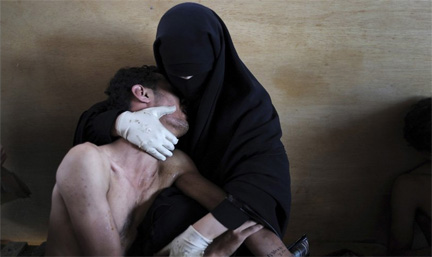
The international jury of the 55th annual World Press Photo Contest has selected a picture by Samuel Aranda from Spain as the World Press Photo of the Year 2011. The picture shows a woman holding a wounded relative in her arms, inside a mosque used as a field hospital by demonstrators against the rule of President Ali Abdullah Saleh, during clashes in Sanaa, Yemen on 15 October 2011. Samuel Aranda was working in Yemen on assignment for The New York Times. He is represented by Corbis Images.

Comments on the winning photo by the jury
Koyo Kouoh: “It is a photo that speaks for the entire region. It stands for Yemen, Egypt, Tunisia, Libya, Syria, for all that happened in the Arab Spring. But it shows a private, intimate side of what went on. And it shows the role that women played, not only as care-givers, but as active people in the movement.”

Nina Berman: “In the Western media, we seldom see veiled women in this way, at such an intimate moment. It is as if all of the events of the Arab Spring resulted in this single moment – in moments like this.”

Aidan Sullivan: “The winning photo shows a poignant, compassionate moment, the human consequence of an enormous event, an event that is still going on. We might never know who this woman is, cradling an injured relative, but together they become a living image of the courage of ordinary people that helped create an important chapter in the history of the Middle East.”

Manoocher Deghati: “The photo is the result of a very human moment, but it also reminds us of something important, that women played a crucial part in this revolution. It is easy to portray the aggressiveness of situations like these. This image shows the tenderness that can exist within all the aggression. The violence is still there, but it shows another side.” Continue reading World Press Photo of the Year 2011