Category Archives: Gender and Sexuality

Demographics, Islam, Modernity


Photographic image source

by Anouar Majid, Tingitana, March 16, 2013

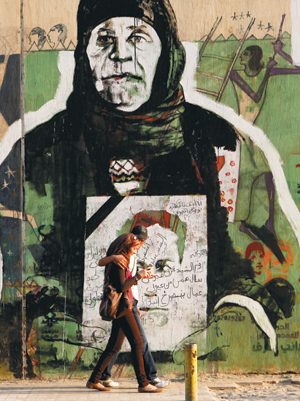
New reports are showing that Morocco’s fertility rates continue their rather dramatic downward trend. According to InfoMédiaire, Morocco’s High Commission for Planning says they have been halved since 1987, dropping from 4.5 children per women to 2,2 children in 2010. Part of the explanation has to do with the fact that people are marrying later.

Declining fertility rates is a global phenomenon and is particularly surprising in the Islamic world, perplexing observers who expect demographically-related doomsday scenarios of one kind or another. In 2011, David Goldman explained that civilizations without a strong religious faith lose the desire to procreate. Economic prosperity turns children into expensive and time-consuming propositions, since a child born to parents in Paris or New York would have to compete with dozens of other demands, such as the need for education, entertainment, vacations, and the like. And fertility rates are not helped when parents no longer expect to be supported by their children in old age. At least, Westerners have social security systems to rely on. Continue reading Demographics, Islam, Modernity
Mind your manures…


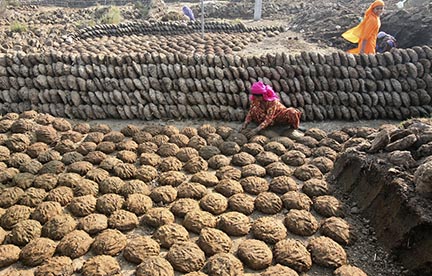
A villager makes cow dung cakes used as cooking fuel at Maloya village on the outskirts of the northern Indian city of Chandigarh on January 31, 2011; photograph by Ajay Verma / Reuters

[Webshaykh’s note: Here is a great story coming out of Indonesia about two young female science students contributing to society. I believe Marvin Harris would love this, as would anyone appreciates the Hindu doctrine of ahimsa. Yet another sacred cow sacrificed in the interest of science.]

Fermented Cow Dung Air Freshener Wins Two Students Top Science Prize

by Kimberley Mok, Care2.com, March 16, 2013

Conventional air fresheners are known for their toxic soup of chemicals that may be linked with asthma, reproductive disorders and even lung disease. While there’s no shortage of environmentally-friendly and human-healthy air fresheners on the market, two Indonesian science students are behind a rather bizarre concoction that you may be seeing soon: an affordable air freshener made from cow dung.

Yes, cow dung — as weird as it sounds, the formulation actually has a pleasant herbal smell, and has won Dwi Nailul Izzah and Rintya Aprianti Miki a gold medal at Indonesia’s Science Project Olympiad (ISPO). According to Oddity Central, the young women overcame 1,000 other competitors with their surprising freshener, which was painstakingly created by collecting unused cow manure from a cattle farm and fermenting it for three days:

Then they extracted the water from the fermented manure and mixed it with coconut water. Finally, they distilled the liquid to eliminate all impurities. The whole process took 7 days, which is pretty long, but in the end they obtained what they were looking for – a liquid air freshener with an herbal aroma from digested cow food. Continue reading Mind your manures…

Passport Blues

Yemenis seeking American citizenship pay exorbitant dowries in lucrative marriages of convenience

by Nadia Haddash, Yemen Times, March 7, 2013

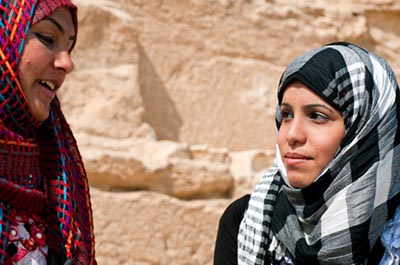
Getting a visa from the American embassy in Sana’a is not easy for Yemenis hoping to travel to the U.S., and is especially hard for young, single men. So, many seek an alternative route: marrying a Yemeni-American woman.

By doing so, they typically become American, too, but could be in debt for years—they often have to pay huge dowries for their dual citizen brides.

Walid Al-Asimi, 28, met his wife, a Yemeni-American, in an English institute in Sana’a.

“When I knew that she would travel to America I decided to marry her,” he says. “I was surprised when her father asked me to give $30,000 as a dowry.”

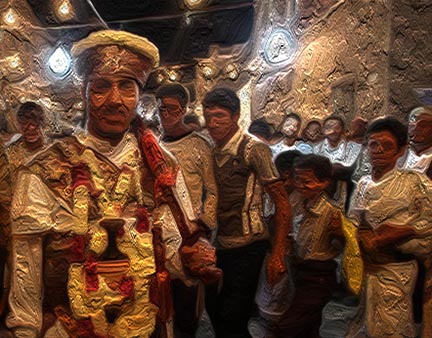
The majority of Yemeni youths who marry women with dual citizenship pay very high dowries, ranging between$10,000-50,000, or around YR 2 million- 11 million. By comparison, a typical dowry paid to a bride’s family in Sana’a is around $4,000 or YR 800,000. The dowry paid to brides’ families in rural areas of the country is much less still. Continue reading Passport Blues

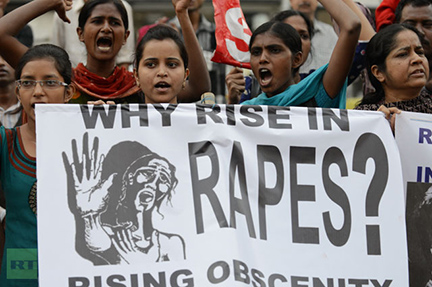
Rape and the Gender Gape

For International Women’s Day, it is important to reflect on issues that are of significant impact on women around the world. Let’s start with a beginning, the Genesis one. The original creation story familiar to Judaism, Christianity and Islam starts out with man alone. Not only is the first man not like other animals, which he has no problem naming, but he has no family: no nurturing mother, no moral father, no brothers or sisters. He was formed as a lump of clay with breath and a spirit connection to the divine. Even the presence of God, his creator father figure, was not enough for this lonely man. Surely this garden paradise was hell for the man alone.

So God put Adam to sleep, extracted a rib and fashioned a woman to be his mate. But again this was still a fool’s paradise with no other human beings around the first pair. No doubt it was less boring, but there seem to have been few challenges for the couple, since everything they needed (except clothes which were not yet fashioned) were at hand. Yes, they had each other, but apparently only as a brother and sister might. Until that fruitful day when Eve bit into the knowledge of good and evil, it must have been boring beyond belief. Disobedience by the pair, something quite normal for all children who could hardly know better, led to a disaster for the first couple, their children and all children ever after. So the story goes. Hell would now shift from the lonely boredom of Paradise to the sweat and blood reality of a world where both had to work for a living.

The gender gap, foretold in the curses on Adam and Eve, has many variants, but the vast majority of societies give the male precedence. Post Eden became a man’s world, where brother kills brother and the line of begats is male to a fault. One assumes all this begetting involved sex, but the opening chapters of Genesis are strangely silent about sex. One can understand the desire not to draw attention to the original incest, but one wonders about the libido of these descendants of Adam and Eve. By the time of Noah sex is a serious issue, one in which the “sons of God” saw that the “daughters of men” were “fair”, at least in the sense of fair game. So when we are told “And God saw that the wickedness of man was great in the earth, and that every imagination of the thoughts of his heart was only evil continually” (Genesis 6:5), we have finally arrived at and beyond what might be called the gender gape. Continue reading Rape and the Gender Gape

The Price of Freedom


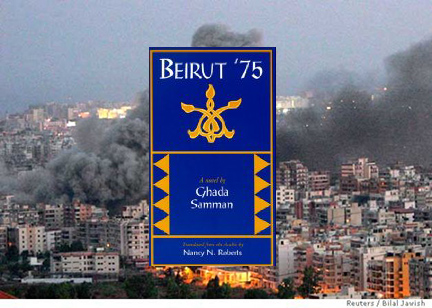
The Price of Freedom: A Reading of Ghada al-Samman’s Beirut ’75
by George N. El-Hage, Ph.D.

“Beirut has ruined me, that’s all!”

“That’s not true,” he replied, “You women all accuse Beirut of ruining you when the truth of the matter is that the seeds of corruption were already deep inside you. All Beirut did was to give them a place to thrive and become visible. It’s given them a climate where they can grow.”

“She wondered to herself…if they had allowed my body to experience wholesome, sound relationships in Damascus – would I have lost my way to this extent?”

A sense of alienation, pessimism, and ultimate nihilism, which stems from al-Samman’s existential viewpoint, envelops the main characters in Beirut ‘75. The protagonists (Yasmeena, Farah, Ta’aan, Abu’l-Malla, and Abu Mustafa) feel trapped, alone, and disconnected from each other and from society. Each character’s personal struggle sheds light on some negative aspect of Lebanese society as seen by al-Samaan in 1975. Each character is exploited in some way, either sexually, politically or economically. Although these underlying evils of Lebanese society may have existed, al-Samman only shows a unilateral view colored by her own perception of reality. She fails to offer a multidimensional and more realistic view of the society at that time. In addition, she fails to successfully convey the depth of existential crisis that each of her characters endures, consequently resulting in characters that remain shallow and who do not convince the reader that their tragic demise is warranted.

The first chapter of the novel repeatedly foreshadows the characters’ impending doom; nevertheless, the reader is still left with a sense of bewilderment at such an astonishing and violent end to an otherwise ordinary set of characters. Did they really merit such a catastrophic conclusion of events? Several reviews have been very critical of such a sensational conclusion, and some critics, as well as many readers, have been shocked and dismayed. The author loves to admit, though, that she herself was puzzled with this conclusion as she tries to justify it to the public: Continue reading The Price of Freedom

iOrientalism: Fooling around with Arab princesses


The late Edward Said lamented the biased representation of the “Oriental” in his influential Orientalism, published 35 years ago. Most of the scholarly and voyeuristic tomes he critiqued are rarely read these days, although his intellectual nemesis Bernard Lewis is well represented in your local Barnes and Noble bookstore (in part thanks to a desire for selling books rather than seriously vetting them by some of the editors at Oxford University Press). Few students of the Middle East or Islamic studies these days have ever heard of Lord Cromer or William Muir or Raphael Patai, let alone would read and be influenced by their aged volumes. The ugly ethnocentrism, racism and sexism that once could be found in the broad (far too broad) discourse labeled “Orientalism” is still quite evident, although moreso in the media, political punditry on the right and rantings of career Islamophobes than by serious scholars. But we are now in the digital age and iOrientalism is now propelled through Facebook, Twitter and Youtube via iphones, ipods and their technological clones.

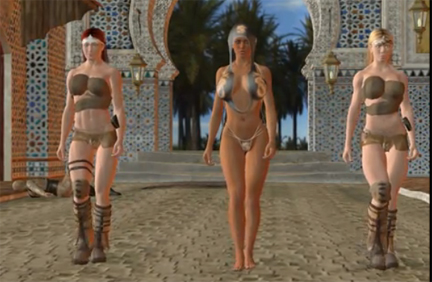
One Youtube video that recently appeared on a Youtube search that had nothing to do with the subject I was searching is a mock video-game fight between three hefty-bosomed and bursting-at-the-bra-straps Arab princesses and a swarthy Mike Tysonish evil guy. This appears to be a promo for Poser Pro Animation rather than a cultural statement per se. The three Arab princesses are so scantily clad that it is more the tile-glazed architecture and palm trees that orientalize than the costume or look. Of the three kung-fu trained ladies, one has red hair, one is a blond and the other is wearing what looks to me like the kind of aviator helmet worn by Amelia Earhart in the 1930s. The bully wears a leather waist band, but otherwise the shaft he was endowed with by nature is visible to the three princesses, but not to those of us viewing the video. Ironically, this parallels Said’s choice of the Gérôme’s painting that graced the cover of the original paperback of Orientalism: this features a naked boy with a snake wrapped around him and a group of grizzled Walnetto perverts staring at his organ, while we voyeuristic viewers can only see the glistening buttocks of the youth. Continue reading iOrientalism: Fooling around with Arab princesses

Sex in the Muslim City


by Carlin Romano, The Chronicle of Higher Education, January 14, 2013

Is it possible all those young men clashing in the streets of Cairo and Damascus aren’t getting enough?

Democracy? No, I mean that other thing people seek and are willing to die for.

Talk of the “Arab Spring” now forms a clichéd part of pundit chatter in America, with plays on “Arab Winter” and “Arab Fall” depending on the politics of the speaker and the troubled country dissolving at the moment. But few talking heads know enough about Arab culture to tie the massive Mideast street actions we’ve seen to matters behind surface politics. And those background matters include the state of Arab marriage, the tension between so-called Western norms and Islamic pieties, and the suppressed sexuality among Arab youth who face financial and theological obstacles to fulfilling their desires.

Is it tasteless to mix somber stuff like political rebellion with sub-rosa lust and denial? Could be it’s truthful rather than tasteless.

Thank you, then, Shereen El Feki—Cambridge-educated immunologist, former science writer for The Economist, current vice chair of the U.N.’s Global Commission on HIV and Law—for adventuring beyond the headlines in Sex and the Citadel: Intimate Life in a Changing Arab World, forthcoming from Pantheon Books. It’s a trenchant exploration of the uncertainties filling the humble abodes that Tahrir Square demonstrators go home to. A truthful book may not set you free when you’ve suffered under centuries of misguided interpretations of Islam and sex, but one prays that El Feki gets an Arabic edition.

In the West, her blunt examination of sex and its attendant practices and paraphernalia—topics include vibrators, Viagra, virginity codes, marital rape, and homophobia—would hardly raise an eyebrow. We Westerners live now in a Fifty Shades world, a publishing culture in which Naomi Wolf’s Vagina gets reviewed on the front page of The New York Times Book Review by former ballerina Toni Bentley—she of The Surrender (a title meant to evoke the offering of another body part)—and one hopes the kids aren’t watching. Continue reading Sex in the Muslim City