All posts by dvarisco

Mahdi as Hell: Look out Darwin

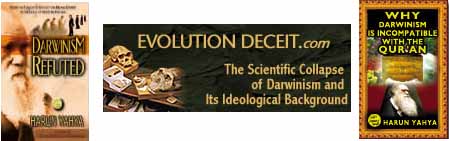
Has your atlas arrived yet? The New York Times reported yesterday that prominent American scientists and politicians are receiving what purports to be an “Atlas of Creation” from a Turkish media guru self-named Harun Yahya. No, it is not revenge for the “War on Terror.” Nor is a glossy book of patent nonsense, no matter how intelligently designed and styled as “probably the largest and most beautiful creationist challenge yet to Darwin’s theory” much of a challenge. Scientists will recognize it for a “load of crap,” as Kevin Padian, an evolutionary biologist at the University of California, Berkeley, impolitely phrased it.

The “War on Terror” has manufactured a whole host of new enemies. But what a strange bedfellow is Charles Darwin, who liberated science from the dogmatic demands of religious apologists like Mahdi Yahya a century and a half ago. Darwin’s approach now summarizes all of modern science, a steady advance in knowledge because no specific idea is ever held sacred. This does not mean that scientists must abandon religion and faith, but it does offer a view of the world in which human reason is not abandoned under the cloak and rhetorical dagger of a supposedly spiritual quest for moral behavior. Continue reading Mahdi as Hell: Look out Darwin
Eden is Lost

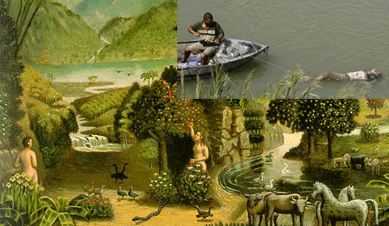
Today’s BBC has a report about the daily toll of mutilated bodies dumped into the Tigris River in Iraq and found in nets down river. Once a symbol of a river of paradise, the Tigris might as well be fed these days by a burning lake of fire. There are times when perhaps the best way to respond is in poetry.

A river rises in Eden to water the garden; beyond there it divides and becomes four branches. The name of the first is the Pishon; it is the one that winds through the whole land of Havilah, where there is gold. The gold of that land is excellent; bdellium and lapis lazuli are also there. The name of the second river is the Gihon; it is the one that winds all through the land of Cush. The name of the third river is the Tigris; it is the one that flows east of Asshur. The fourth river is the Euphrates. The LORD God then took the man and settled him in the garden of Eden, to cultivate and care for it. (Genesis 2:10-15)

Eden is lost
yet again.
The weeds of war have choked the marshes
where the water god once spoke of life.
Nothing rises in Eden today
but the dust of a hate I can not measure.
God’s good well is dry
and the fields lie parched,
savaged by unwanted salt and more lies. Continue reading Eden is Lost

What If?

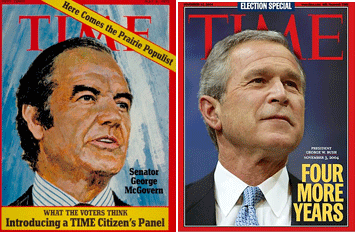
Pundits thrive on “what if” scenarios. “What if” George W. Bush had not charged with General Custer bluster into Saddam’s Iraq over four years ago? “What if” we just up and pulled out right now? The other day, trying to balance my checkbook, I wondered “what if” my grandfather had bought shares in a tin-Lizzied start-up company called Ford Motor Company? I also remember my first election in 1972 when I enthusiastically voted for George McGovern for President. “What if” George McGovern had not been slimed and dimed by the new and yet to be watergate-downed Nixon and his Kissenger messenger? I mention McGovern, one of those rare Presidential candidates who has never had a taint of corruption, because last October he published a piece on the Iraq War in Harper’s Magazine. Had his advice been followed, we would be out of Iraq right now. So it seems relevant to ask “what if” we return and read his comments again.

The Way Out of War:
A blueprint for leaving Iraq now

by George S. McGovern
Harper’s Magazine, October, 2006

Staying in Iraq is not an option. Continue reading What If?

For Lust of Reading

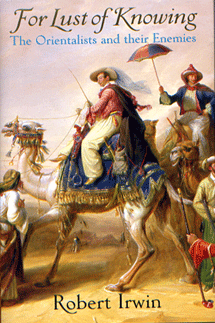
The publisher, author and Arabist historian Robert Irwin recently published a readable and passionate defense of academic Orientalism, a once-respected field that has seemingly been in post-colonial freefall (perhaps more accurately a free-for-all) since Edward Said wrote his seminal polemic Orientalism in 1978. Lust of Knowing (or Dangerous Knowledge: Orientalism and Its Discontents in the American edition), Irwin’s take on the motivation of most past Orientalist scholars, is subtitled “The Orientalists and their Enemies,” a list which extends far beyond Edward Said. “I have done my best to make this book interesting,” (p. 2) begins Irwin and all but the most head-in-the-sand devotees of Said’s thesis would have to agree he is successful in this. Like most readers of Said’s text, which is nearing the three decade mark, Irwin does not set out to defend the bias and prejudice hurled in an Oriental direction from generations of European authors, nor does he disparage Said because he was Palestinian or a staunch defender of Arab causes. Continue reading For Lust of Reading

The Prophet’s Medicine: Part Two


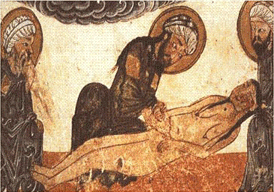
[Illustration: Teaching Caesarean Birth, al-Biruni, (973-1051 CE)

THE MEDIEVAL ISLAMIC VIEW OF MAN

The Arabic books on the Prophet’s Medicine generally begin with an overview of the human constitution. Since this is far different than would be found in medical school today, it is important to understand the context in which statements about human health were made centuries ago. In describing man, seven parts of his “natural” being were distinguished. At the most fundamental level the human body was seen as a mixture of the four basic elements that defined the material world in classical science. These were fire (hot and dry), air (hot and wet), water (cold and wet) and earth (cold and dry). In this physical respect the human body was no different from other animals. And these were the same elements that were thought to make up everything material in the universe. Continue reading The Prophet’s Medicine: Part Two

Wavell in Yemen: “Of Fire and Sword”


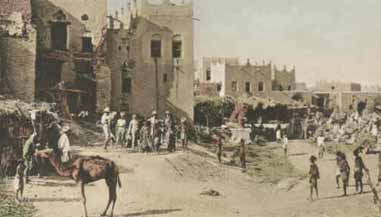
Market in Lahj, southern Yemen

[Note: Arthur John Byng Wavell (1882-1916) was a British soldier and adventurer who traveled in disguise to Mecca in 1908 and went on to Yemen in 1911 to witness fighting between the Zaydi imam’s troops and the Ottoman Turks. This account was originally published in 1912.]

The events in that country [Yemen] are worthy of a chapter in the history of these prosaic days. The counter-currents of human interest and activity that run up and down the Red Sea, linking the civilizations of the East and West, leave undisturbed this backwater. Western Europe knows little and cares less about what goes on there. Continue reading Wavell in Yemen: “Of Fire and Sword”

The Prophet’s Medicine: Part One


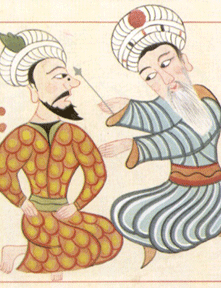
[Illustration: Miniature illustrating the treatment of a patient, Serefeddin Sabuncuoglu. Jarrahiyatu’l-Hâniya. Millet Library, Ali Emiri, Tib 79.

In the 7th century Muhammad set in motion one of the world’s great religions, Islam. As an Arabian prophet, Muhammad spoke of the same God known to Jews and Christians for centuries. The message received by Muhammad, and revered today by over a billion Muslims, is contained in the Arabic Qur’an. Although the focus of this scripture is on the spiritual health of mankind, there are also numerous statements regarding physical health and emotional wellbeing. Muhammad himself often spoke regarding medicine and diet, and his words are accepted as authoritative only beneath the level of God’s revelation in the Qur’an. As Muslim scholars in later centuries encountered the medical traditions of classical Greece, Syriac tradition, and India, they compared this indigenous knowledge with the Qur’anic view of man and the prophet’s statements about health. Eventually, a specific literary genre called the “Prophet’s Medicine,” or al-tibb al-nabawi in Arabic, came into existence. In the texts of this genre Muslim scholars tried to merge the most accepted and current scientific knowledge about medicine with the folklore of Muhammad’s Arabia. Continue reading The Prophet’s Medicine: Part One

History in Century Hindsight

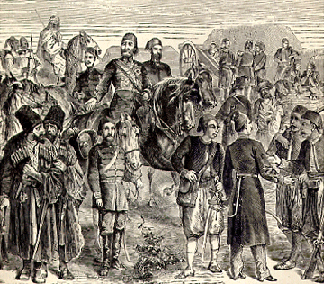
How will the history of the world be written in another century? I am glad I will not be around to find out, although I suspect future historians will look at the post-9/11 operations at home on the patriot front and abroad with patriot missiles as a low point in America’s future past. We can always look back and see how history was written a century ago. Here is a passage from a popular “History of the World” by John Clarke Ridpath, who penned it near the end of the 19th century. Although dated in its racial and ethnocentric overtones, it is refreshing to see some critical assessment on Western stereotypes at work as well. As an exercise, read the excerpt below to sort out the prejudice from the attempt, even if not up to present-day standards, to be less rather than more subjective.

Some allowance, however, must be made for the judgment which the Western peoples have passed upon the Turks. There is no denying the fact that a part of this judgment is prejudiced. The Aryan races have always shown a disposition to reject and contemn those usages with which they themselves are unfamiliar. They have done so. Not because the usages in question have contradicted the laws of right reason, the interests of the state, of the principles of morality, but simply because such facts have been strange, unfamiliar. The intolerance of the Western people in this respect has been as severe and inexcusable as many of the usages which they have contemned and despised. Continue reading History in Century Hindsight