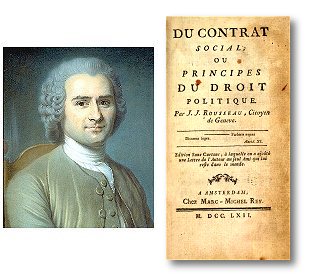
Remember your Rousseau: “man is born free, but he is everywhere in chains.” Updating the male-oriented language of his day, women must also be born free. Feminists would argue that everywhere she is also bound in chauvanistic chains, but what would Rousseau say about women who in some places are hidden away head to toe in full-length veils? To veil or not to veil: that has become more than a philosophical question these days. A recent legal opinion in France denied Faiza Silmi, a Moroccan woman, French citizenship because of her insistence on wearing the niqab, which obscured all but a narrow slit-view of her eyes in public. In a similar context, a Muslim woman in Florida was not allowed to have her driver’s license picture taken without showing her face. While relatively few Muslim women in Western societies choose to be chador laden or walk around in full-length woven tents, the few that do invariably stir strong feelings. If the intention is to be invisible, the opposite response is inevitable. In both these cases the issue was not one of physically removing their choice of dress in public, but one of a lack of the conformity necessary for negotiating individuality in the public sphere. If you want to become a French citizen, an option rather than a natural right, then you must accept the range of behavior agreed upon as acceptable in secular French culture. Dressing like Muhammad’s wives supposedly did in the 7th century may convince the authorities in Saudi Arabia, but modern France freed itself from the bloody history of religious bigotry that such symbols often cover. If you want the privilege of driving a car, then you need to pass a driving test and not obstruct your vision or prevent authorities from identifying you by failing to show your face. Continue reading Niqab and the Social Contract