All posts by dvarisco

Daydreams and Arabian Nights


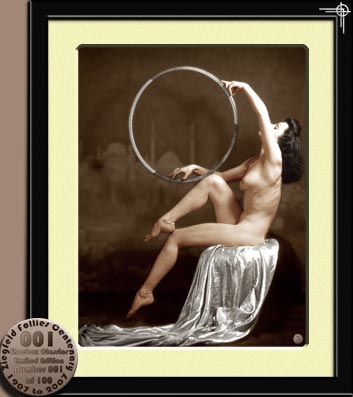
Ziegfeld Follies Girl representing Scheherazade from The Arabian Nights

On a personal note, today is my birthday. It is hard to be serious on such a foreboding occasion, especially when the magic number now exceeds the number of varieties of Heinz pickles. Besides (myself), the sun is shining and it is spring and silliness is in the air. [Isn’t it silly that we drop the ‘y’ to make silliness gramatically correct?] Since I have been preparing a powerpoint for a class on the history of ways in which the human body has been depicted, especially in the art of Adam and Eve in Eden, I have come across a number of Google-ill-begotten images, some of which are hilarious, some risque and some poignant. Take, for example, the picture above, which is not off a current porn site but actually a Ziegfield Follies Centennial print, indeed the first in the series.

So what do you see here? Continue reading Daydreams and Arabian Nights
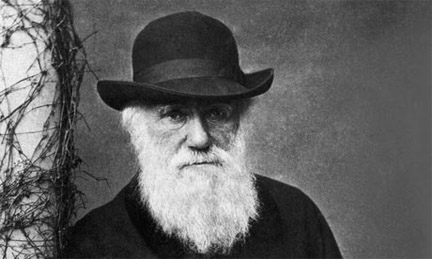
Darwin at 200

Today is a momentous day, especially if we turn back the clocks 200 years exactly. On February 12, 1809 two freedom fighters were born at opposing ends of the Atlantic: Lincoln and Darwin. Abraham Lincoln freed America from the intolerable idea of human slavery; Charles Darwin freed the human mind from the dogmatic shackles that viewed scientific inquiry as heresy. I have been preparing a paper on Darwin’s reception by Muslims for an upcoming conference at Hofstra University on “Darwin’s Reach” March 12-14. As you might suspect, the initial reaction was not very positive. Of course information about Darwin’s new theory of natural selection did not come through any scientific venues but through the negative filter of Protestant missionaries. Branded a materialist and atheist, there was little enthusiasm in the late 19th century for a challenge to the traditional view of Adam and Eve. Continue reading Darwin at 200

Picturing the Exodus

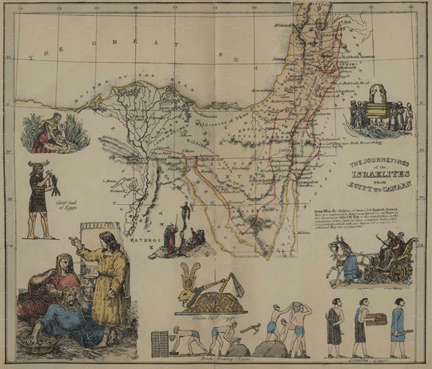
The ubiquity of GPS threatens to leave the old printed map out of the picture. This is a pity, for there is much to be learned from the way maps frame the world. As J. Z. Smith once remarked, map is not territory. True enough, but maps are the way we imagine not only territory but our place in it. When Edward Said wrote his critique of Orientalism in 1978, he cited novelists, travelers, poets and academics, but no mapmakers. But in a way Holy Land maps are what put the Holy Land on the map. Maps not only illustrated what was thought to be the lay of the land, but what people imagined was there.

A splendid example of this is an 1856 pictorial Bible map of the Journey of the Israelites from Egypt to Canaan. I reproduce the image above, but if you
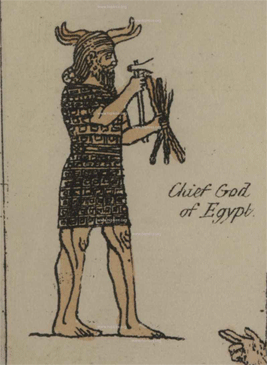
click here you can get a greatly enlarged view to see the details. Mind you, this was 1856, when few of the archeological discoveries in Bible territory had come to light. This is evident in the depiction of the “Chief God of Egypt,” (left side of map) who looks like a cross between an Assyrian and a Viking.

Continue reading Picturing the Exodus

Disproportional suffering


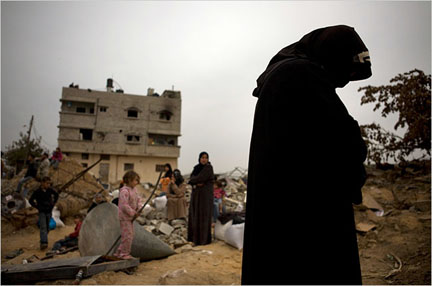
Residents returned to their homes around Gaza City on Friday. Tyler Hicks/The New York Times

Gaza is not history, nor is it likely to be soon. The bombs may have ceased on both sides, but the human toll presages a bleak future. Both sides have grievances, but the grief from death, maiming and sheer destruction of property and homes is incredibly disproportional. Even Independent observers must acknowlege this:

Up to 10 times as many Palestinians were killed as Israelis. The Palestinian Ministry of Health says 1,314 Palestinians were killed, of whom 412 were children or teenagers under 18, and 110 were women. On the Israeli side, there were 13 deaths between 27 December and 17 January, of whom three were civilians killed by rockets fired from Gaza. Of the 10 soldiers killed, four were lost to “friendly fire”.

Even if the Palestinian figure is disputed, it is clear that the death toll was massively higher for Palestinians than Israelis. Proportionality is not simply a matter of numbers, however. Continue reading Disproportional suffering

Entitled to consideration and respect


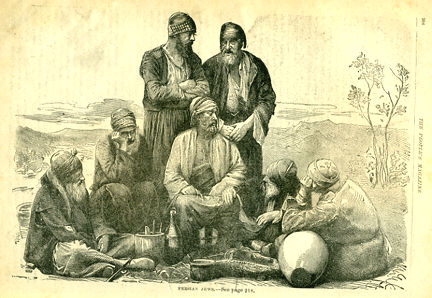
Illustration of “Persian Jews” from the People’s Magazine, 1879

The current fighting in Gaza is a tragedy of Greek dramatic proportions. On the one hand a highly sophisticated military machine wielded at present with Hawkish intent, on the other a ragtag guerilla group bent on lobbing barbs at the Hawk’s fortified lair. And in the middle frightened civilians in a humanitarian nightmare of medieval mindset. The problem is that neither side is really willing to treat the other with consideration and respect. In this unethical tie, of course, the onus must be on the stronger to recognize the limited options of the weaker.

The tragedy does not end with the present loss of life, limb and hope for Gazans. Unfortunately, it overshadows a historical trajectory that created the rise of Zionism as a political ideal in Europe. There is no excuse for the present punishing policies of Israel towards the residents of Gaza. Indeed, it is all the sadder given the sordid history of anti-Semitism in both the Christian-dominated West and Islamic-dominated Near East. Recently I picked up an old magazine from 1879, published exactly 140 years ago. On one page I was struck by the extraordinary pathos of an image of “Persian Jews.” Continue reading Entitled to consideration and respect

Rizpah and the Politics of Vengeance


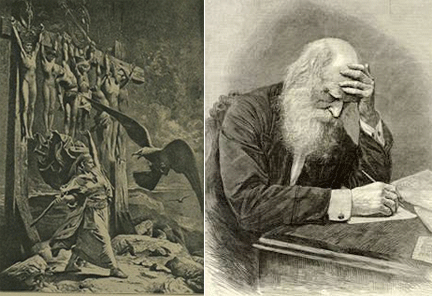
Rizpah protecting the bodies of her sons, by George Becker, left; William Cullen Bryant, right

With Gaza ablaze, the political woes of contemporary Palestinians continue to echo past tragedies on the same blood-drenched ground. Consider the vengeance of the Gibeonites, both a purge and a scourge in the early days of Israel’s King David. Setting aside who is who for the moment, the biblical account recorded in the book of II Samuel describes a weak David with a struggling economy (called a famine in those days). The Gibeonites, who sought vengeance for their slaughter by the former King Saul, demanded seven of his sons, and David agreed. The princes were soon hanged in eye-for-an-eye justice. Yet the queen mother of two of the sons spent five months protecting the bodies from being devoured by beasts not shaped like humans. Her name was Rizpah and she can be seen as a maternal heroine or a distraught widow.

Like so many of these seemingly sacred stories, almost any moral can be teased out of the narrative. Should the lesson be “Do not make deals with the enemy, even when you are weak”? I can see both supporters of Hamas and Israeli hardliners applauding the message. Or might it be possible to read the story in a more sane hindsight as a referendum on the futility of vengeance? Were the matter simply an eye for an eye, it could theoretically stop after the first act of vengeance, but this region has seen an infinity of eye-gouging that no blessed peacemakers have yet been able to stop. My own preference is for Rizpah fighting off the vultures of violence, less an act of protecting only one’s own than defiance of the perpetual killing that makes martyrdom a virtue on both sides.

Once again, I prefer to tune out the talking heads and let a poet of the past speak: Continue reading Rizpah and the Politics of Vengeance

David vs Goliath, the IDF vs Hamas


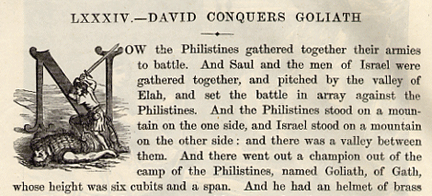
Lithograph letter illustrating The Child’s Bible Illustrated from a 19th century serial publication.

When the once holy land of Biblical proportions is the issue on the front page of every newspaper, politics must make way for metaphor. The Israeli plan to bring down Hamas echoes with Samson bringing down the temple on the Philistines. Lots of Philistines were killed that memorable day, but only with a martyr’s mentality. Plug in “Gazans” or “Israelis” for “Philistines,’ and the martydom makes both scenarios equally mad. Moving forward in Biblical time, the Philistines did not disappear as a thorn in the side of Israel. Today, well beyond the world of the prophets, the jet fighters and tanks of the IDF have replaced David’s sling, but search as the military scanners may there is no Goliath in modern Gaza. Was Sophocles still writing for the stage, the ongoing Israel/Palestine tragedy would make Oedipus Rex look like Twelfth Night. How unbiblical a thought. Continue reading David vs Goliath, the IDF vs Hamas

Lithographica Arabica 1


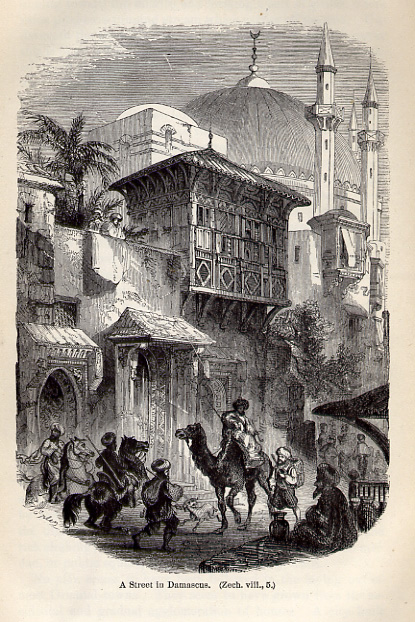
“A Street in Damascus” from Bible Lands by Henry Van-Lennep, 1875, p. 456

Watching vivid color, cable television on an HD screen obscures the art of old black and white movies, which were once able to conjure up fantasies in black, white and shades of gray. Glancing at glossy National Geographic photographs similarly buries further into the archived past all those simple lithographic line drawings storehoused in 19th century travel accounts, Orientalist writings and Bible Custom compendiums. I admire the fruits of progress, but the nostalgia for reaching back into the museum of my book-reading memories demands equal time.

For those who share the tactile thrill of fingers thumbing through brown-edged paper and caressing delicate bindings of century-plus-old books, I dedicate a new theme on Tabsir devoted to the art of lithographic representation of the Middle East. Lithographica Arabica — long live the line drawings and antiquated woodcuts of bibliophilic bliss. Continue reading Lithographica Arabica 1