All posts by dvarisco

Consuming halal or letting halal consume you


Dietary rules — I suspect these have always been around as our earliest ancestors learned what foods made them feel good, what foods made them sick and what foods made them well. The ancient world and the Islamic era have bequeathed a wealth of herbal remedies and food recipes that continue to have relevance. Then there are the taboos, the kosher and halal rules that go beyond any scientific rationale to diet by revelatory fiat. The kosher laws in Leviticus, as anthropologist Mary Douglas showed many years ago, are not really about health, but symbolic for the community that applies them. Tainted beef will get you sick just as quickly as tainted pork. But as long as there is no harm, then eating kosher or halal is not a problem. It may be an inconvenience, but it is not going to harm your health.

It is one thing to eat halal and another to turn the idea of halal food into something that is more about consuming than eating as a religious preference. Devout Christians complain that Christ has been x’d out of Christmas and they are right: Santa Claus, Christmas trees and oligatory gifts define Christmas as it is currently consumed in the United States. I suspect there is a danger that the same thing can happen to halal food and to the fasting month of Ramadan. Let’s take Ramadan first: the original intent was for religious reflection at a time when both Jews and Christians also observed fasting as a reflective rite. Going without food and water, no matter what the exact time dimension, is a powerful symbol pointing to those less fortunate who may have no food or water or barely enough to survive. It can also cleanse your body. But if you simply abstain during the day, then gorge after sunset and spend half the night celebrating, what exactly is the point of fasting? Continue reading Consuming halal or letting halal consume you
Romney up against the wall


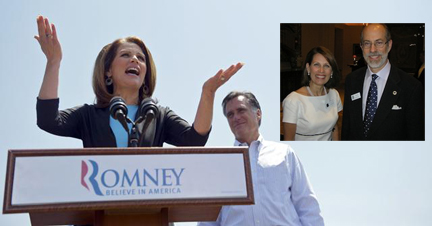
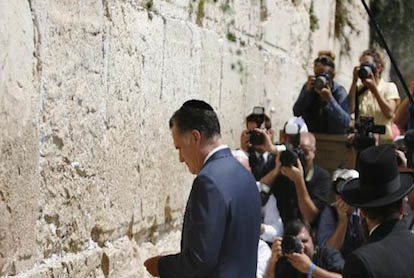
The gaffes of Republican nominee Mitt Romney have put him up against the wall several times, including the Wall Street Journal op-ed pages. But his latest “stump” in Israel, with the obligatory picture of Romney at the Wailing Wall, has even brought out a critique from the New York Times editorial page. Romney is visiting Israel and veering hard to the right, even outdoing the neocons that fueled our invasions of Afghanistan and Iraq. Here is what the editorial says, followed by my own comments.

Mr. Romney Stumps in Israel

Mitt Romney made a point of insisting that he would adhere to an unwritten rule and often violated rule about candidates not criticizing each other or contradicting American foreign policy on foreign soil. About the only effort he made to keep that promise during his stop in Israel was to avoid mentioning President Obama by name.

Beyond that, with some of the biggest investors in Republican politics in tow, Mr. Romney made no effort to disguise the target and intent of rhetoric that was certainly inflammatory but largely free of any sense of how we would carry out policies he was championing.

The message — on Iran, Jerusalem, the Palestinians — was all anti-Obama: Mr. Romney would be a much better friend to Israel than Mr. Obama ever could be. He would be much tougher on Iran. He would recognize Jerusalem as the capital. For good measure, he insulted the Palestinians by declaring that cultural differences — not decades under Israeli occupation — are the reason Israelis are more successful economically. It’s hard to say how this could affect policy if he were president, but it is not encouraging.

The real audience for Mr. Romney’s tough talk was American Jews and evangelical Christians, some of whom accompanied him on his trip. He is courting votes and making an aggressive pitch to donors, including Sheldon Adelson, the billionaire casino magnate with the hard-line pro-Israel views who is spending more money than any other American — $100 million — to defeat Mr. Obama. Continue reading Romney up against the wall

Hell to Pay?


It as heartening to note that several prominent Republican politicians, especially John McCain, immediately repudiated the offensive letter that Michele Bachmann and several of her tea-party ilk sent on official House letterhead to government agencies asking for an investigation of Huma Abedin, a well-respected professional aide to Secretary of State Hillary Clinton. When the news first unfolded, I was pleased to applaud the range of reaction in a previous post. Then on July 24, Tarek Fateh published a commentary in the neocon tabloid Toronto Sun called “Beating Up on Bachman.” My initial thought was to ignore the piece altogether, but then it was picked up, in a longer version no less, by the Huffington Post, which generally does not promote neocon causes. But I suppose Huff Post and the Toronto Sun do share something in common: the Toronto Sun‘s daily sunshine-drenched pin-up girls and Huff Post’s penchant to dwell on the arousing apparel of superstar actresses.

Tarek Fateh is a prolific op-ed writer of the kind that rarely provides edification and almost always proffers conspiratorial rumors. He is, in effect, the Fouad Ajami of Canada. I will pass on his argument, which is innuendo in defense of offensive innuendo, and focus on one statement, which is a gem:

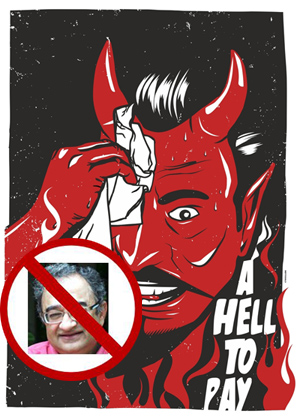
To put this in context, imagine a political aide to Henry Kissinger being the daughter of two members of the Soviet communist party politburo. There would have been hell to pay.

Hell to pay? This is a helluva stretch. Continue reading Hell to Pay?

Travels with Ibn al-Mujabbir #4


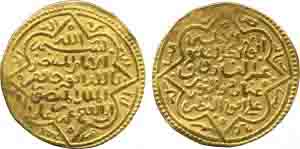
Gold dinar of the Rasulid sultan al-Malik al-Mansur ‘Umar b. ‘Ali

Sailing Seasons in the Red Sea and Indian Ocean:
The View from Rasulid (13th-14th Centuries) Aden

by Daniel Martin Varisco

[This is a lecture presented at the Red Sea Trade and Travel Study Day of the Society for Arabian Studies at the British Museum, October 5, 2002, and subsequently published in Yemen Update. For Part 1, click here; for Part 2, click here; for Part 3, click here.]

Monday, 19 Sha‘ban, 691 (August 5, 1292)

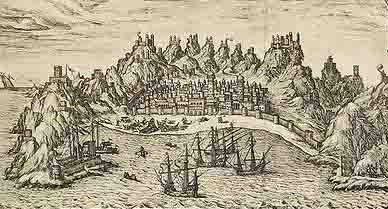
Most travelers that I know complain of the lack of fresh water here in Aden, but I think the more serious omission is basic intelligence. Perhaps the unbearable heat drains their brains as well as their bowels. Instead of unloading our ship on the third day, we were kept waiting a full extra day before finally being allowed into customs. One would think their interest in picking our pockets would speed up rather than prolong this unpleasant process. I was under orders to take the gift directly to the sultan, and I am half tempted to write a letter immediately to the master of this land and apprise him of the inattention that seems to plague his servants in the port. After all, I represent the Karimi, not some cheap junk from Serendib! Continue reading Travels with Ibn al-Mujabbir #4

Michele Bachmann, VIP


The great thing about America is that in theory (and mainly in theory) anyone has an equal opportunity to become a VIP in the usual sense. Certainly a President, no matter what the party, is a Very Important Person. So, in theory, is a representative from the U.S. House of Representatives. But Michele Bachmann, who ran for the Republican nomination and briefly led the lackluster field, is another kind of VIP: a Very Ignorant Pariah. Not just ignorant, but very ignorant, as she demonstrates almost every time she makes a public statement. And now it is increasingly clear that she has reached Pariah stage, even in her own party (at least the part that doesn’t get drunk on tea). In finding a few other out-there representatives, she has written a letter (which you can see here) demanding an official investigation of a Muslim American senior official, Huma Abedin, in the State Department. Before any prominent Muslims could cry “Foul,” the news media (like CNN’s Anderson Cooper) and fellow Republicans (like John McCain) leveled blistering attacks on her tactics. Even Fox News has turned its guns inward, publishing a commentary by Ed Rollins, a former campaign advisor for Bachman, comparing her to Joseph McCarthy. Add to this mix Scott Brown and Marco Rubio.

The tragedy is that Bachmann sits on the House Intelligence Committee. How oxymoronic is that: the queen of un-intelligence sits on this powerful committee of the United States government. Continue reading Michele Bachmann, VIP

Travels with Ibn al-Mujabbir #3


Sailing Seasons in the Red Sea and Indian Ocean:
The View from Rasulid (13th-14th Centuries) Aden

by Daniel Martin Varisco

[This is a lecture presented at the Red Sea Trade and Travel Study Day of the Society for Arabian Studies at the British Museum, October 5, 2002, and subsequently published in Yemen Update. For Part 1, click here; for Part 2, click here.]

Thursday, 15 Sha‘ban, 691, August 1, 1292

We are now but a day’s sail away from safe haven in Aden, if God wills and the wind does not cease to obey his commands. It has been a good journey thus far. No major storms or pirates, though we did see a shipwreck on the reefs south of the Farasan Islands. Our pilot, praise God, knows his way over the shoals, even if blindfolded, I think. In the morning we took aboard some fresh water at al-‘Ara, after coursing around the tip at Bab al-Mandab and leaving Bahr al-Qulzum. After my noon prayer, when the sun beat down so mercilessly and I was sorely tempted to jump into the water with all my clothes on, I suddenly remembered that this was the midpoint of Sha‘ban with only two weeks left until the holy fasting month. Today is the anniversary of the day the Prophet, peace be upon him, was instructed to make Mecca the qibla rather than Jerusalem. God willing, I will make the pilgrimage in the coming year. Even thinking of the well of Zamzam made the warm water in the fantash all the more sweeter.

As night fell, I remembered an earlier trip, when a tormenting monsoon tore our sail and nearly capsized the ship as we departed Zayla‘ for Bab al-Mandab. These were the ‘awasif winds, fouling us with the stench that only Iblis breaking wind could send. That turning point is a dangerous point. An old sailor on board, who has often traveled along the African coast from Mogadishu, told me that only ships like our jalba can make the passage safely; no boat with iron nails could sail past, for God, our Protector, has ordained a magnetic mountain to attract hand-wrought nails and split an intruding vessel asunder. But only the infidel Christians defy nature with such innovations. May God protect the holy cities from the ravenous appetites of crusader cannibals. Continue reading Travels with Ibn al-Mujabbir #3

Moderate but Islamist…


A variety of Islamophobes have comfortable media niches, including “opinion writer” Charles Krauthammer, whose Krauthammering away at Islam as a political force in yesterday’s Washington Post is yet another low blow. Krauthammer admits, almost laments, that Libya “appears to have elected a relatively moderate pro-Western government.” But, then who cares since “Libya is less a country than an oil well with a long beach and myriad tribes.” I suppose one could expand on this to argue that Texas is less a state than an oil well with a long beach and myriad rednecks. Libya is a country, Mr. Krauthammer, and one that is struggling to remake itself after decades of a dictator that the West loved to hate but actually did nothing to undo. Ah, but after all, this is obviously an exception in the aftermath of the “Arab Spring.”

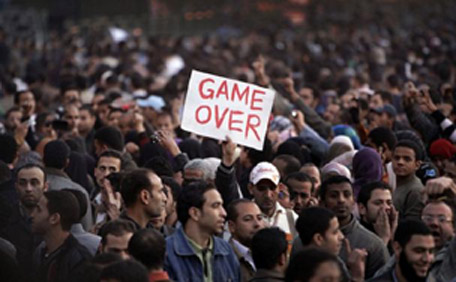
They say that ignorance is bliss, so consider the bliss as Krauthammer’s view unfolds: “Tunisia and Morocco, the most Westernized of all Arab countries, elected Islamist governments. ” The most “Westernized”? This might come as a surprise to the Lebanese, unless they fail to qualify as Arab. Does he mean that they happen to be rather close to Europe? Is being “Westernized” a geographical issue? Does being “Westernized” mean accepting American foreign policy without reservations or having access to iphones and Hollywood movies? Morocco, by the way, is still a kingdom and not part of the “Arab Spring.” Continue reading Moderate but Islamist…

Comment peut-on être Persan?


The French savant and satirist Charles-Louis de Secondat, better known as Baron Montesquieu penned his Lettres Persanes in 1721, almost three centuries ago. This was long before the age of computers or the idea that eventually germinated in the head of Steve Jobs and blossomed into the Mac (and I do not mean the big kind you eat). I suspect that Montesquieu wrote by candle light with a quill for a pen, but he would have been delighted to type away on a Macbook, especially since it comes prepackaged with both a French keyboard and a Persian font. But, alas, poor Usbek and Rica would not be able to board an Air France flight to New York, connect to Atlanta and then walk into an Apple Store and buy a much smaller Air than the one they flew from Charles de Gaulle.

Shocking, is it not. But as Jamal Abdi writes in today’s New York Times, how to be a Persian has taken on new meaning in our globally-fixated-on-terrorism age:

Last month, Sahar Sabet, a 19-year-old Iranian-American woman, was improperly prevented from buying an iPad at an Apple store in Alpharetta, Ga. After she had gone over the various options with two Apple sales clerks, a third clerk, who had overheard Ms. Sabet speaking Persian to her uncle, intervened. He asked what language they were speaking and, when he found out it was the language of Iran, he said she could not buy anything because “our countries do not have good relations” — never mind that she intended to give it to her sister in North Carolina.

Of course, Montesquieu himself could walk into Le Apple Store in Paris and come out high on his own Airs. So I can only wonder what he might have added in the new updated version of Le emails persane. Perhaps it would go like this: Continue reading Comment peut-on être Persan?