All posts by dvarisco

The Quran as a Great Book: Muslim Perspectives, 4


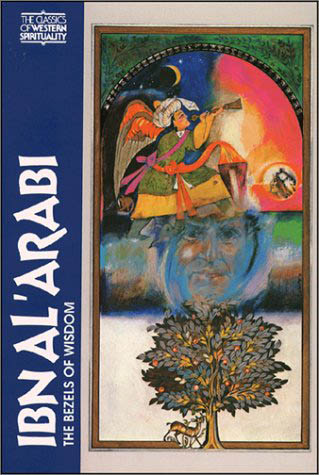
Cover of Ibn Al’ Arabi’s The Bezels of Wisdom (The Classics of Western Spirituality)
edited by R.W. Austin


[The following is part four of a series on a lecture presented in the Hofstra Great Books Series on December 5, 1993. For part three, click here.].

The Devout Scholar and the Text

In Islam there have been and continue to be both conservative and radical “theologians,” those whose wisdom almost anyone can benefit from and those who leave for posterity mainly the marks of their own highly strictured ignorance, mystics who dare to see beyond the literalist trap imposed by an all-too-human language and unthinking clerics who cling to tradition for little more than tradition’s sake.

From the wide array of Islamic scholars, it would be impossible to say who has been the wisest, the most respected, the most influential. But certainly on the short list we would find Muhyi al-Din Muhammad Ibn al-‘Arabi, an extraordinarily well-traveled man of the late 12th and early 13th centuries A.D. Born in Islamic Spain, he traveled that seemingly vast symbolic distance across the Mediterranean Sea to Tunis, made the pilgrimage to Mecca (Islam’s sacred capital) in 1202 CE, and after traveling throughout the central lands of the Islamic Empire, eventually settled in Damascus, where he became a highly respected teacher for the last eighteen years of his life. He himself had studied with over 90 masters and produced (we are told) an estimated 700 distinct texts (some 400 of which are still preserved), several of which could rightly qualify in this series as “great books” in their own right. His magnum opus, called Futuhat al-makkiya (The Meccan Openings) is a vast encyclopaedia of Islamic knowledge and Quranic interpretation; it would cover perhaps some 17,000 pages in a formal published edition. Continue reading The Quran as a Great Book: Muslim Perspectives, 4
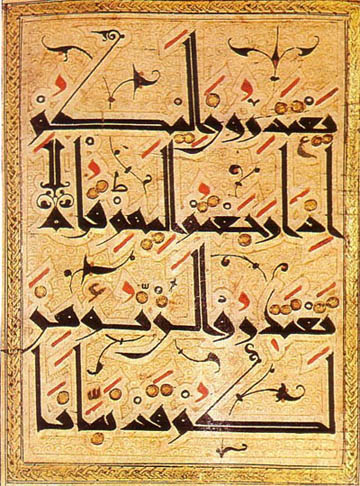
The Quran as a Great Book: Muslim Perspectives, 3


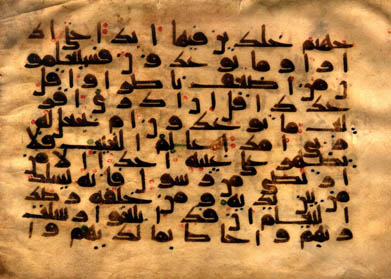
A 9th- or 10th-century leaf of the Qur’an in Kufic script


[The following is part three of a series on a lecture presented in the Hofstra Great Books Series on December 5, 1993. For part two, click here.].

1. Praise be to God, Lord of the Worlds

If there is a phrase in Arabic as frequently used as the bismillah, it is no doubt the hamdillah. Since God is perfect, God alone has the right to receive praise from humanity. God deserves this verbal praise because this mercy comes of his own volition; it was not forced, it was freely given. We are also reminded in these opening words that God rules; he is the rabb of the worlds that be. The word rabb in Arabic has a number of related connotations, including master or lord, chief, determiner, provider, sustainer, rewarder, and perfector. The worlds, perhaps better rendered straightforwardly as the universe, indicated here encompass the material and the immaterial, of flesh-and-blood and of spirits, of those who are well guided and those who are misguided. Whatever is, God is the ultimate master of it. While a non-believer might read this as a base for fatalism, a Muslim sees it differently as a fundamental reason for hope. God’s will will be done, but this hardly frees the believer from doing his or her part, particularly when no one can speak definitively as to what God’s will is in a given matter. The meaning of Islam, after all, is submission.

2. The Compassionate, the Merciful

3. Master of the Day of Judgement

The term malik is that which is used in Arabic for the master of a slave, the owner of property, and the king or sole ruler. For the Muslim, God is the ultimate master of all things. He is not just a judge dispensing justice; God renders reward and punishment (the implication of judgement day) because He alone is the authentic source for such judgement. Who else has this kind of authority, but the one who creates everything and sustains everything? We are reminded quite literally as well that Islam preaches a final judgement, one beyond the grave, a future resurrection of the dead – an idea hardly unique to this revelation. But the Muslim is consoled by the realization that no matter how bad things are (and in many Muslim countries, things are pretty bad right now) God will be the ultimate judge. Continue reading The Quran as a Great Book: Muslim Perspectives, 3

The Quran as a Great Book: Muslim Perspectives, 2


Quran in Naskhi script written by the celebrated Turkish calligrapher Hamd Allah (15th century, Topkapi Museum


[The following is part two of a series on a lecture presented in the Hofstra Great Books Series on December 5, 1993. For part one, click here.].

So why am I here?

Let me begin with my discipline. I am an anthropologist by training and experience and a life-long student of Arabic (as a dynamic language and as an extraordinary corpus of folklore and formal literature). You may wonder why an anthropologist would stand before you to discuss a great book, an anthropologist who should seem to be more at home studying “primitive”, non-literate people (who can sadly boast of no “great books”.. Perhaps we should have a “Great Oral Traditions” series).

You see, as an anthropologist, I do not so readily discriminate between societies with books and societies technically without them. More specifically, as a cultural anthropologist, my ethnographic research (that is, my personal observations and documentation of what people do, say they do, or don’t do and think they should do) was in the Arab Islamic country of Yemen (located southwest of Saudi Arabia across the horn of Africa from more newsworthy Somalia). While many of the Yemeni men and women I knew in the field were not formally literate, they were clearly part and parcel of a religion of the book; as Muslims with an impressive local history they all related to the Quran as a vital text and they all (even if unschooled) knew by heart portions of the Quran, at a minimum the fatiha I recited at the start. To talk meaningfully about the Yemen I observed and studied and not to know something reasonably substantial about the Quran that Yemenis revere, would seem to me absurd, or at the very least the sloppiest sort of scholarship. Continue reading The Quran as a Great Book: Muslim Perspectives, 2

The Quran as a Great Book: Muslim Perspectives


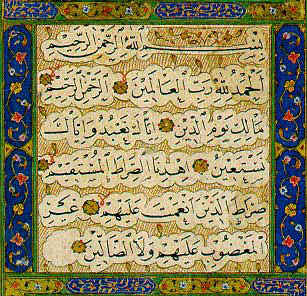
The fatiha in an Arabic manuscript of the Quran


[The following is a lecture presented in the Hofstra Great Books Series on December 5, 1993].

بِسْمِ اللَّهِ الرَّحْمَٰنِ الرَّحِيمِ

الْحَمْدُ لِلَّهِ رَبِّ الْعَالَمِينَ
الرَّحْمَٰنِ الرَّحِيمِ
مَالِكِ يَوْمِ الدِّينِ
إِيَّاكَ نَعْبُدُ وَإِيَّاكَ نَسْتَعِينُ
اهْدِنَا الصِّرَاطَ الْمُسْتَقِيمَ
صِرَاطَ الَّذِينَ أَنْعَمْتَ عَلَيْهِمْ غَيْرِ الْمَغْضُوبِ عَلَيْهِمْ وَلَا الضَّالِّينَ

In the name of God, the infinitely Compassionate and Merciful.
Praise be to God, Lord of all the worlds.
The Compassionate, the Merciful. Ruler on the Day of Reckoning.
You alone do we worship, and You alone do we ask for help.
Guide us on the straight path,
the path of those who have received your grace;
not the path of those who have brought down wrath, nor of those who wander astray.

What I have just recited in Arabic is the Quran’s opening or fatiha, consisting only of seven short verses, the first of some 114 chapters of varying length. This is the most oft repeated part of the Quran, recited daily by millions of Muslim men and women during each of the five regular prayers. So integral are these opening words in the revelation of Islam that they have been called the “essence” (literally “mother”) of the Quran (Umm al-Quran ), or as some say, “the Lord’s Prayer of the Muslims.” This fatiha is the opening salvo of a scripture revered as God’s most basic message by more than one billion people on earth today. For these Muslims, most of whom live outside the Middle East, the Arabic Quran is not only a great book but quite literally “the” great book. While non-believers would not approach this book as a true revelation, no one can deny that it is a scripture that has been influential in shaping history across continents for almost 15 centuries and will continue to influence the lives and politics of many of the world’s peoples for a long time to come.

My interest tonight in talking about the Quran differs somewhat from most of the lectures in this series. I feel no need to convince you as an audience in an academic setting that the Quran is a significant text, one of those few great books that we cannot afford to ignore. This is made even more poignant in light of the perceived threat by many in our society of a so-called “militant” Islam on the march against Western Civilization. In our collective cultural ignorance, the Quran is portrayed only as a manifesto, not because non-believers do not take the time to read it carefully but simply because Islam has been branded as a hostile and uncompromising worldview. Continue reading The Quran as a Great Book: Muslim Perspectives

Forever counting down

The world has been on the verge of ending ever since people decided it was on the verge of ending, which probably happened when we were Neanderthals wondering why it took so long to figure out how to make fire. The history of apocalypse prophecy is, quite literally, a bottomless pit. The 21st century is no exception, especially for those who were convinced we would never make it past 2000 or 2001. What is particularly ludicrous is the prediction that the world will end at a specific point in time. This says as much about the gullibility of our species as it does about the duplicity of certain self-proclaimed prophets. Forget Ezekiel and the wheel or Daniel in the lion’s den: every era has its doom sayers. Take October 22, 1844, for example, which was only a few months after Joseph Smith (the prophet of Mormonism) was murdered at age 38. On this October day more than a century and a half ago perhaps as many as 100,000 God-fearing Protestant folk had given up their earthly possessions and quite a few joined Miller on a hill waiting for Jesus to come and greet them. The Mormons believe that Jesus came to Missouri, but it seems he skipped Rev. Miller’s venue.

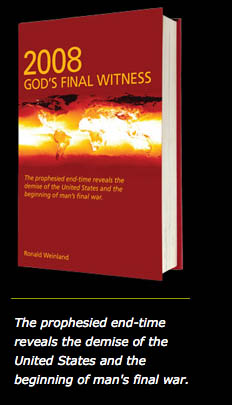
There are quite a few doom-mongers to choose from, some like Harold Camping of relatively high media renown, but let’s focus on an internet prophet named Ronald Weinland. In 2006 he published a book saying that the world would end in 2008. As you can see in the cold print below, the United States has ceased to exist as an independent nation, at least as far as the prophet could see. Continue reading Forever counting down

Revealing the News


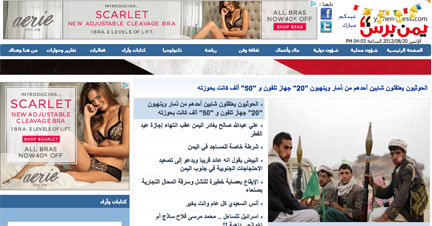
In attempting to keep up with the news in Yemen, I surf a number of Yemeni news sites. When I tried the usually reliable almasdaronline.com this morning, I was redirected to a commercial site called Mojo Pages. So I switched to yemen-press.com, where the top story was about the Huthi forces arresting two individuals in Sa‘da. While reading the article I realized that it was impossible to ignore the Gestalt of the total screen page, which I reproduce above. Here is a scene of several Yemeni fighters, clearly in a qat-chewing mode, and holding what I suspect (not being a military expert) are grenade launchers. What struck my attention was the advertisement adorning the banner and taking a prominent space on the left of the screen: Scarlet, the new adjustable cleavage bra. I have not been in the market for a bra, so I do not think the ad showed up due to any sophisticated Facebook-style marketing strategy. But I am male, so perhaps the assumption is that any Western viewer is in the market for a bra, since the ad is in English after all. And ten minutes later a new ad took its place: this time for a car rental place in New York.

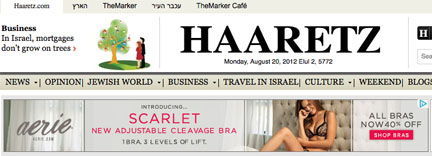
Then a couple of hours later I happened across an article on Haaretz and there she was again: dear Scarlet hawking her gawking adjustable discount bra. Perhaps I am a victim of cookies twisting, but what a coincidence that is probably not a coincidence. Criss-crossing the endemic violence in the Middle East, the ongoing plight of the Palestinians and the voices in the Zionist wilderness of left-leaning Israelis there is the seductive power of an ad, as if politics did not really matter. In this case the bra fits all sizes of religious persuasions and the model is available to be ogled by anyone, at least from a Western computer. How ecumenical can commercial immodesty get.

It is the multifarious irony of these pages that weighs me down. I will focus on the Yemen website, since that was the first encounter with Scarlet. First, how ironic that I devour news by scouring multiple websites, most of which do not explicitly state their de facto bias. While there are a couple of Yemen News sites that are available in English (like Yemen Times and Yemen Post), they tend to be days old and in need of better English editing. Yemen Times, for example has a most recent post of August 15, five days ago, which is hardly Time Magazine timely. Yemen Post has a story only a day old, but its presentation is nowhere near as slick as any of the major Yemeni sites in Arabic. Irony #1 is that what is available but not in Arabic is old and out-of-date internet-wise. This is only an irony for the hubris with which English-speakers assume that news must be packaged in their native language.

The second irony is the critical crux. Where else can you find images of a seductive woman in a bra revealing cleavage (and at 40% off) counterposed with a truckload of qat-chewing Yemenis holding grenade launchers or on a major Israeli online newspaper in English? Continue reading Revealing the News

Cinematic Contending with the Companions


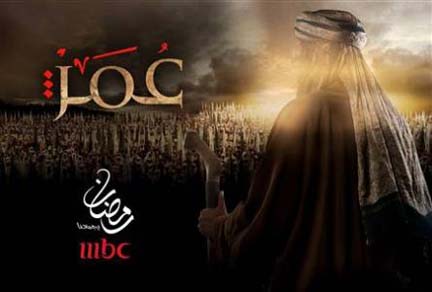
As Ramadan for the Hijri year 1433 draws to a close, the violence between Muslims on the ground is paralleled by the violence about Muslims on the screen. The daily slaughter of Syrians, continued terrorist bombings throughout the region and the uncivil rebellion in Mali dominate the news, as such atrocities should. But cinema does not lag far behind in showing blood spurting out of bodies and broken bones, all in the name of politicized religion. I am not talking about The Expendables, where aging Hollywood superheroes unite to make themselves even more money, but a Ramadan television serial that has captured the attention of Muslims across the Middle East: a retelling of the story of the second caliph ‘Umar ibn al-Khattab. Click here for the trailer and here to watch Episode #2.

Premiering 36 years after Moustafa Akkad’s acclaimed The Message recreated the life of Muhammad without actually showing Muhammad, the serial ‘Umar in 30 episodes is a millions-of-megabucks production worthy of Cecil B. DeMille. The earlier film had the blessing of the major Islamic organizations, since it avoided showing an image of the prophet Muhammad. It was a bit eerie to see Anthony Quinn as Hamza constantly speaking to the camera as though the camera-not-very-obscura was in fact the Prophet. But this new film has been railed against by the Grand Mufti of Saudi Arabia and the sheikhs of al-Azhar because it dares to show an actor playing a companion of the Prophet, notably the caliph ‘Umar ibn al-Khattab. If it had been Saladin, that would be okay it seems. Continue reading Cinematic Contending with the Companions

The best Kurd?


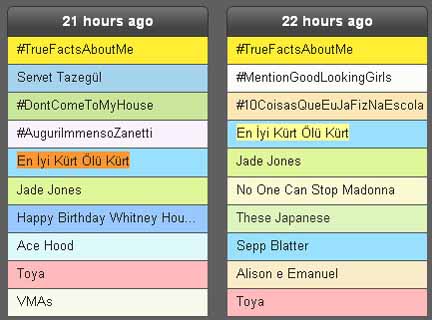
In the social media revolution Twitter has taken a breathtaking role. The Arab Spring may still have sprung without cellphones, but the rapid ability to communicate has been an enormous aid to coordinating protests. But it seems that much of Twitter is for twits, to whit media narcissists who think the public lives to follow their quotidian banality and the full range of bigots who use Twitter to spew out hate. Take the Turkish phrase “En İyi Kürt Ölü Kürt” (“The best Kurd is a dead Kurd.”), which trended on August 9, as reported on Al Jazeera. The trend came after news coverage of an ambush of a Turkish military bus by suspected Kurdish separatists. But the anti-Kurdish sentiments may also have been heightened by Turkey’s decision in June to allow the teaching of Kurdish in schools.

Part of the trend was the response by Kurds who were angry at the racist post. Continue reading The best Kurd?