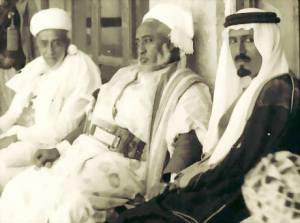
Here is a photo from the 1940s to tax your memory. Can you recognize the imam and the king in the picture? I will post the correct answer if no one provides one in the comments section…
Here is a photo from the 1940s to tax your memory. Can you recognize the imam and the king in the picture? I will post the correct answer if no one provides one in the comments section…

The winners of the 29th Aydın Doğan Cartoon Award have been announced. Details are available here and the cartoons can be seen here. Enjoy. Continue reading Cartoons a la turc
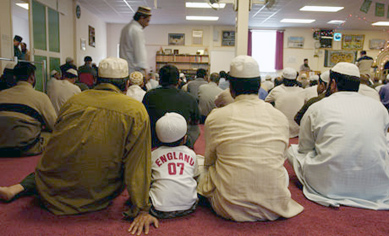
More than half (55%) of Britons would be concerned if a mosque was built in their area.’ Photograph: Martin Godwin for the Guardian
by Leon Moosavi, guardian.co.uk, Tuesday 3 July 2012
British Muslims often express a stronger sense of belonging than other citizens, so why are they still seen as outsiders?
In Britain today there is a mismatch between how non-Muslims often perceive Muslims and how Muslims typically perceive themselves. This disconnect is down to a tendency by non-Muslims to assume that Muslims struggle with their British identity and divided loyalties. These concerns were challenged a few days ago,in a report by the University of Essex that found Muslims actually identify with Britishness more than any other Britons.
This study is just one of several recent studies that have consistently found that Muslims in Britain express a stronger sense of belonging in Britain than their compatriots. Consider the following examples:
• 83% of Muslims are proud to be a British citizen, compared to 79% of the general public.
• 77% of Muslims strongly identify with Britain while only 50% of the wider population do.
• 86.4% of Muslims feel they belong in Britain, slightly more than the 85.9% of Christians.
• 82% of Muslims want to live in diverse and mixed neighbourhoods compared to 63% of non-Muslim Britons.
• 90% of Pakistanis feel a strong sense of belonging in Britain compared to 84% of white people.
Those who work closely with Muslim communities will attest to the integrated position of British Muslims and that despite frequent exoticisation, British Muslim lives are much the same as any other citizen’s. British Muslims also appreciate their ability to practise their religion in Britain without the type of subjugation that fellow Muslims are subjected to under despotic regimes in several Muslim-majority countries. Even though negative depictions may encourage people to imagine Muslims as similar to the 7/7 bombers who struck seven years ago this week, your average British Muslim is much more likely to be similar to a confident Amir Khan, a bubbly Konnie Huq or a hardworking James Caan. Continue reading Muslims are well-integrated in Britain – but no one seems to believe it
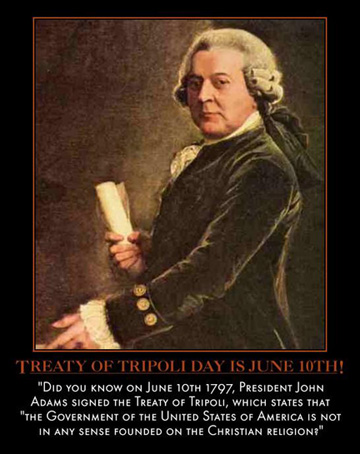
Yes, a treaty and not a Humean treatise, although Hume’s treatise on Religion no doubt had an influence on the creators of the text. The third treaty established by the young United States, recently liberated from British rule, with the nations of the “Barbary Coast” was with the Bey of Algiers in 1797. Like the earlier two treaties, the focus was on maritime trade in the Mediterranean and the problem of Barbary “pirates” as well as neutrality of the Barbary states when the U.S. was battling other “Christian” powers. Our Founding Fathers (for surely those members of Congress in 1797 were as close to being Founding Fathers as Sarah Palin’s contorted dubbing of John Quincy Adams, who had just turned 20 and had yet to enter politics) were obviously not working hard to free slaves (as these treaties will bear out), but they did stress a point that many rightwing pundits conveniently gloss over: the United States was not created as a “Christian nation.”
As you read the treaty below, in celebration of the 4th of July, note article 11 in particular. It turns out that the translation provided to Congress by Joseph Barlow, is not very accurate and the original Arabic version did not contain what we find in Article 11. But in fact, Congress never knew that and only saw the version printed here; this was accepted unanimously and then acknowledged as well by President John Adams at the time. So it was certainly not the contention of the Dey of Algiers that the U.S. was not a Christian nation, but an idea that resonated well with the young Congress.
Treaty of Peace and Friendship, signed at Tripoli November 4, 1796 (3 Ramada I, A. H. 1211), and at Algiers January 3, 1797 (4 Rajab, A. H. 1211). Original in Arabic. Submitted to the Senate May 29, 1797. (Message of May 26, 1797.) Resolution of advice and consent June 7, 1797. Ratified by the United States June 10, 1797. As to the ratification generally, see the notes. Proclaimed Jane 10, 1797.
[Translation]
Treaty of Peace and Friendship between the United States of America and the Bey and Subjects of Tripoli of Barbary.ARTICLE 1.
There is a firm and perpetual Peace and friendship between the United States of America and the Bey and subjects of Tripoli of Barbary, made by the free consent of both parties, and guaranteed by the most potent Dey & regency of Algiers.ARTICLE 2.
If any goods belonging to any nation with which either of the parties is at war shall be loaded on board of vessels belonging to the other party they shall pass free, and no attempt shall be made to take or detain them.ARTICLE 3.
If any citizens, subjects or effects belonging to either party shall be found on board a prize vessel taken from an enemy by the other party, such citizens or subjects shall be set at liberty, and the effects restored to the owners. Continue reading Tabsir Redux: An American Treaty on Religion
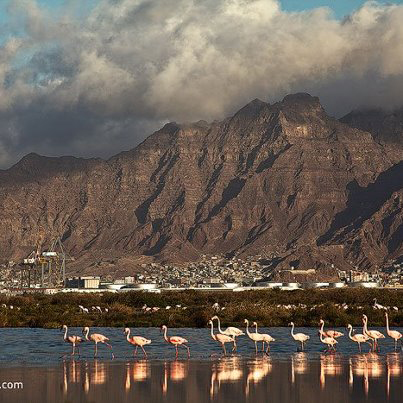
Aden with flamingos; photo by Ameen AlGhabri
There is a Facebook site with great pictures of Yemen. This is So you think you’ve seen Yemen. It is well worth surfing and perusing.
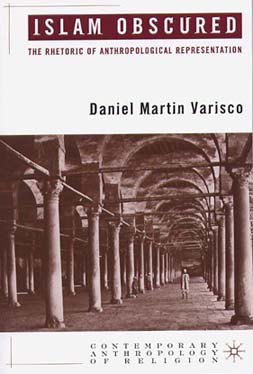
Review of D. M. Varisco, Islam obscured. The rhetoric of anthropological representation, Palgrave MacMillan, New York 2005.
by Estella Carpi, letturearabe di Jolanda Guardi, June 29, 2012
Anche a distanza di ben sei anni, vale la pena recensire il testo dell’antropologo Americano Daniel Varisco, considerate l’urgenza attuale di de-cristallizzare i discorsi sull’Islam, particolarmente nel contesto accademico italiano.
Attraverso una rassegna concettuale di eminenti studiosi tra i quali Ernest Gellner e Clifford Geertz, e la de-mitizzazione della sociologa marocchina Fatima Mernissi che ancora pecca di una visione monolitica dell’Islam, Varisco riesce totalmente, a mio avviso, nell’intento di decostruire il solo Islam univoco, omogeneo, aspettatamente coerente e destoricizzato che ci viene rifilato.
L’Islam che definirei “monolitico†tuttora pervade i discorsi dei più esperti: Varisco, attraverso il suo background squisitamente antropologico, invoca invece all’osservazione degli individui che si auto-definiscono “musulmaniâ€, piuttosto che alla catalogazione di ciò che l’Islam teologicamente prevede. L’Islam, come qualsiasi altra religione intesa sia come istituzione che pratica culturale, può soltanto essere rappresentato.
Per demolire le tuttora ancor troppo diffuse stagnazioni dogmatiche e una comprensione campanilistica dell’Islam, è quindi necessario, sostiene Varisco, tener conto del fatto che additiamo costantemente ai misfatti compiuti dai musulmani con maggior indignazione, in riflesso appunto alla nostra lettura dell’Islam, inteso come insieme di valori e pratiche rigorosamente coerenti, rispetto a qualsiasi altra religione.
I musulmani sono invece “conservatori o comunisti, maschi o femmine, giovani e vecchi, ricchi e poveri, di buon umore o mal intenzionatiâ€, che poco hanno a che fare con una logica islamica del “prendere o lasciareâ€, quale invece ampiamente diffusa nella letteratura al riguardo. Continue reading Islam Obscured reviewed
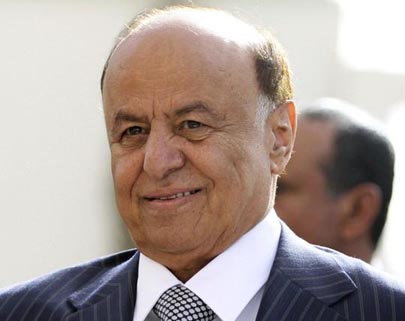
Yemeni interim president Al-Hadi
Yemen’s transition: a model to be followed?
by Helen Lackner, Open Democracy, June 19, 2012
What is actually happening in Yemen? It is either presented as a ‘solution’ which could be a model for Syria, or as a ‘phoney’ change that only conceals continuation of the previous regime
In the current environment where the success of the ‘Arab revolutions’ to bring about genuine democracy to their countries is more than doubtful, there is value in examining in some detail the situation in Yemen. Where Egypt seems to be poised between a military or a fundamentalist regime, Libya is at risk of being divided between a multiplicity of various armed factions, Bahrain continues on its bloody confrontation between a minority regime and the demands of the majority of its people, early hopes for Tunisia are dwindling in the face of more aggressive fundamentalists and Syria is suffering civil war with a death toll of hundreds each weak, what is actually happening in Yemen? It is either presented as a ‘solution’ which could be a model for Syria, or as a merely cosmetic change which conceals a continuation of the previous regime.
After many months of procrastination, Ali Abdullah Saleh was forced to sign the so-called Gulf Cooperation Council Transitional agreement on 23 November 2011. While he attempted to continue ruling from behind the scenes, his power has been very dramatically reduced over the months. First, his former Vice President, Abdul Rabbo Mansour Hadi was elected president through an overwhelming popular endorsement on 25 February 2012 when more people came out to vote for him than had participated in the previously ‘contested’ presidential elections of 1999 and 2006. While the outcome was in no doubt as he was the only candidate, the fact that over 6 million Yemenis bothered to come out and queue to vote showed their desire for change and to get rid of the old regime – even if many of them were voting more against AAS than for ARMH – gave him a popular legitimacy which helps him develop a genuine power base which he previously lacked. Continue reading Yemen’s Transition
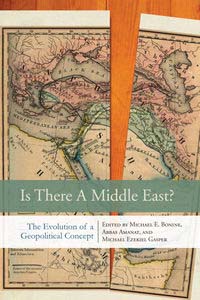
[The following post is about a conference held five years ago, but the papers from the conference have been published in a new volume edited by the late Michael E. Bonine, Abbas Amanat and Michael Ezekiel Gaspar entitled Is There a Middle East?. This is a book well worth reading and owing.]
Is there a Middle East? At first glance we either have a very silly question or an occasion for an academic conference. In this case it was the latter at Yale University this past weekend. The Council for Middle East Studies of the Yale Center for International and Area Studies hosted a dozen scholars from various disciplines. Papers were given on the history of the term “Middle East,†its geographical borders in maps and mental templates, how the region implied has been imagined, colonially appropriated and the continuing relevance of the region in a world hooked on oil and stymied by regional terrorism. Continue reading Tabsir Redux: Is There a Middle East?