All posts by tabsir

Sex in the Muslim City


by Carlin Romano, The Chronicle of Higher Education, January 14, 2013

Is it possible all those young men clashing in the streets of Cairo and Damascus aren’t getting enough?

Democracy? No, I mean that other thing people seek and are willing to die for.

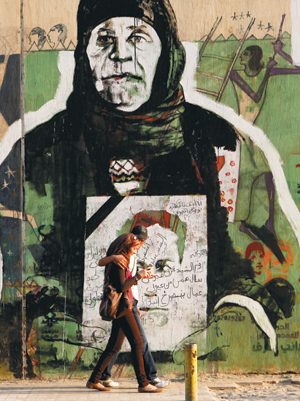
Talk of the “Arab Spring” now forms a clichéd part of pundit chatter in America, with plays on “Arab Winter” and “Arab Fall” depending on the politics of the speaker and the troubled country dissolving at the moment. But few talking heads know enough about Arab culture to tie the massive Mideast street actions we’ve seen to matters behind surface politics. And those background matters include the state of Arab marriage, the tension between so-called Western norms and Islamic pieties, and the suppressed sexuality among Arab youth who face financial and theological obstacles to fulfilling their desires.

Is it tasteless to mix somber stuff like political rebellion with sub-rosa lust and denial? Could be it’s truthful rather than tasteless.

Thank you, then, Shereen El Feki—Cambridge-educated immunologist, former science writer for The Economist, current vice chair of the U.N.’s Global Commission on HIV and Law—for adventuring beyond the headlines in Sex and the Citadel: Intimate Life in a Changing Arab World, forthcoming from Pantheon Books. It’s a trenchant exploration of the uncertainties filling the humble abodes that Tahrir Square demonstrators go home to. A truthful book may not set you free when you’ve suffered under centuries of misguided interpretations of Islam and sex, but one prays that El Feki gets an Arabic edition.

In the West, her blunt examination of sex and its attendant practices and paraphernalia—topics include vibrators, Viagra, virginity codes, marital rape, and homophobia—would hardly raise an eyebrow. We Westerners live now in a Fifty Shades world, a publishing culture in which Naomi Wolf’s Vagina gets reviewed on the front page of The New York Times Book Review by former ballerina Toni Bentley—she of The Surrender (a title meant to evoke the offering of another body part)—and one hopes the kids aren’t watching. Continue reading Sex in the Muslim City

Remembering Arab Spring Photographer Rémi Ochlik


Photographer Rémi Ochlik who was killed last year in Syria at the age of 28 (Photo: Corentin Fohlen)

By Adeline Sire, PRI’s The World, February 1, 2013

Many journalists have died covering the Arab uprisings.

Last year, 17 were killed in Syria.

One of them was award-winning French photojournalist Rémi Ochlik.

He was only 28-years-old.

Ochlik documented the revolutions in Tunisia, Egypt, and Libya.

Then last year, he headed out to Syria. Continue reading Remembering Arab Spring Photographer Rémi Ochlik

Egypt Week in New York


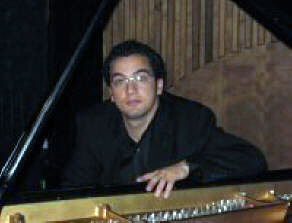
Egyptian pianist, Mohamed Shams

EGYPT MINI-SERIES FEBRUARY 2013 
LINCOLN CENTER

NEW YORK PUBLIC LIBRARY FOR THE PERFORMING ARTS
BRUNO WALTER AUDITORIUM
(entrance @ 111 Amsterdam Avenue @ 64th street)


PROGRAM

SATURDAY FEBRUARY 2 @ 2.30 PM
Opera in Arabic:
On translating opera into classical and colloquial Egyptian Arabic, with Baritone Raouf Zaidan, Bass Baritone Ashraf Sewailam and Kamel Boutros, piano – moderated by Nimet Habachy of WQXR Classical Music Station New York


SUNDAY FEBRUARY 3 @ 2.30 PM
Music for Piano and French Horn:
Recital by Amr Selim (winner, Northeast Horn competition 2012), and Seba Ali, both winners of the 2012 Ackerman Chamber Music competition 2012 at Stony Brook, NY
And a choreographic offering specially created for Seba and Amr by Cherylyn Lavagnino with Cherylyn Lavagnino Dance (CLD) dancers Ramona Kelley and Justin Flores


MONDAY FEBRUARY 4 @ 6 PM
Music of Arab American composer Mohammed Fairouz
With the Cadillac Moon Ensemble, Ensemble 212 and the Mimesis Ensemble
Curated by Katie Reimer

 Continue reading Egypt Week in New York

Tabsir Redux: Headless in Saudi Arabia

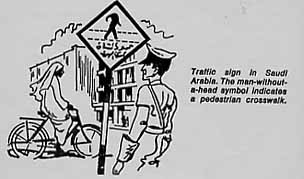
[”Traffic sign in Saudi Arabia. The man-without-a-head symbol indicates a pedestrian sidewalk.”]

I recently came across a rather plebian junior high school level text on The Middle East: History, Culture, People (by Thomas G. Kavunedos and Harold E. Hammond, Bronxville, New York, Cambridge Book Company, Inc, 1968). The book is quite forgetable, but some of the illustrations bring you to a full stop. My favorite is the illustration above. If indeed this was once the sign for a crosswalk, no wonder everyone seems to drive Mercedes in the kingdom.

Daniel Martin Varisco

[Tabsir Redux is a reposting of earlier posts on the blog, since memories are fickle and some things deserve a second viewing. This post was originally made on October 10, 2006.]

Iranian Studies Directory Online


Putting the world’s scholars and organisations at your fingertips, the Iranian Studies Directory (ISD) is a pioneering initiative to develop a comprehensive reference and research facility that will open up the fields of Persian and Iranian studies to academics, teachers, students, curators, professionals and lay enthusiasts across the globe.

If you are in any way involved in the world of Iranian or Persian studies, get networked now! Register with this public resource and connect yourself to other professionals and institutions in your field throughout the world.

A Bulgarian in 19th century Yemen


Photo of R. V. Radev with signature: “For these who love to travel, i devote my travel notes.”

The blogger Ruslan Trad has sent along an interesting piece regarding a Bulgarian traveler to Yemen, R. V. Radev, who published a book on his travels in 1906. If you can read Bulgarian, check out the original blog item. Otherwise, Ruslan has sent me a brief translated excerpt and some of the photographs, which I include here.

“Much like the Bedouin in the vast desert – one of those few unknown patches on the Earth’s surface, unexplored by Europeans – the Arab of the Happy Arabian coast today fights a legendary battle that turns fighters into heroes, invulnerable even to the slashes of the vengeful, merciless blade of Istanbul. A revolutionary network with its center in Syria is redoubling its efforts and preparing to sweep over all of Arabia, which has an estimated population of 12 million. Standing in the path of these millions is nothing more than one or two hundred thousand government clerks, looters, Turks and a few garrisons, spread around fortified checkpoints – a battle that would take no more than a couple of days to reach a favorable outcome, were it not for the proverbial scuffles between the various chiefs of the numerous tribes inhabiting Arabia, or for Turkey’s underhanded tactics in handing out bribes – gifts to some, privileges and unlimited power to others. Turkey sows the seeds of rivalry among the Sheikhs so they would fight and destroy each other. Neither the masses, nor the intellectual class, the rich Arabs, seem to understand that it would take no more than a couple of hours to resolve the issue of freedom and independence for Arabia, for which so much blood has, and continues to be shed…” Continue reading A Bulgarian in 19th century Yemen