All posts by tabsir

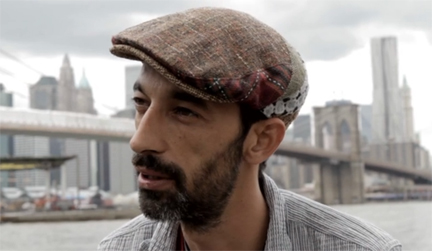
Karim Ben Khelifa: “The World is Changing, Change With It”


Karim Ben Khelifa

Photojournalist Karim Ben Khelifa is interviewed about his work in war zones with a collage of his photographs on Vimeo. This is a short video; check it out for an excellent insight into the art of photojournalism in the Arab Spring and other conflict contexts. For his website of older galleries, click here. For his Twitter account, click here. Karim has also found a new online photojournalism site called Emphasis.is.


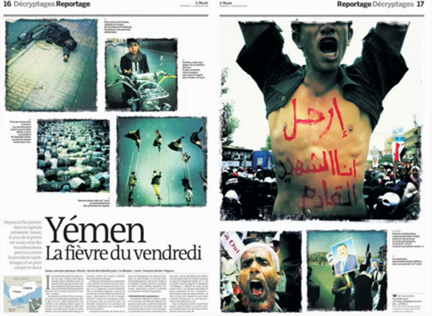
Karim’s work in Le Monde

Continue reading Karim Ben Khelifa: “The World is Changing, Change With It”

Corruption Charges Hit Indonesia’s Biggest Islamic Party

by Kevin W. Fogg

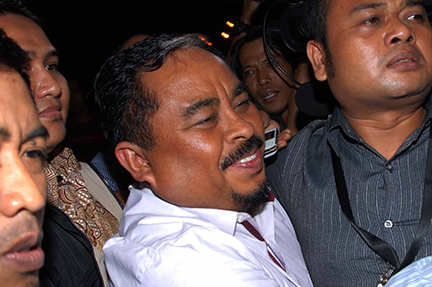
Late last month, the head of Indonesia’s most prominent Islamic political party, the Prosperous Justice Party or PKS (Partai Keadilan Sejahtera), was arrested in connection to a corruption scandal over importation licenses. His arrest made it the first time that the chairperson of any party has been arrested for corruption, even though the chairmen of some secular parties have also been getting some heat. The arrest of Luthfi Hasan Ishaaq elicited shock from across the Indonesian political spectrum, and even accusations by PKS members of a vast Zionist conspiracy to bring down the Islamic party, among other allegations of selective investigation of corruption.

Why is the arrest of Luthfi of the PKS more than your average corruption scandal? Well, it has plenty of juicy elements, like how Luthfi’s aide was arrested completely unclothed while in the company of a 19-year-old young college woman, who is not one of his alleged five wives but was also completely unclothed.

More seriously, though, the case is important is it gives the Corruption Eradication Commission a reason to investigate PKS more broadly, which could turn up more corruption. Many people are speculating that the PKS-aligned Minister of Agriculture (whose ministry oversees the import licenses) could go down over this scandal – the second time a minister would fall because of corruption in the last few months. Continue reading Corruption Charges Hit Indonesia’s Biggest Islamic Party

USAID in Yemen


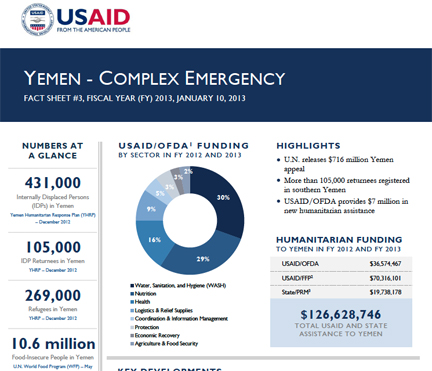
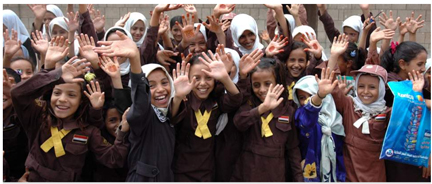
The drones capture the headlines when Yemen makes the news. The development arm of the U.S. State Department, USAID, also works in Yemen, although its activities have been greatly curtailed since the old days when I worked as a consultant on a number of USAID projects, starting in 1982 on the Agricultural Sector Assessment of Yemen of that year. For information on USAID’s current programs in Yemen, check out the relevant website. USAID provides a recent (January) fact sheet on the development situation in Yemen.


Rebellion in the Ottoman Empire


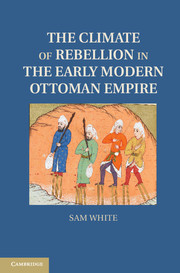
Last year I had the privilege of serving on the Albert Hourani Book Award Committee for the Middle East Studies Association. There were a number of excellent books submitted, but in the final analysis it was unanimous for a remarkable historical study by Sam White entitled The Climate of Rebellion in the Early Modern Ottoman Empire (Cambridge: Cambridge University Press, 2011), parts of which are available on Google Books. For an interview about the book, click here.

Below is the statement released by the committee:

Our committee reviewed over eighty books for this year’s Albert Hourani Book Award. Manycommittee members commented on the large number of high quality works from the incredibly rich and diverse body of nominations. Finally settling, unanimously, on a single work of superior scholarship could not have been achieved without the conscientious, diligent and professional attention my four fellow committee members gave to their colossal task: Michael Bishku of Augusta State University, Terri DeYoung of the University of Washington, Devin DeWeese of Indiana University, and Daniel Martin Varisco of Hofstra University.
The committee has chosen Sam White’s masterful work, The Climate of Rebellion in the Early Modern Ottoman Empire, published in 2011 by Cambridge University Press as the 2012 recipient of the Albert Hourani Book Award. Sam White is an assistant professor of history at Oberlin College. Continue reading Rebellion in the Ottoman Empire

Amat Al Alim Alsoswa on the Yemeni National Dialogue


ROUNDTABLE DISCUSSION;
YEMENI COMPREHENSIVE NATIONAL DIALOGUE: CHALLENGES AND PROSPECTS

The International Peace Institute (IPI) is pleased to host a roundtable discussion on the Yemeni Dialogue with Ms. Amat Al Alim Alsoswa, former Assistant Secretary-General, Assistant Administrator and Director of the Regional Bureau for Arab States, United Nations Development Program on Wednesday, February 13, 2013, from 1:00pm–2:45pm at IPI’s Trygve Lie Center for Peace, Security & Development on the 12th floor, located at 777 United Nations Plaza.

Yemen’s transition began on November 23, 2011, when an agreement was brokered by the Gulf Cooperation Council (GCC) creating a two-year transitional government led by President (and former Vice-President) Abdu Rabu Mansour Hadi. The agreement mandates holding a National Dialogue to decide the formation of the new movement and address other pressing national issues. According to the GCC agreement, the National Dialogue conference must include “all forces and political actors, including youth, the Southern Movement, the Houthis, other political parties, civil society representatives and women.” Continue reading Amat Al Alim Alsoswa on the Yemeni National Dialogue

Digital Heroes: Video Games and Identity Construction in Iran


The Middle East and Middle Eastern American Center of The Graduate Center at CUNY announces a lecture by Vit Sisler (Charles University) entitled Digital Heroes: Video Games and Identity Construction in Iran. This will be held February 11, 2013 from 6:30 PM TO 8:30 PM in Rom 9204 of The Graduate Center. For more information, click here. Admission is free.

Abstract:
Video games are a popular leisure time activity for a substantial part of Iranian youth. At the same time, most games on the Iranian market are of US, European, or Japanese origin. Unsurprisingly, the Iranian authorities are concerned about the negative influence of such games on Iranian youth. Therefore, they established the National Foundation of Computer Games in Tehran in 2006 in order to subsidize development of games in Iran, conceived in accordance with Iranian and Islamic values. Consequently, a variety of independent producers have become involved in this emerging industry. The lecture analyzes contemporary Iranian video games and explores the ways in which they communicate different concepts of identity. Essentially, whereas the Iranian government perceives games as a new semiotic language of the youth and utilizes them to promote Islamic values and foster national pride, many independent producers maneuver within the and around state’s interests, presenting instead their own, oftentimes quite different ideas. Therefore, the resulting concepts of identity are achieved through sensitive negotiations between the demands, funding and restrictions of the Islamic state and the visions and engagement of private entrepreneurs.

Vit Sisler is an assistant professor at the Faculty of Arts at Charles University in Prague. His research deals with the problematic of contemporary Islamic law, the relation between Islam and digital media, normative frameworks in cyberspace, and the topic of educational and political video games. Vit Sisler was a visiting Fulbright scholar at Northwestern University in 2008-2009. He is also a managing editor of CyberOrient, a peer reviewed journal founded by the Middle East Section of the American Anthropological Association.